Dubai’s bus network plays a vital role in daily commuting, connecting communities, business districts and emerging neighbourhoods, while supporting efforts to reduce congestion and carbon emissions. Against this backdrop, the introduction of the RTA low-carbon emission buses marks a strategic move to modernise operations, enhance passenger comfort and align public transport services with Dubai’s long-term sustainability vision.
RTA Low-Carbon Emission Buses in Dubai
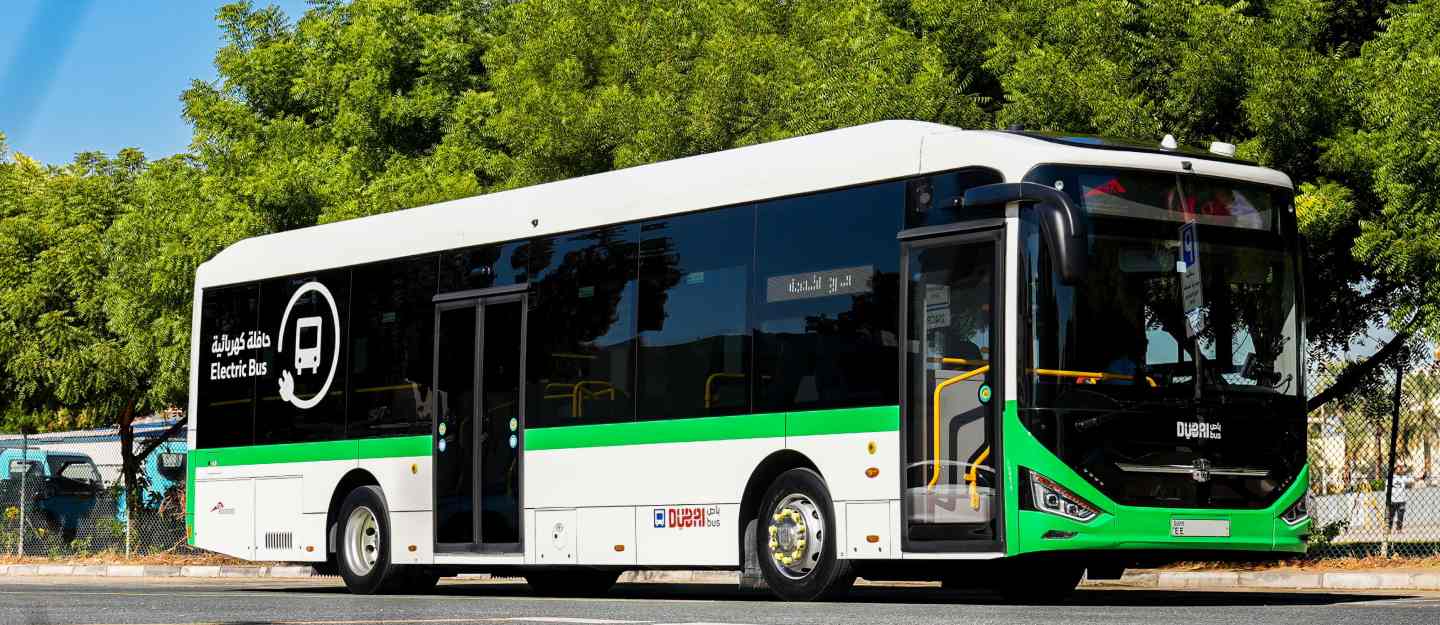
Dubai’s Roads and Transport Authority (RTA) has announced the arrival of the first batch of 250 new buses as part of a broader contract to procure 735 multi-size buses compliant with the European Euro 6 low-carbon emissions standard. This initial delivery includes 40 fully electric buses, representing the largest and first-of-its-kind electric bus procurement in the UAE. The remaining buses under the contract are scheduled for delivery by 2026.
The initiative reflects Dubai’s commitment to building a cleaner, more efficient public transport system aligned with international environmental standards and future mobility goals.
RTA Low-Carbon Emission Buses – Tailored for Dubai’s Climate
Designed specifically for local operating conditions, the 12-metre-long bus can travel up to 280 kilometres on a single charge, allowing it to complete daily services without returning to depots for recharging.
The bus features a 434-kilowatt-hour battery, supported by a 360-kilowatt ABB fast charger. With a passenger capacity of 70, the vehicle is equipped with a 360-degree camera system, advanced safety technologies and global certifications. An innovative battery-cooling system ensures optimal performance in the UAE’s high-temperature environment.
Following more than three months of testing in Dubai, the electric bus demonstrated strong results in energy efficiency, braking responsiveness, air-conditioning performance and overall vehicle stability. Trial operations confirmed the safety and reliability of critical systems, including battery, cooling and braking components. The testing phase achieved a 95% satisfaction rate among drivers and passengers.

Supporting Dubai Urban Plan 2040 and climate neutrality goals
According to His Excellency Mattar Al Tayer, the procurement of the new buses aligns with the directives of His Highness Sheikh Mohammed bin Rashid Al Maktoum, Vice President and Prime Minister of the UAE and Ruler of Dubai and the follow-up of His Highness Sheikh Hamdan bin Mohammed bin Rashid Al Maktoum, Crown Prince of Dubai, Deputy Prime Minister, Minister of Defence and Chairman of the Executive Council of Dubai. The initiative supports the delivery of a sustainable and flexible public transport system in Dubai that enhances quality of life and facilitates mobility.
The project also contributes to the objectives of the Dubai Urban Plan 2040 by supporting smart urban development and accommodating the continuous growth in public transport ridership. The strategy aims to make public transport the preferred choice for daily commuting across the emirate.
The introduction of the RTA 250 low-carbon emission buses forms part of the authority’s long-term Zero-Emission Public Transport Strategy 2050. This strategy targets the full conversion of buses, taxis and limousine services to zero-emission operation. Under this plan, 100% of public transport buses are expected to operate on electric and hydrogen power by 2050.
The initiative also supports national objectives to reduce carbon emissions and achieve climate neutrality by 2050, while contributing to the Dubai Economic Agenda D33, which aims to position Dubai among the world’s leading urban economies.
RTA 250 Low-Carbon Emission Buses Future Plans
In addition to the 40 Zhongtong electric buses, the contract includes 549 city-service buses comprising 400 MAN buses and 149 Zhongtong buses, all equipped with Euro 6 engines. These vehicles are classified as Class II under the United Nations vehicle classification system, enabling flexible operation on both urban and longer inter-urban routes.
The agreement also covers 76 double-decker Volvo buses and 70 articulated Isuzu Anadolu buses designed to serve high-density areas and newly developed districts. This expansion enhances geographical coverage, increases passenger capacity and improves overall network efficiency.
Features of the RTA Electric and Low-Carbon Buses
Most of the new buses are equipped with advanced Driver Behaviour Monitoring Systems that use innovative technologies to improve driver performance and enhance safety standards. Automated Passenger Counting systems record actual passenger numbers and cross-reference them with fare collection data, helping reduce fare evasion and improve operational planning.
Additional technologies include Driver Identity Authentication systems integrated with RTA’s operating platforms. These smart solutions support safer operations, data-driven decision-making and improved service reliability across the fleet.
The new Dubai low-emission buses offer high levels of comfort and accessibility. Features include ergonomic seating, adjustable seat belts in family-designated areas, low-floor entrances for People of Determination, dedicated seating for children and designated spaces for bicycles. Passengers also benefit from Wi-Fi connectivity, mobile phone charging points and premium interior finishes.
A contemporary design language reflects Dubai’s modern image while ensuring compliance with international safety and quality standards. The adoption of a national standardised fuel-consumption testing protocol, the first of its kind in the Gulf region, further enhances operational efficiency and environmental sustainability.
FAQs
What makes the new buses environmentally friendly?
The buses comply with the European Euro 6 low-carbon emissions standard, with electric buses producing zero tailpipe emissions.
How far can the electric buses travel on a single charge?
Each electric bus can travel up to 280 kilometres on a single charge, enabling full daily operations without depot recharging.
When will all 735 buses be delivered?
Delivery of the remaining buses under the contract is expected to be completed by 2026.
How does this initiative support Dubai’s long-term goals?
The project supports Dubai Urban Plan 2040, the Zero-Emission Public Transport Strategy 2050 and national climate neutrality objectives.
This is everything to know about the RTA low-carbon emission buses. Dubai’s investment in low-carbon and electric buses underscores a long-term commitment to sustainable mobility, innovation and high-quality public transport services. The arrival of this new fleet represents a decisive step towards cleaner and smarter low-emission public transport in Dubai.
The RTA bus fleet in Dubai contains and is frequently updated with electric vehicles. Moreover, RTA holds electric bus trials to ensure the vehicles are road-ready and suitable for the emirate’s climate.
Electric cars also remain a formidable option for eco-conscious buyers. The many available used electric cars for sale in Dubai can be ideal for people who prefer a personal vehicle.
Stay tuned to dubizzle’s auto blog for more updates on transformative initiatives shaping the UAE’s transport and mobility landscape.
Cover Image Credits: Dubai Media Office
Related Posts