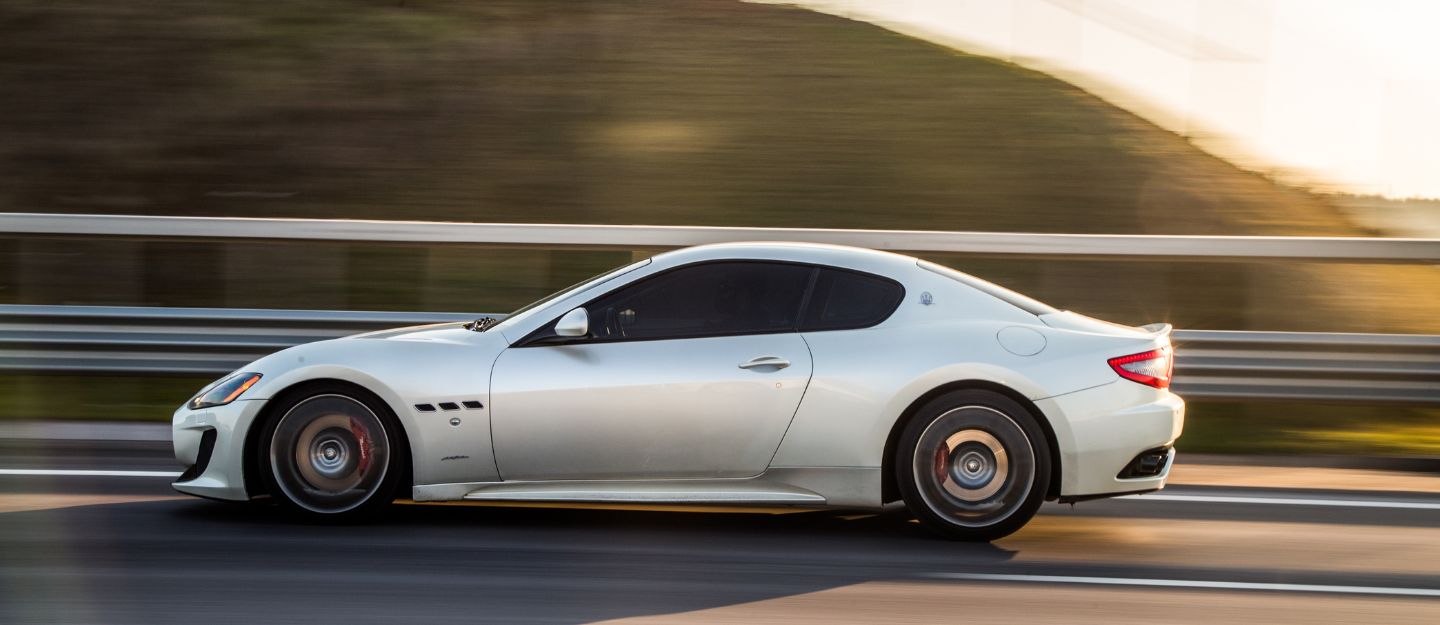
Built with a clear focus on performance and agility, a sports car distinguishes itself from other body types through its dynamic capabilities. It delivers swift acceleration, precise handling and a level of responsiveness that sets it apart, even when the boundary between categories appears subtle. Despite these overlaps, certain characteristics of a sports car continue to mark a distinct position of these vehicles in the automotive landscape.
Sports Car Characteristics
A general sports car definition is low-slung, performance-focused vehicle built for quick acceleration, sharp handling and an engaging drive. Yet relying solely on these features can blur the distinction between car body types, as many modern vehicles now come with similar capabilities. What truly sets a sports car apart is a blend of characteristics that prioritise road performance.
Design and Aesthetics
Sports cars are characterised by aerodynamic designs crafted to minimise air resistance and enhance car downforce, allowing the vehicle to maintain stability even at higher speeds. Elements such as spoilers, adjustable wings and diffusers support this performance by improving airflow management.
Many manufacturers also incorporate lightweight materials, such as carbon fibre parts, to reinforce the structure and enhance aesthetics without compromising practicality.
Size and Weight
Sports cars feature compact proportions, often measuring around 4,200–4,800 mm in length, 1,800–2,030 mm in width and 1,100–1,300 mm in height. These compact car dimensions help lower the centre of gravity, which enhances stability and control at higher speeds.

The majority of sports cars weigh between 1,100 kg to 1,600 kg; for comparison, a sedan typically weighs around 1,300 to 2,000 kg. The lower weight contributes to sharper acceleration and more responsive braking compared with heavier vehicles.
Engine and Drivetrain
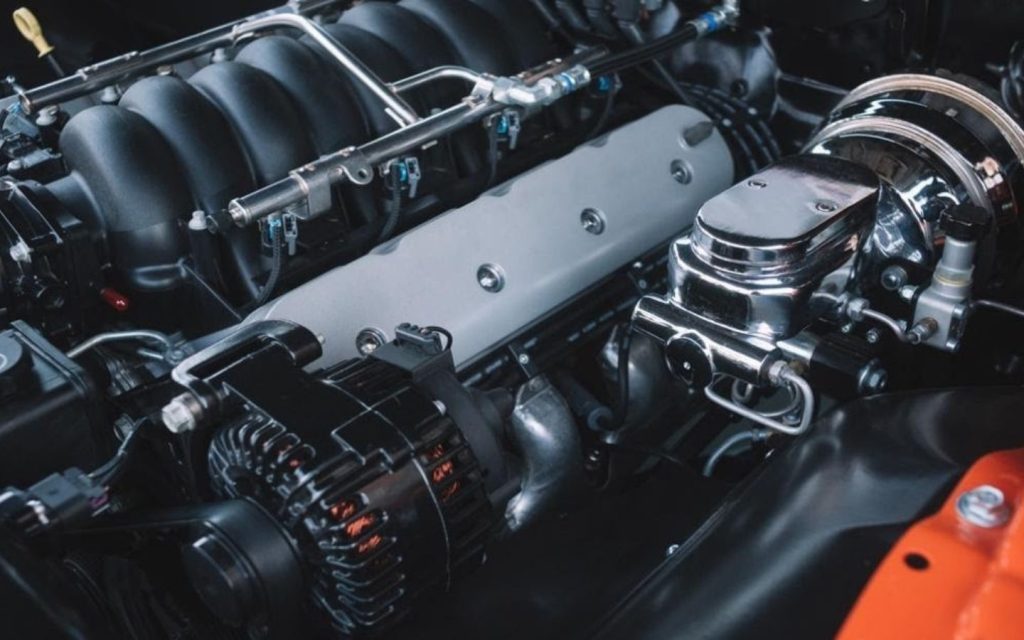
Another key characteristic of a sports car is a high-performance engine and drivetrain. Power outputs commonly range from 300 to 700 hp, with some specialised models reaching significantly higher figures. For instance, the Devel Sixteen comes with an 81 mm Quad Turbo 12.3-litre V16 engine that can generate up to 5007 hp. The engine configurations vary, though V-type engine layouts remain among the most widely used due to their balance of power and compact design.
In terms of drivetrains, manufacturers typically choose rear-wheel drive or all-wheel drive to optimise acceleration, handling and overall stability. These systems distribute power efficiently, supporting the dynamic performance expected from this category.
Stability and Handling
Stability and handling become the defining aspects of high-performance cars. In these cars, suspension design, weight distribution and electronic control systems work together to provide higher stability and better handling.
Many sports cars feature a mid-engine layout to achieve an ideal power-to-weight ratio. Positioning the engine centrally enhances stability and contributes to more predictable power delivery during dynamic driving.
Suspension systems are typically active or adaptive, tuned to be firmer for minimising body roll. Moreover, the continuous adjustments made by these systems help improve grip, allowing sharper turns and more confident manoeuvring at higher speeds.
Complementing the mechanical setup, modern sports cars rely on electronic systems such as traction control and stability management. These systems monitor wheel slip, yaw and acceleration, regulating power and braking inputs to maintain control without compromising performance.
Limited Storage and Space
Most sports cars prioritise performance, which naturally limits seating capacity and cargo space. Sports SUVs and grand tourers (GTs) fall outside this pattern, as they are a type of sports car designed with a stronger focus on comfort and practicality.
Traditional sports models, often coupes or roadsters, typically offer two seats, and when rear seats are included, legroom is minimal, usually around 29 to 33 inches. The compact chassis and, in many cases, mid-engine layouts also restrict boot space, which generally ranges between 170 litres to 340 litres. In comparison, the typical boot space of a sedan ranges from 450 to 550 litres. These limitations support an optimal weight-to-performance ratio, enhancing stability and handling by keeping overall mass lower than that of larger vehicles.
FAQs
What factors define a sports car?
A sports car is defined by its focus on performance, combining agile handling, responsive acceleration and balanced weight distribution. Aerodynamics, drivetrain layout and suspension tuning also play key roles in shaping its dynamic character.
How does the power-to-weight ratio influence a sports car?
A higher power-to-weight ratio allows a sports car to accelerate faster and respond more quickly to driver input. With less mass for the engine to move, performance improves without compromising handling or braking efficiency.
Is body style important in defining a sports car?
Body style contributes to the identity of a sports car but does not solely define it. Coupes and roadsters are common, yet the defining elements are performance-focused engineering, aerodynamics and driver engagement rather than shape alone.
What is the difference between a sports car and a supercar?
The difference between sports cars and supercars lies in power, performance and purpose. Sports cars offer strong performance suitable for everyday use, while supercars deliver far greater power, advanced engineering and higher levels of speed and exclusivity.
Where can I spot a sports car in Dubai?
There are multiple places to spot a sports car in Dubai, including JBR, Downtown Dubai and Dubai Airport.
These are some characteristics of a sports car that distinguish it from other body types and shape its reputation for performance-focused engineering. From Maserati and McLaren to Lamborghini, a wide range of new and used sports cars in the UAE are available, giving buyers ample choice to find a model that suits their preferences.
Stay tuned to dubizzle’s auto blog to learn about the UAE’s popular sports cars.
Related Posts