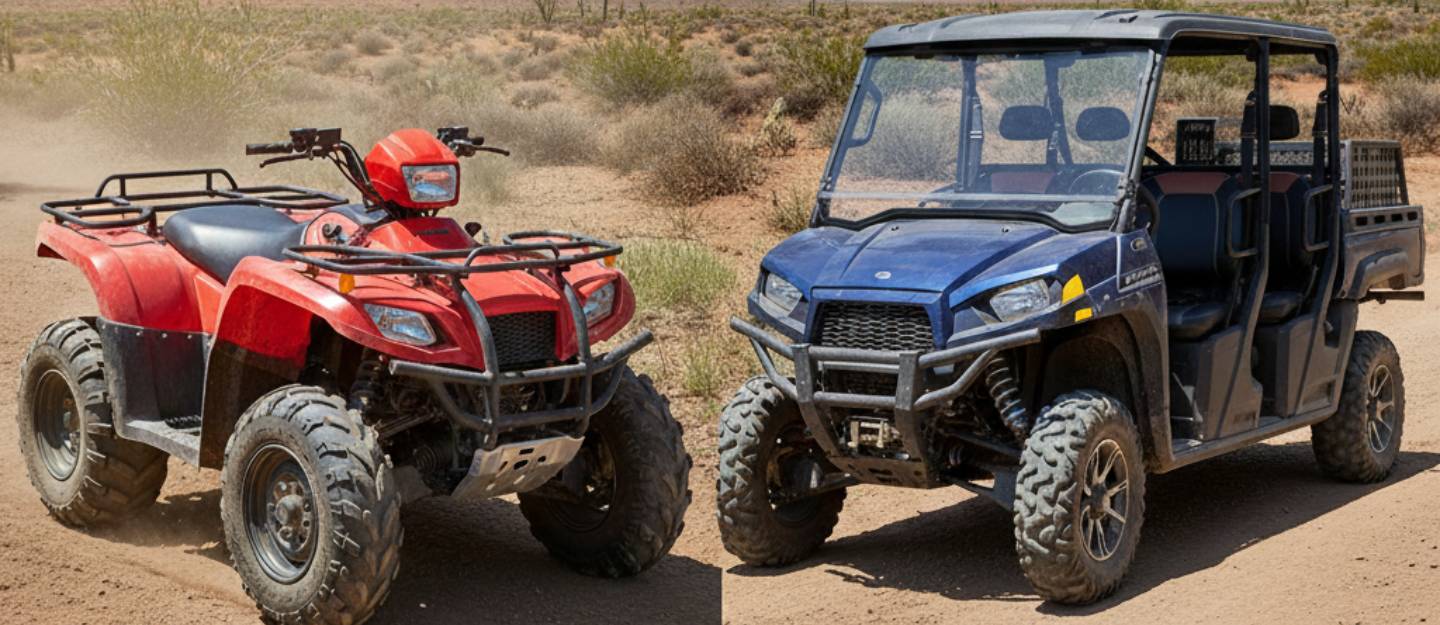
All-Terrain Vehicle (ATV) and Utility Terrain Vehicle (UTV) are commonly used vehicles for off-roading. Designed to withstand the challenges offered by different terrains, both vehicles are sound choices for off-road adventures. But which vehicle has the upper hand when it comes to off-roading? The detailed ATVs vs UTVs comparison gives a comprehensive analysis of the pros and cons of both these vehicle types.
ATVs vs UTVs
Common off-roading vehicle types, ATVs and UTVs, have evolved significantly over the years. From engine to design, both vehicle types have undergone notable changes and are the favoured choice for off-roading.
However, both vehicle types differ in terms of design and performance. The all-terrain vs utility task vehicles comparison will help people decide which vehicle reigns supreme.
Handling and Manoeuvrability
ATVs are generally smaller, lighter and more agile than UTVs. They have handlebars for steering and require the rider to shift their body weight when turning or tackling rough terrain. This makes them more physically demanding but also highly manoeuvrable in different off-roading terrains like tight trails or forest paths.
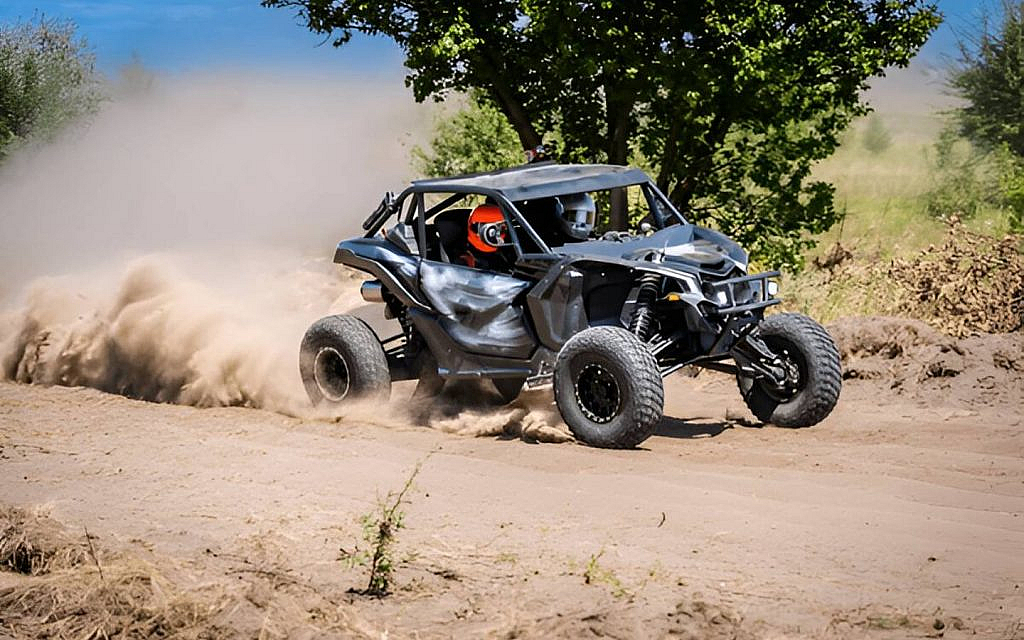
On the other hand, UTVs handle more like a car with a steering wheel and foot pedals. They’re larger and heavier, which makes them slightly less nimble yet more stable at higher speeds or over uneven ground. Their design prioritises comfort and control, especially in rocky or hilly terrain.
Seating Capacity
Typically designed for a single rider, some ATVs offer a rear seat for a passenger. However, riding two-up can be less comfortable and harder to manage, especially on difficult off-roading trails.

In contrast, UTVs come in 2, 4 and even 6-seat configurations, making them ideal for groups or families. Everyone has their own seatbelt and some models include side doors, roofs and roll cages for added safety and comfort.
Storage and Cargo Capacity
Cargo and storage capacity are another key difference between ATV and UTV. ATVs have limited cargo space, usually just a small rack on the front or back. They’re suitable for carrying light gear or a small tool kit, but not ideal for heavy-duty hauling.
With large rear cargo beds, UTVs are built to carry tools, hunting gear, camping supplies or even firewood. Many models can be fitted with roof racks, dump beds and towing attachments, making them perfect for work tasks as well as play.
Terrain Capability
Owing to their narrow build and low weight, ATVs can access narrow trails and navigate tighter paths that UTVs can’t. They’re great for steep climbs, quick turns and narrow woodland trails.
UTVs can handle rough terrain extremely well but require wider paths due to their larger size. Their 4WD systems and suspension allow them to handle mud, rocks and hills with ease, especially when carrying extra gear or passengers.
Safety Features
ATVs require the rider to wear more protective gear such as helmets, gloves and armoured clothing. With no seat belts or roll cages, the risk of injury can be higher in the event of a rollover.
UTVs come equipped with built-in safety features like seat belts, roll cages, windshields and sometimes even side doors. These make them a safer option for less experienced drivers or those travelling with children.
Comfort and Ride Experience
The ride on an ATV is raw and engaging. Drivers feel every bump and dip in the trail. It can be thrilling but also tiring over longer rides. There’s minimal protection and occupants are also exposed to weather conditions. This makes off-roading in harsh weather more challenging.
UTVs offer a much more comfortable ride with cushioned seats, cup holders, roof covers and optional heating/AC units in some models. Ideal for longer excursions, hunting trips or utility work that requires extended time in the vehicle.
Purpose and Use Case
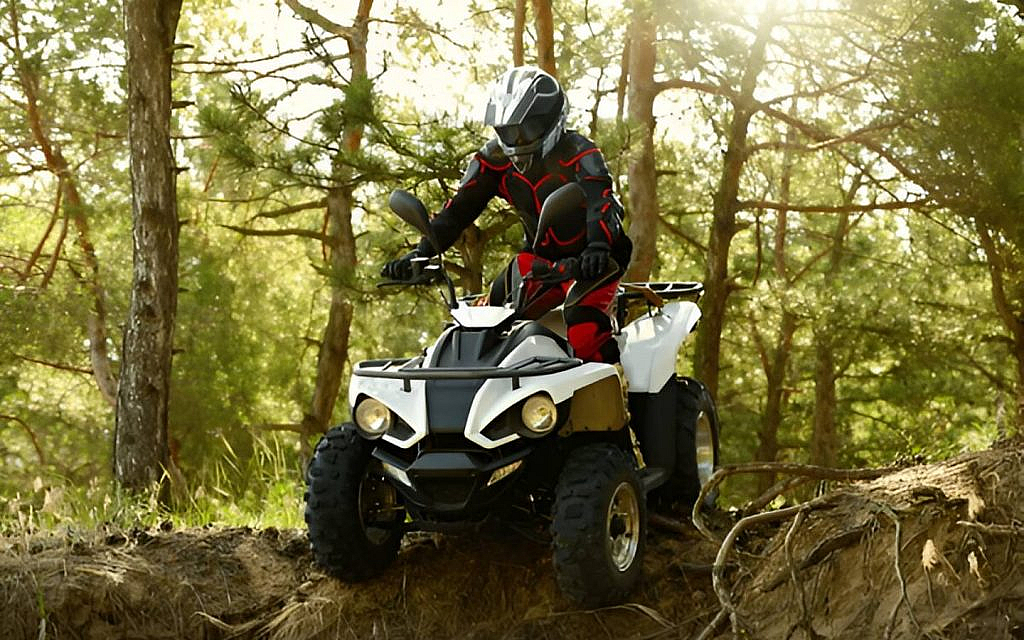
ATVs are the right choice for solo riders looking for sport and thrill. Moreover, they are ideal for trail riding, racing or accessing tight spots in the wilderness. These are great for those who enjoy an active riding style and don’t mind a little mud.
Whereas UTVs are perfect for those who want to combine fun with function. Great for families, hunting parties or property owners needing a capable utility vehicle. They excel in both recreational and work environments.
FAQs
Which is better for solo off-road adventures, an ATV or a UTV?
For solo off-road adventures, an ATV is better due to its agility, affordability and ease of manoeuvring on narrow trails. Be sure to wear the ATV safety gear before setting off for the journey.
What are the typical uses of ATVs vs UTVs?
ATVs are typically used for solo trail riding, racing and light utility work. On the other hand, UTVs are used for hauling cargo, carrying passengers, farming and recreational group adventures.
Which vehicle offers better cargo and towing capacity, ATV or UTV?
UTVs offer better cargo and towing capacity due to their larger frames, cargo beds and powerful engines.
There you have it, a comprehensive ATV vs UTV performance, design and capability comparison. Both vehicle types come with specific sets of advantages and disadvantages. For solo trail exploration or racing, ATVs are the sound choice. However, UTVs can be a better option for off-roading with a group. The decision comes down to individual preferences.
There are many off-roading places in the UAE where residents and tourists can take their vehicles out for a spin. Browse through these for-sale off-road vehicles in the UAE to purchase ATVs, UTVs and other compatible rides.
Consider the UTV and ATV buying factors before finalising the purchase to get the best out of the experience.
Stay tuned to dubizzle’s auto blog for detailed comparisons on different vehicle types and more.
Related Posts