- The Beginning
- Shift Toward Elegance
- The Oil Era
- Late 20th Century
- The 21st Century
- Architectural Marvels
- FAQs
Dubai’s architectural journey is a fascinating chronicle of transformation, reflecting its rise from a modest fishing village to a global metropolis. Each chapter in its evolution tells a story of ambition, resourcefulness and a relentless pursuit of innovation. Today, Dubai’s skyline stands as a testament to its visionary spirit and its status as a cultural and economic hub. Let’s dive deeper into the history of Dubai’s modern architecture.
The Foundations of Survival: History of Dubai’s Modern Architecture
In its earliest days, Dubai’s architecture was born out of necessity. It was shaped by the harsh desert climate and limited resources. Homes were constructed using locally available materials: palm fronds for roofing, mud and coral stone for walls and gypsum for plastering. The hallmark of this period was the Barajeel or wind towers—ingenious structures that harnessed the desert winds to cool homes naturally.
Courtyards played a central role in early homes, providing communal spaces for families while improving ventilation. This architectural style, deeply influenced by Islamic and Arabian traditions, prioritised practicality and sustainability. Mosques, souks and forts were modest in scale yet rich in cultural significance. They embody simplicity and a strong sense of community.
Pearl Trade Prosperity: A Shift Toward Elegance
The flourishing pearl trade in the late 19th and early 20th centuries brought newfound wealth and global connections to Dubai. This economic boom introduced more durable and decorative architecture. Coral stone and wooden beams formed the structural basis of buildings, while intricate gypsum carvings adorned their facades.
Foreign influences began in Dubai’s architecture during this period, thanks to increased interactions with traders from India and Persia. The city’s growing prosperity was reflected in more elaborate buildings. This signalled a shift from purely functional designs to those showcasing sophistication and cultural exchange.
The Oil Era: Modernisation and Ambition
The discovery of oil in the 1960s was a turning point, propelling Dubai into an unprecedented phase of modernisation. With oil wealth came a surge in infrastructure development and architectural experimentation. Concrete, glass and steel became the materials of choice, enabling the construction of high-rise buildings that redefined the cityscape.

Key highlights of this period included the introduction of air conditioning, which revolutionised building design and the adoption of international architectural styles. This began to coexist with traditional Arabian elements. Roads, ports and bridges sprang up, laying the ancient foundations of modern architecture in Dubai. The skyline began to climb as the city embraced the possibilities of modern construction techniques.
The Late 20th Century: Iconic Landmarks and Luxury
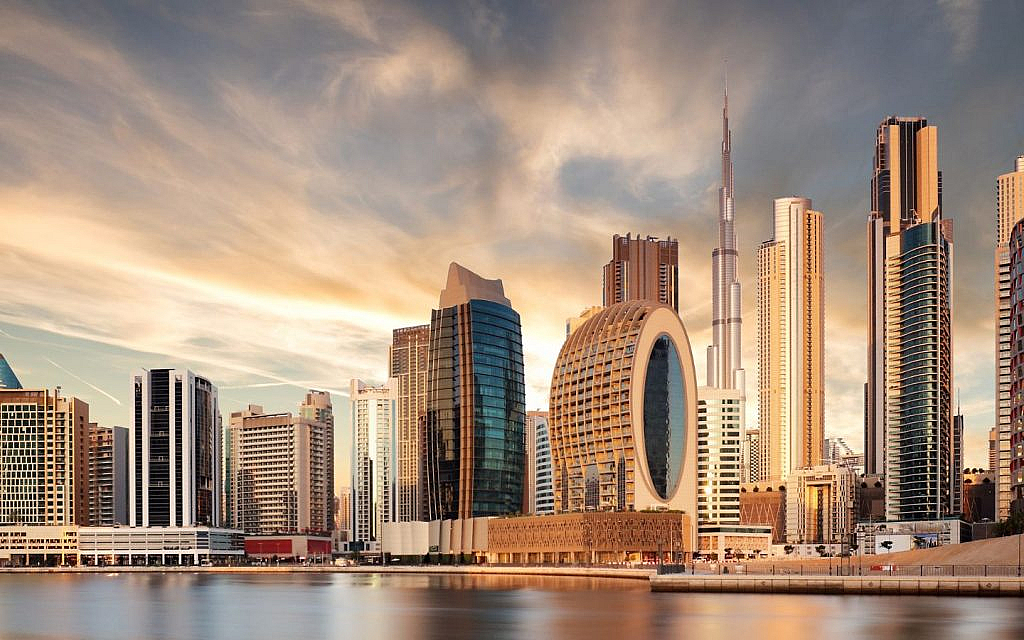
As Dubai entered the late 20th century, it began to cement its reputation as a city of architectural ambition and extravagance. The construction of Burj Al Arab, completed in 1999, marked a milestone in this era. Designed to resemble the sail of a traditional dhow, this luxury hotel became a global icon and a symbol of Dubai’s rising status as a luxury destination.
This period also saw the city attracting some of the world’s most renowned architects, further elevating its skyline. From luxury resorts to innovative skyscrapers, Dubai embraced boldness and creativity, setting the stage for its transition into the 21st century.
The 21st Century: Innovation and Sustainability
Dubai entered the new millennium with groundbreaking projects that captured the world’s imagination. The Burj Khalifa, completed in 2010, is the pinnacle of this era, standing at 828 metres as the tallest building in the world. Its design, inspired by Islamic geometric patterns, merges cultural heritage with cutting-edge engineering. You can also explore some of the tallest buildings in the UAE here.
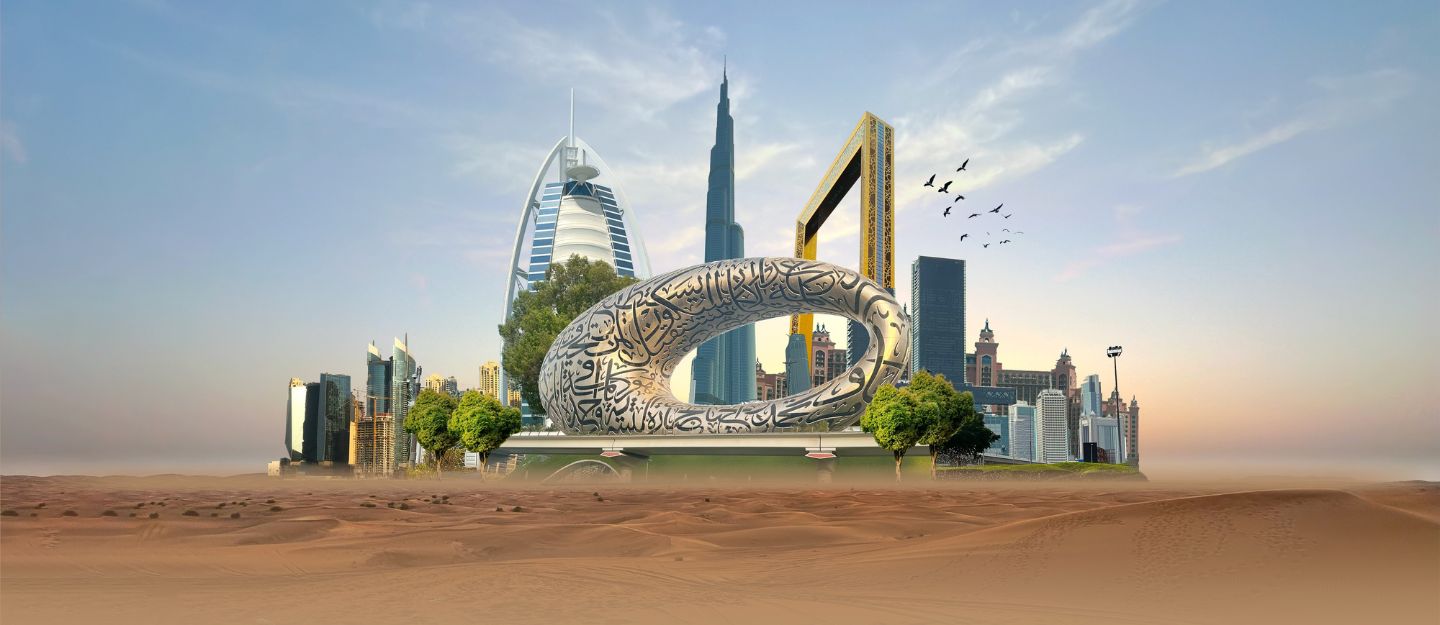
This era also introduced large-scale projects like the Palm Jumeirah, a man-made island that expanded Dubai’s coastline. Also, the Museum of the Future, a stainless-steel structure adorned with Arabic calligraphy, represents Dubai’s focus on technological advancement and sustainability.
Sustainability has emerged as a key focus in recent years. Developments like Madinat Jumeirah, which reflects traditional Arabian townscapes and futuristic eco-friendly projects such as The Loop, underscore Dubai’s commitment to blending heritage with modernity. Smart architecture and green initiatives are now integral to Dubai’s vision for the future.
Architectural Marvels That Shape Dubai’s Identity
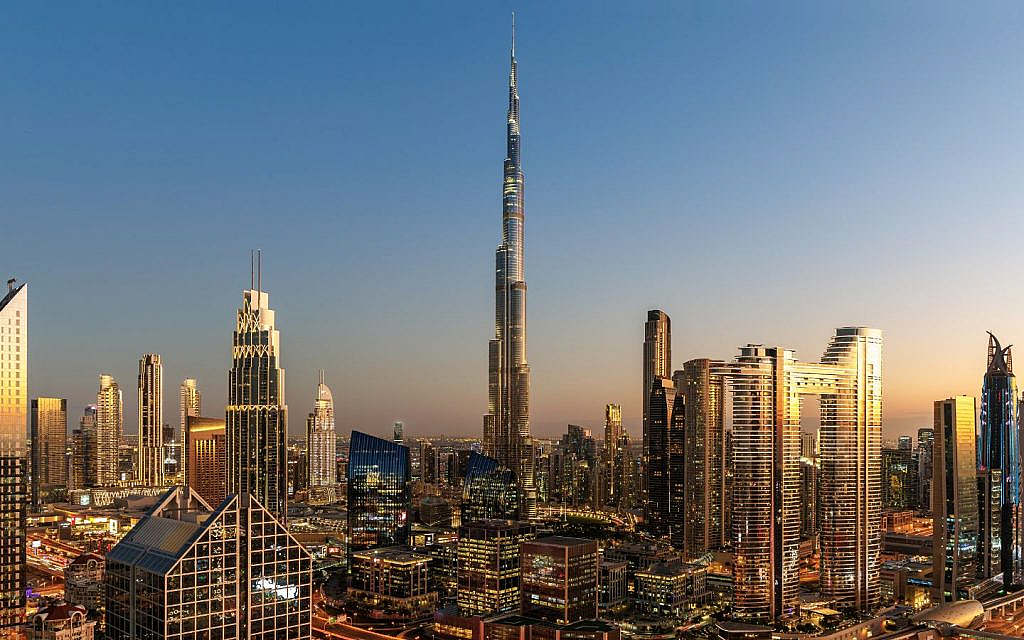
Dubai’s skyline is a dazzling showcase of architectural feats, each reflecting the city’s innovative spirit:
- Burj Khalifa: A global icon and engineering wonder, blending Islamic design with modernity. Designed by Adrian Smith of SOM (Skidmore, Owings & Merrill), the Burj Khalifa remains the tallest structure in the world at 828 metres. Its design, inspired by Islamic geometry, symbolises Dubai’s fusion of tradition and modernity.
- Burj Al Arab: Designed by architect Tom Wright, this sail-shaped luxury hotel redefined Dubai’s image. Built on an artificial island, it symbolised the city’s ambition to blend opulence with architectural ingenuity. It is the world’s most luxurious hotel, featuring 24-karat gold interiors and a helipad.
- Museum of the Future: A bold representation of humanity’s pursuit of knowledge, with an emphasis on artificial intelligence and sustainability.
- Cayan Tower: Cayan Tower is a twisting skyscraper that rotates 90 degrees from base to top, defying conventional design.
- Atlantis, The Royal: A modernist masterpiece on Palm Jumeirah, boasting interlocking towers and sky bridges.
- Expo 2020 Dubai Pavilions: Iconic structures like the UAE Pavilion (inspired by a falcon in flight) and the Sustainability Pavilion highlight the city’s focus on innovation and eco-consciousness.
Futuristic Concepts: Dubai’s Next Frontier
Dubai’s architectural vision knows no bounds. Here’s a glimpse into its ambitious projects:
- Moon Resort: The project was designed to replicate a lunar experience, complete with zero-gravity zones and astronaut-like suits.
- The Loop: A 93-kilometre climate-controlled corridor for pedestrians and cyclists, promoting sustainable urban transport.
- Symbiotic Towers: Eco-friendly skyscrapers that integrate Dubai’s natural landscape into their design.
- Sandstorm Absorbent Skyscrapers: Towers equipped with magnetism-based sandstorm absorption technology, showcasing Dubai’s commitment to environmental resilience.
All these developments also make the UAE one of the top countries for real estate investments in the world.
FAQs
What is the style of architecture in Dubai?
Dubai’s architecture blends traditional Arabian designs with modernist, futuristic and international styles. Key elements include Islamic geometric patterns, innovative skyscrapers and luxurious, bold structures.
What is the futuristic architecture in Dubai?
Dubai’s futuristic architecture includes projects like the Burj Khalifa, Museum of the Future and The Loop, which integrate cutting-edge technology, sustainability and futuristic design elements.
Why Does Dubai Look Futuristic?
Dubai looks futuristic due to its innovative use of advanced materials, high-tech construction and groundbreaking designs. Some of them include iconic skyscrapers, artificial islands and smart cities.
What is the most famous architecture in Dubai?
The Burj Khalifa is the most famous architectural landmark in Dubai, standing as the tallest building in the world.
The history of Dubai’s modern architecture is more than just a timeline of popular buildings in Dubai; it is a narrative of human ambition and ingenuity. From simple wind towers to futuristic eco-cities, every structure tells a story of adapting, innovating and striving for excellence.
The city’s skyline is a dynamic canvas, continually evolving to reflect its cultural diversity, economic prosperity and futuristic aspirations. Dubai isn’t just building for today; it’s creating a legacy that will inspire generations to come.
If you want to find a home in this futuristic city, browse through these properties for sale in Dubai. Besides, you can also rent a villa in Dubai and enjoy comfortable living.
For more investment options, check out these new residential projects in Dubai.
Stay tuned to dubizzle’s property blogs for more UAE’s ever-evolving real estate market and architectural wonders.
![It’s live!
TruEstimate™ Alerts are now on dubizzle.
Get monthly updates on your property’s estimated market value, straight to your inbox.
Stay informed. Stay ahead. Explore TruEstimate™ Alerts via the link in bio!
ابقَ على اطلاع بقيمة عقارك.
تنبيهات TruEstimate™ متاحة الآن على دوبيزل، لتصلك تحديثات شهرية حول القيمة التقديرية لعقارك مباشرةً إلى بريدك الإلكتروني.
ابقَ على اطلاع، واكتشف تنبيهات TruEstimate™ عبر الرابط في البايو!
[dubizzle UAE, dubizzle Dubai, Real estate, buy and sell UAE, Property]](https://www.dubizzle.com/blog/property/wp-content/plugins/instagram-feed/img/placeholder.png)