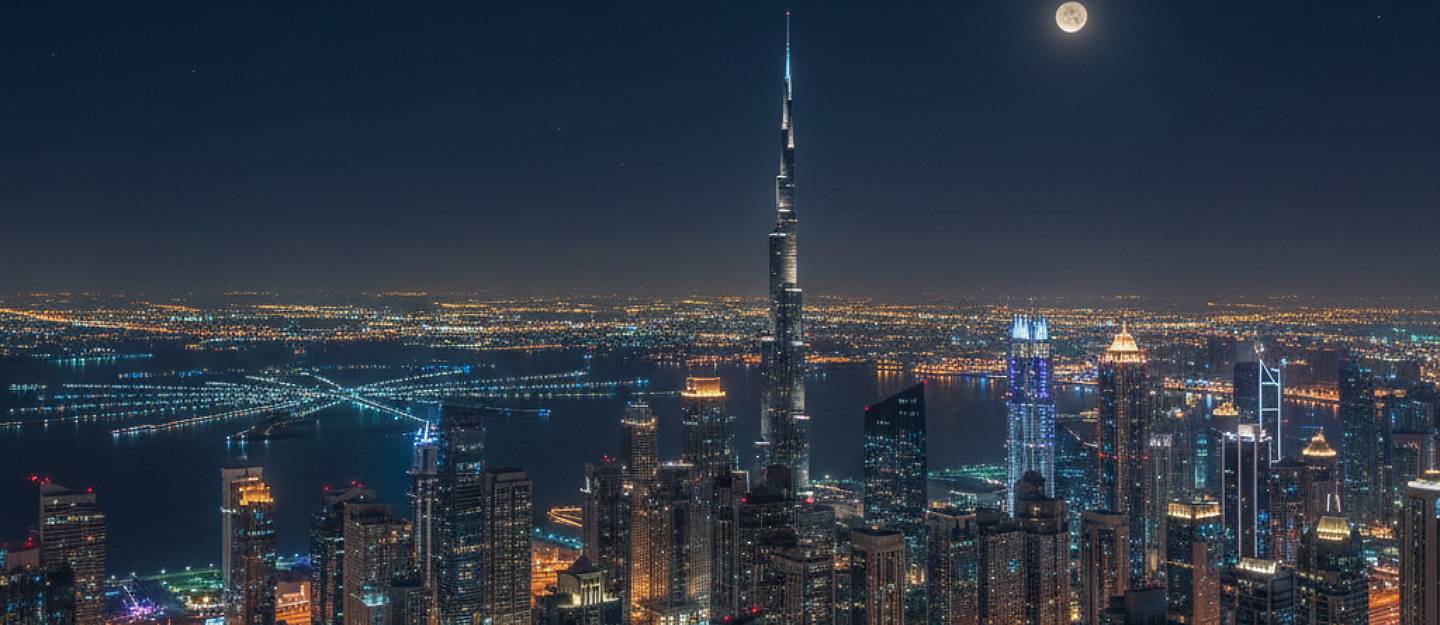
- From Port to Vertical City
- Inflow of Foreign Investments
- Emergence of Landmarks
- Supporting Infrastructure Upgrades
- Ongoing Development
- FAQs
Dubai’s transformation from a sparsely populated desert settlement into one of the world’s most vertical cities is the result of master planning, strategic location near the Persian Gulf, multi-billion dollar real estate and infrastructure developments. The emirate now boasts a glittering skyline, celebrated around the world. It hosts many of the defining landmarks of the region, including the iconic Burj Khalifa, the world’s tallest building. Dubai built a metropolis of skyscrapers over the years, resulting in an urban landscape that continues to expand both vertically and horizontally.
From Trading Port to Vertical City
Until the 1960s, Dubai’s built environment consisted mainly of low-rise coral stone houses and wind towers. The discovery of oil in 1966 provided initial capital. Later, the country prioritised diversification into trade, aviation, tourism and real estate. This strategic shift set the foundation for what would later become known as the Dubai skyline transformation from desert to a global urban centre.
By the late 1970s and 1980s, infrastructure investments such as Port Rashid, Jebel Ali Port and Dubai International Airport fueled the demand for commercial developments and tourism hotspots, triggering the early rise of tall buildings in Dubai.
Policies Favouring the Inflow of Foreign Investment
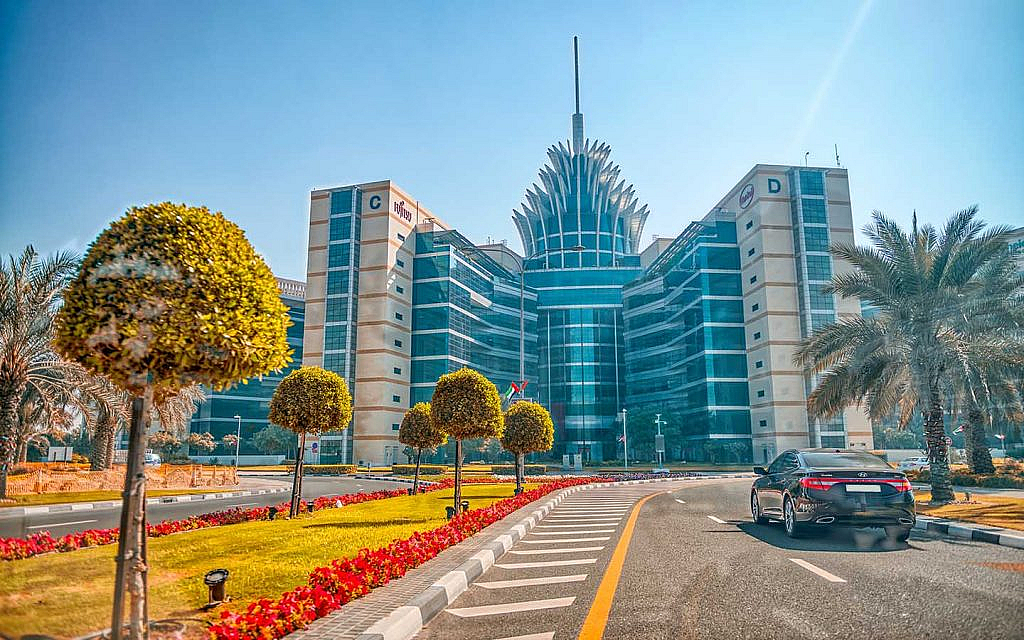
A game-changing factor in the Dubai skyscraper development history was regulatory reform. The introduction of freehold property ownership for foreigners in designated areas in 2002 marked a turning point. This policy unlocked international capital and accelerated private-sector-led construction.
Master-planned districts and urban developments such as Dubai Marina, Downtown Dubai and Business Bay were zoned specifically for Dubai urbanisation high-rise buildings, allowing increased floor-area ratios and mixed-use developments.

This phase is often cited when analysts discuss the Dubai skyscraper boom, as it combined liberal property laws, tax-free incentives, and fast-track approvals.
Building Skyscrapers on Desert Terrain
The construction of skyscrapers in the Dubai desert required specialised engineering solutions. Sandy soil conditions led developers to rely on deep pile foundations, sometimes extending more than 50 metres, anchored into stable rock layers. Advanced concrete mixes were developed to withstand extreme heat, salinity, and wind loads.
Climatic challenges also influenced building design. High-performance façades, reflective glass, and mechanical cooling systems were integrated to ensure energy efficiency in extreme temperatures. These technical adaptations were central to how Dubai built a metropolis of skyscrapers despite environmental constraints.
Iconic Towers and Vertical Competition
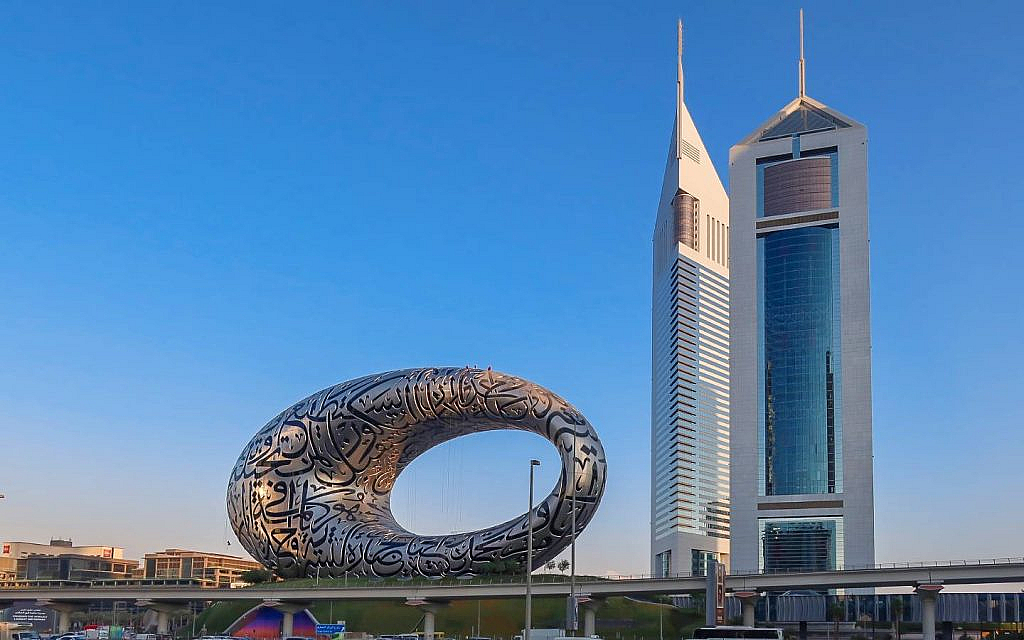
Dubai is home to some of the tallest buildings in the UAE. The scope of its ambitious skyline was reinforced through landmark projects that redefined global benchmarks. The Dubai tallest buildings timeline reflects this vertical competition and the feats they have resulted in:
- World Trade Centre (Built in 1979): At 149 metres, this remained the UAE’s tallest for nearly two decades
- Emirates Towers (Built in 2000): Established Sheikh Zayed Road as a high-rise corridor
- Burj Al Arab (Built in 1999): Combined structural innovation with symbolic architecture, stretching the emirate’s coastline
- Burj Khalifa (Built in 2010): At 828 metres, it pushed the limits of supertall construction, becoming the tallest building in the world.
These projects accelerated the Dubai skyline evolution from sands to towers, positioning the city as a hub for architectural experimentation. Headturning landmarks like the Dubai Frame and Museum of the Future also serve as a testament to the emirate’s progressive design and engineering practices.
Balancing Skyward Urbanisation With Infrastructure Development
High-rise growth was matched with large-scale infrastructure. The Dubai Metro, multi-lane highways, district cooling systems and integrated utilities enabled dense vertical development without compromising mobility or services. This coordinated approach explains how Dubai built its skyscraper metropolis rather than allowing unplanned vertical sprawl. Urban planners aligned Dubai public transport corridors with tower clusters for seamless connectivity throughout the metropolis.
Present-Day Skyline and Ongoing Development
Dubai now has one of the highest concentrations of skyscrapers globally, with more than 200 buildings exceeding 150 metres. The city continues to refine zoning laws, sustainability standards and construction technologies as part of its long-term urban strategy. Dubai Building Code (DBC) is a holistic framework for regulations related to the design and construction of buildings.
FAQs
What key projects marked the beginning of Dubai’s skyscraper era?
Emirates Towers, Burj Al Arab and early high-rises along Sheikh Zayed Road signalled Dubai’s shift toward vertical, landmark-driven development.
What construction and engineering challenges did Dubai face in building towers in the desert?
The construction of skyscrapers in the Dubai desert was a big challenge. Engineers had to deal with weak sandy soil, high salinity, extreme heat and strong winds. Techniques such as deep pile foundations, specialised concrete mixes and advanced façade systems helped to keep the projects on track.
What role did government policy and infrastructure play in Dubai’s high-rise boom?
Emergence of freehold property areas in Dubai, tax incentives, master-planned zones and major infrastructure developments contributed to the emirate’s skyscraper boom.
Dubai built a metropolis of skyscrapers as a result of a long-tailed evolution. It is the outcome of policy-driven urbanisation, engineering innovation and sustainable development practices that were incorporated along the way. The construction of Dubai’s artificial islands is no less than an engineering marvel. Modern design and construction techniques were put to the test to expand Dubai’s urban landscape into the sea in a highly strategic and appealing way.
The city’s real estate market capitalises on its continuous expansion. Rental units and properties for sale in Dubai come in a wide variety, catering to almost all lifestyle needs and preferences. The off-plan landscape of the emirate is also rapidly growing. Internationally acclaimed developers and celebrities have introduced many new projects in Dubai recently, catalyising its overall real estate growth.
For more information on Dubai urban planning and skyscraper growth, stay connected with the UAE’s leading real estate blog.