- Rallying Rules
- Crew and Navigation
- Car Types and Modifications
- Types of Rally Motorsports
- Rally Events in the UAE
- FAQs
Rally racing, also known as rallying or rally motorsport, is a point-to-point form of competition where teams race against the clock on closed sections of public or private roads. Unlike circuit racing, the focus is on completing timed routes in the lowest total time, often across unpredictable and mixed terrain.
Rally Racing Origin and History
Rallying traces its roots back to 1911, with the Monte Carlo Rally being the first event to use the term ‘Rally,’ which emphasised reliability and endurance. The concept of timed speed tests on closed roads emerged in Scandinavia during the 1950s.
The sport took a major step forward in 1973 with the official inauguration of the World Rally Championship (WRC) by the FIA. From 1987 onwards, WRC shifted to safer production-based car models. Among drivers, Sébastien Loeb of France stands out. He won nine consecutive WRC titles from 2004 to 2012.
Rally Racing Rules and Format
The main competitive elements of rallying are the special stages: closed-road routes driven at maximum speed that determine overall timing. There are also transport stages that involve passing through public road links between dedicated tracks. It is where teams must follow traffic laws and adhere to a set schedule.
Some events also include optional super special stages designed for spectators, often featuring two tracks side-by-side. Rally racing spans across different surfaces, including asphalt and off-roading terrains, such as gravel, dirt, snow and ice. These factors make it one of the most technically challenging types of car racing.

Ultimately, the objective is straightforward: the crew with the lowest total time across all special stages wins the rally. These are the rules set by the Fédération Internationale de l’Automobile (FIA).
Rally Crew and Navigation
In rallying, each car is operated by a two-person team: a driver and a co-driver or navigator, who is responsible for navigation and delivering stage instructions. During the pre-event reconnaissance run, known as Recce, a co-driver prepares detailed pace notes. These notes are then read aloud during the race and describe upcoming features such as corners (including their severity), crests, potential hazards and any changes in the road surface.
Rally success relies heavily on the trust and coordination between the two crew members. Moreover, there is a dedicated service crew that provides essential repairs and maintenance at designated service parks under strict time limits.
Rally Racing Cars and Modifications
Rally cars are production-based, street-legal models that are then extensively modified for challenging conditions. Key modifications include essential safety equipment such as a roll cage, multi-point harnesses, race seats and fire suppression systems.
There are also performance upgrades, including enhanced engine power, suspension and handling and braking, as well as a heavy-duty suspension to withstand rough terrain. Under FIA regulations, rally cars are classified as Rally1, Rally2 and Rally3, based on their technical specifications. The differences between the different types of rally racing cars are:
Rally1
- Top-tier category used in the FIA World Rally Championship (WRC).
- The most advanced and powerful rally cars.
- Built on a spaceframe chassis (not based on full production shells).
- Hybrid cars that combine a turbocharged engine with an electric motor.
- All-Wheel Drive (AWD) with highly sophisticated suspension and aero.
- Highest cost, complexity and performance.
Rally2
- Second-highest category, used widely in WRC2 and national championships.
- Production-based chassis with extensive modifications.
- Turbocharged engines, but no hybrid systems.
- All-Wheel Drive (AWD) like Rally1, but with simpler technology.
- More affordable than Rally1 and the most common category for professional private teams.
Rally3
- Entry-level AWD category designed for cost-controlled competition.
- Production-based cars with lighter modifications compared to Rally2.
- Less powerful engines and simpler suspension setups.
- Acts as a stepping stone for drivers progressing into higher rally classes.
- Ideal for developing skills before moving into Rally2 or Rally1.
Types of Rally Racing
The different types of rally racing include:
Stage Rallying
The most recognised format is based on completing special stages in the fastest cumulative time. It is a format commonly used in WRC.
Road Rallying/Time-Speed-Distance (TSD)
Focuses on precise navigation and maintaining exact average speeds rather than outright pace.
Rally-Raid
Long-distance endurance rallying over expansive, harsh terrains. Emphasis is on navigation across deserts and extreme environments, as seen in the Dakar Rally.
Rallycross
Short, intense and multi-car racing on a closed circuit combining tarmac and gravel.
Rally Racing in the UAE
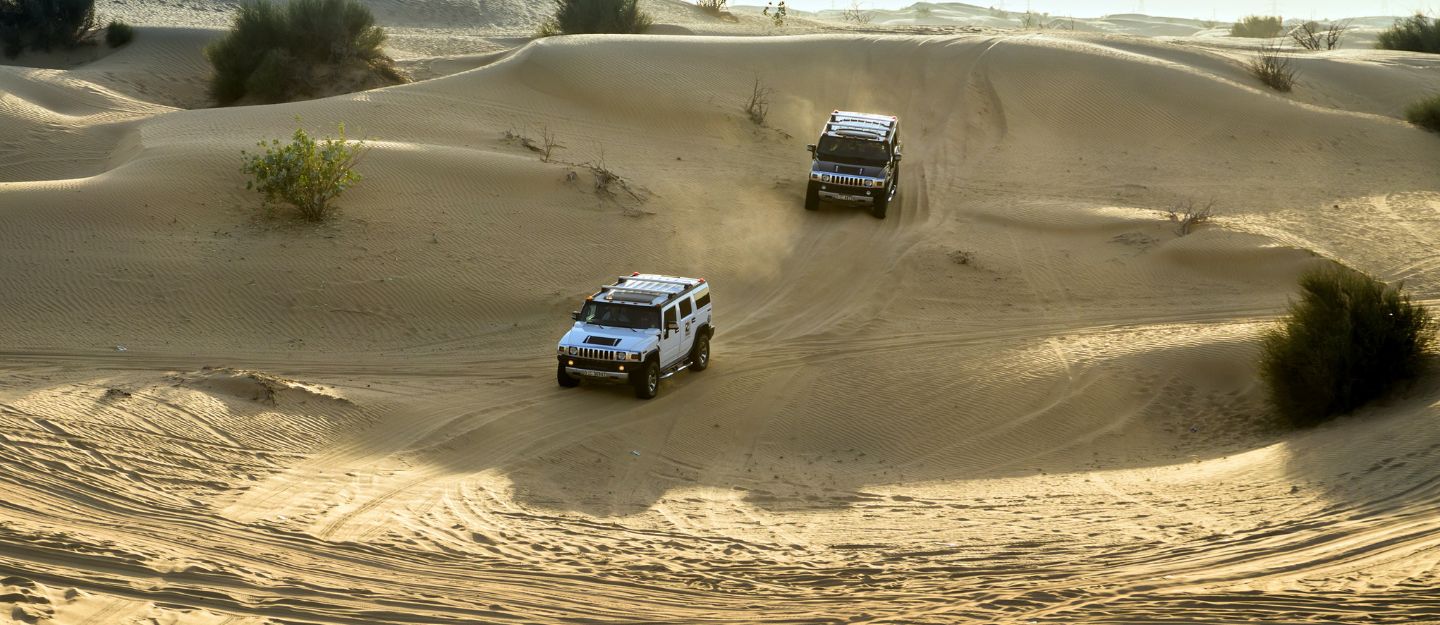
The UAE hosts several rally motorsport events, with terrain ideal for gravel and desert-based competitions. One of the most prominent off-road rally races in the UAE is the Abu Dhabi Desert Challenge (ADDC). It is an annual rally-raid known for its demanding dunes and long-distance navigation requirements.
Organised by the Emirates Motorsports Organisation (EMSO), the ADDC event first started in 1991. Now, its next edition of the event is set to take place from 22–27 November 2026. Rally enthusiasts can check out the ADDC website for more details on the upcoming event.
FAQs
How can someone become a rally driver in the UAE?
To become a race car driver in the UAE, one starts with driver training courses at certified motorsport academies. Once certified, the driver can obtain a motorsport licence.
What safety gear is required for rally drivers?
Rally drivers are required to wear safety gear, including a fire-resistant racing suit, helmet, gloves, racing shoes, Head and Neck Support (HANS) device and a multi-point harness.
Are there used cars available with AWD?
Yes, there is a wide selection of used cars with AWD for sale in the UAE. However, the suitability for rally-style modifications may vary from model to model.
This is everything to know about rally motorsports. From adrenaline rush to safety measures, the rallying experience has been enhanced through the years. However, before becoming a part of any motorsport, the driver must obtain the necessary certification and training for legal compliance and safety. Similarly, spectators of any kind of racing or challenging event must also follow the safety guidelines to prevent hazards and risks.
For more information from the world of motorsports, the UAE’s leading auto blog is your go-to source.
Related Posts