Hyundai started its journey in the automotive industry with the launch of Cortina in 1968. Since then, Hyundai continues to roll off performance-oriented models that are well-received by customers. The prime example of this is the Hyundai Elantra model series released in 1990. The core reason for its popularity is its durability, fuel efficiency and equilibrium of price and features.
Let’s unfold the evolution of the Hyundai Elantra over the years, and elaborate on different models of the series unveiled to date.
Hyundai Elantra Generations
Hyundai first launched the Elantra series under the nameplate of Avante. The nameplate was used for ten years (two generations) from 1990 to 2000. Since the new millennium, Hyundai has made the Elantra and Avante two different model series. Regardless of the nameplate, the series continued to capture the market and increase its fan following. It’s an interesting fact about Hyundai Elantra that it’s the longest-running nameplate by the brand.
Here we have mentioned complete details regarding all the Hyundai Elantra models.
Hyundai Elantra (Avante) First Generation (1990 to 1994)
The first generation of Elantra (Avante) was a compact sedan. The sedan featured narrow headlights and a radiator grille at the front and rectangular brake lights at the rear end. Both the brake lights were connected by a narrow strip with the company’s name written on it.
The cabin was decorated with fabric upholstery. The stereo system, AC and other essential controls were present at the centre console. Two analogue dials were present behind the steering wheel.
The car was powered by a 1.6-litre straight four engine that was engineered by Mitsubishi.

Hyundai Elantra (Avante) Second Generation (1995 to 2000)
The second generation of Avante was released in two different car body types: sedan and hatchback. The front fascia was redesigned, old headlights were replaced with narrow oval headlights and the radiator grille was removed. However, in later models of this generation, a split radiator grille was introduced.

For the interior, no major changes were observed. However, under the hood, the older engine was replaced with an Alpha II G4FK DOHC engine.
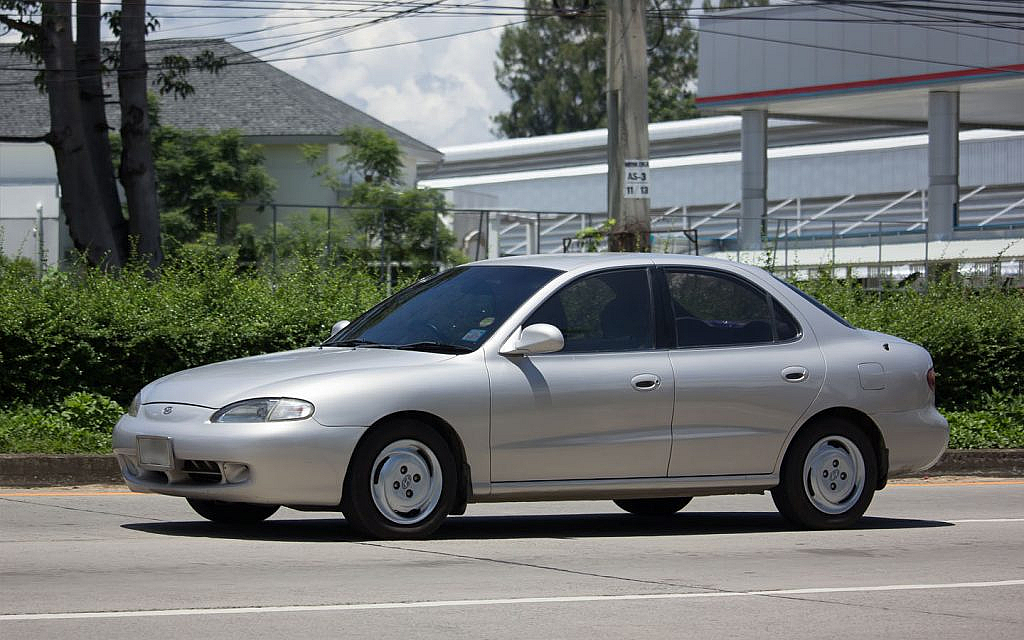
Hyundai Elantra Third Generation (2000 to 2003)
From this generation, Hyundai used Elantra as the official name of the model series. The exterior of this generation was completely redesigned and does not resemble old Elantra models. Sharp contours on the hood made the front fascia more aerodynamic. The V-Shaped radiator grille was sandwiched between angular headlights.
The cabin features a minimalistic dashboard with a rounded centre console. To ensure comfort, vertical-axis adjustable front seats were installed.
A 2.0-litre petrol engine was offered in the third generation of Elantra. The engine was paired with a 2WD drivetrain system and a 5-speed manual transmission system.
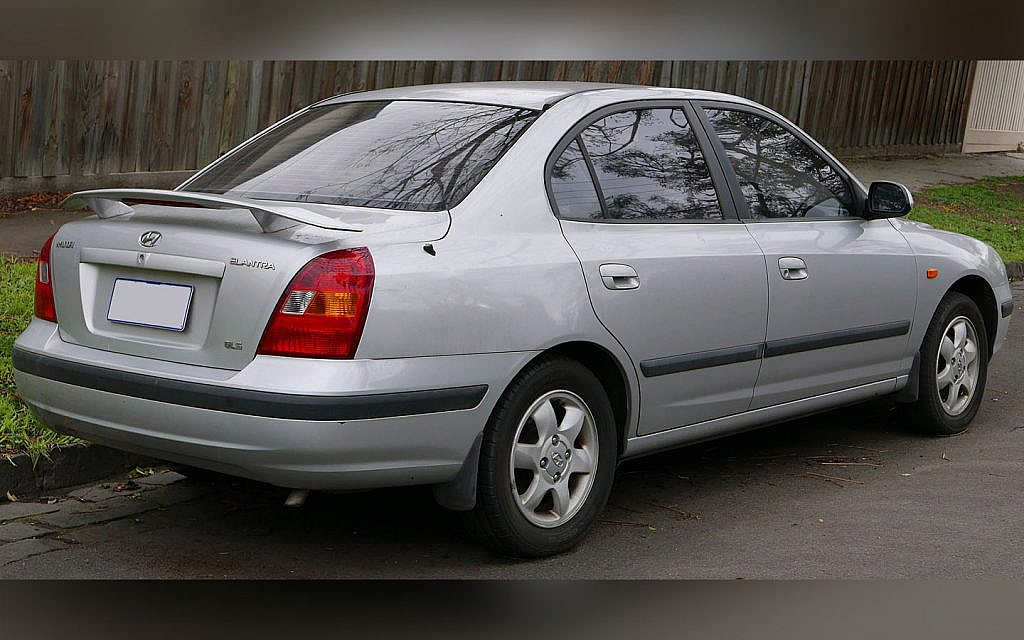
Hyundai Elantra Third Generation Facelift (2003 to 2006)
The third generation received a facelift only after three years of its launch. The front fascia was completely redesigned in the facelifted version. A wider V-Shaped radiator girl was installed along with large rectangular headlights. Sharp contours running from the front end to the rear end were also present.
The cabin was uplifted in this version with a redesigned instrument cluster and easy-to-read dials. The centre console was equipped with an HVAC control and a sound system.
A wide range of engines including petrol and diesel engines were available. The engine was paired with a 5-speed manual or 4-speed automatic transmission system.

Hyundai Elantra Fourth Generation (2006 to 2010)
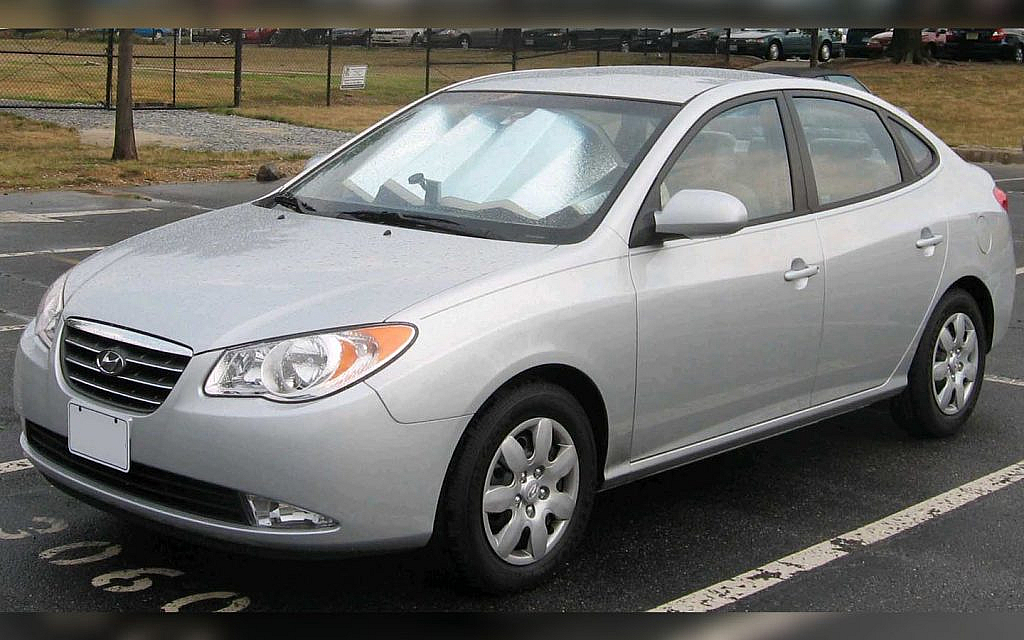
Hyundai unveils the fourth generation of Elantra at the New York Auto show. In this generation, swept-back headlights and a rectangular radiator grille were introduced. Body contours on the hood and side were more pronounced. Along with this, trunk lines were also present to complete the look.
In the fourth generation, Hyundai introduces a more sophisticated cabin with automatic AC and side airbags. For maximum comfort, split-folding rear seats were installed.
The engine range includes 1.6 and 2.0-litre petrol or turbo-diesel engines. The engine was accompanied by a 4-speed automatic transmission system.
Hyundai Elantra Fifth Generation (2010 to 2014)
Hyundai uses a unique design strategy for the fifth generation of Elantra. Fluidic Sculpture is a design principle in which rigid surfaces and wind are used to create a depiction of continuous motion. Therefore, the car features muscular wheel arches, a sleek roof, flowing lines on the side and side glass for more natural light.
The design evolution was also visible inside the cabin. The dashboard was uplifted from the sides with the centre console sandwiched in between. The console was equipped with an infotainment system and a digital instrument cluster.
The fifth generation was powered by a 1.6-litre petrol engine with a top speed of 195 km/h. For the transmission, a 6-speed automatic transmission system was offered.

Hyundai Elantra Fifth Generation Facelift (2014 to 2016)
The facelifted version of the fifth generation was launched in the market in 2014. The front fascia was completely redesigned in this version. The swept-back headlights were moved towards the pronounced fenders. A narrow radiator grille and large air intakes were present at the front end. Whereas, at the rear end, new accents of brake lights were introduced.
The technological advancements used in this generation were also visible inside the cabin. The interior features an infotainment system, reverse camera, USB ports, pandora radio and navigation system.
In the fifth generation facelift, Hyundai offers a 1.8 and 2.0-litre engine paired with a 6-speed manual or automatic transmission system.

Hyundai Elantra Sixth Generation (2016 to 2018)
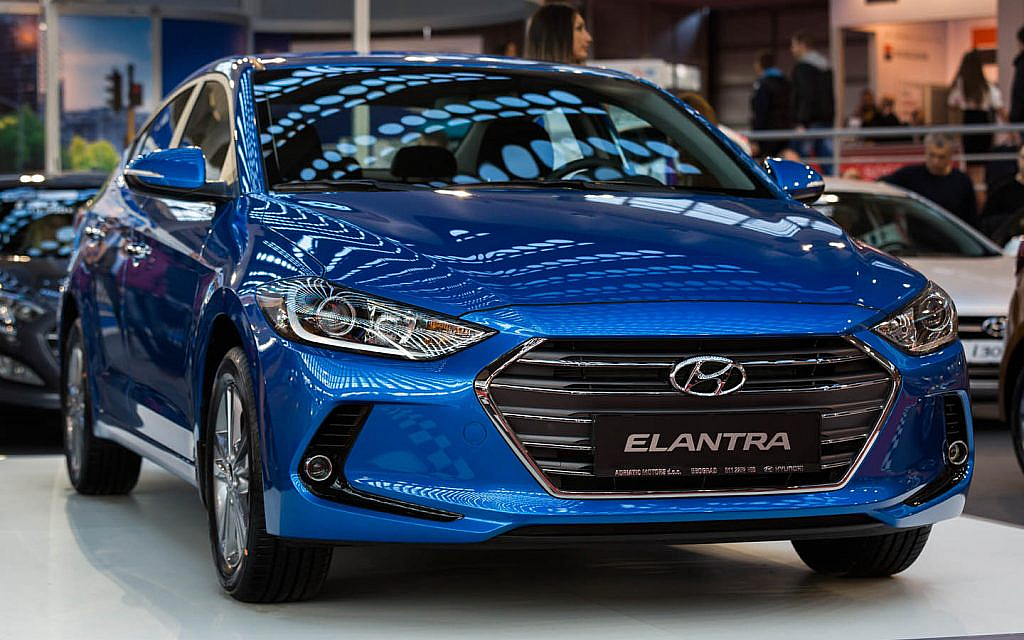
The sixth generation Elantra was released with a bold and aerodynamic design. For the first time in the Hyundai Elantra’s history, the signature hexagonal radiator grille and LED daytime running headlights were present. Whereas, at the back, narrow brake lights were present.
In this generation, a noise-insulated cabin was offered to provide a comfortable ride. The insulated cabin was equipped with an advanced infotainment system and redesigned centre console and instrument cluster.
To power the car, 1.6 and 2.0-litre petrol engines were offered paired with a 6-speed automatic transmission system.
Current Generation of Hyundai Elantra (2020 to Present)
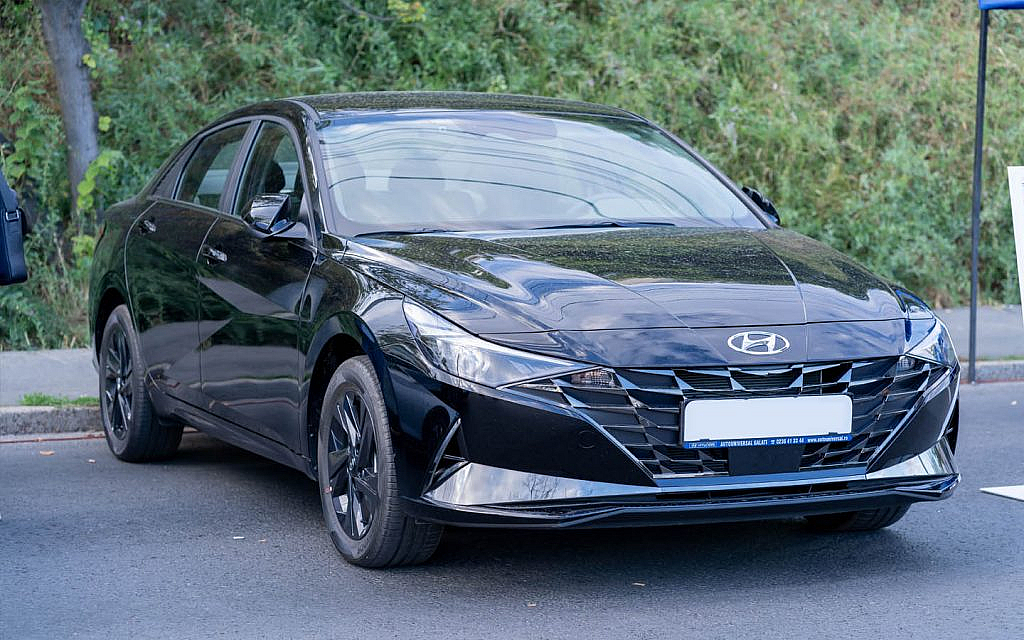
The current generation is designed to cater to the modernization and shifting demands of the industry. At the front, a hexagonal radiator grille featuring smaller segments is present. Whereas, at the rear end, A-shaped brake lights are present.
The cabin is equipped with a minimalistic dashboard featuring a digital instrument cluster and infotainment screen. Monotone colours and ambience lightning are used to decorate the cabin.
A Smartstream G2.0 petrol engine or 1.6 hybrid engine is offered in the current generation. The engine is supported by a 6-speed automatic transmission system.
Here we conclude Hyundai Elantra’s history. Elantra is one of the most popular model series of Hyundai. The core reasons for this are durability and price value. If you are also interested in availing of all the above-mentioned features, browse through these used Hyundai Elantra models for sale in the UAE and drive your own Elanra.
Stay tuned to UAE’s leading auto blog for more information on Hyundai Elantra models.
Related Posts