A dent on an otherwise spotless car is nothing short of an eyesore. In many cases, the cause is not immediately apparent, as dents can result from a variety of factors in a vehicle’s surroundings. However, not all dents are the same; there are several types of car dents, each differing in size, depth and severity depending on the cause. Some can be repaired with minor touch-ups, while others might require the attention of a professional. Identifying the type of car dent you are dealing with is the first step toward selecting the most effective method of repair.
Types of Dents in Cars
Car dents come in various forms depending on the force and direction of the impact. Recognising these differences is essential for assessing damage accurately and selecting the right dent repair technique.
Round Dent
Round dents tend to be circular or funnel-like in shape. These dents commonly occur if a car’s surface comes in contact with spherical objects like baseballs or hailstones. Since the damage caused by round dents is minor, they can be easily fixed without any car paint damage.
Hail Dent

Hail dents are just like round dents but tend to be smaller in size. In the UAE, hail-related damage is a rare occurrence due to prevailing climatic conditions. Nevertheless, repairing such dents is generally straightforward, except in the unlikely event of a severe hailstorm causing extensive damage.
Sharp Dent
If your car hits small metal objects, it can result in a small, localised, sharp dent. These dents are typically narrow, concentrated and deeper than standard dents. Repairing such dents depends on how deep they are.
In cases of minor impact, such as a light collision with a neighbouring car door, the paintwork may remain unaffected. However, deeper dents can compromise the vehicle’s finish, often requiring paint repair or refinishing as part of the restoration process.

Creased Dent
Crease dents usually occur along the sides of the car due to impact and scraping with a sharp object. The dent looks like a deep scratch mark, commonly caused by dragging a car along a pillar, cycle handles or tree branches. Since the severity of the damage depends on the force of impact, the repair work often involves addressing deep scratches and restoring paint across a larger surface area.
Ding
When a dent is less than or equal to half an inch in diameter, it is called a ding. Dings often do not affect the car paint and in some cases, the damage is minor enough to have no impact on the car’s overall appearance.
How to Remove Car Dents
There are some unconventional ways to repair car dents. However, in practice, there are two dent repair techniques: Paintless Dent Repair (PDR) and traditional dent repair.
PAINTLESS DENT REPAIR (PDR)

If the car suffers from small dents that have not yet damaged the paint, you can use a paintless dent repair technique to fix the damage. Now there are various tools to apply the PDR technique.
For instance, a popular method includes using a glue gun and dent puller with suction tabs to remove car dents. Another method includes the use of metal T bars to access the backside of the car panel to massage the dent out without damaging the paint.
In a nutshell, the PDR technique is not only cost-effective but also saves time.
TRADITIONAL DENT REPAIR
If the dent severity is high enough to damage the body paint and the metal panel itself, you might have to go for the conventional dent repair method. This method includes multiple steps that require time and expertise:
- Assessing damage
- Pulling dent
- Body filler application
- Sanding and glazing
- Primer and repainting
Step-by-Step Process for Repairing Major Car Dent Damage
The process begins with a thorough assessment of the damage to determine whether the affected panel can be repaired or requires replacement. Unlike Paintless Dent Repair (PDR), pulling out major dents often results in damage to the paint and panel surface, making additional restoration work necessary.
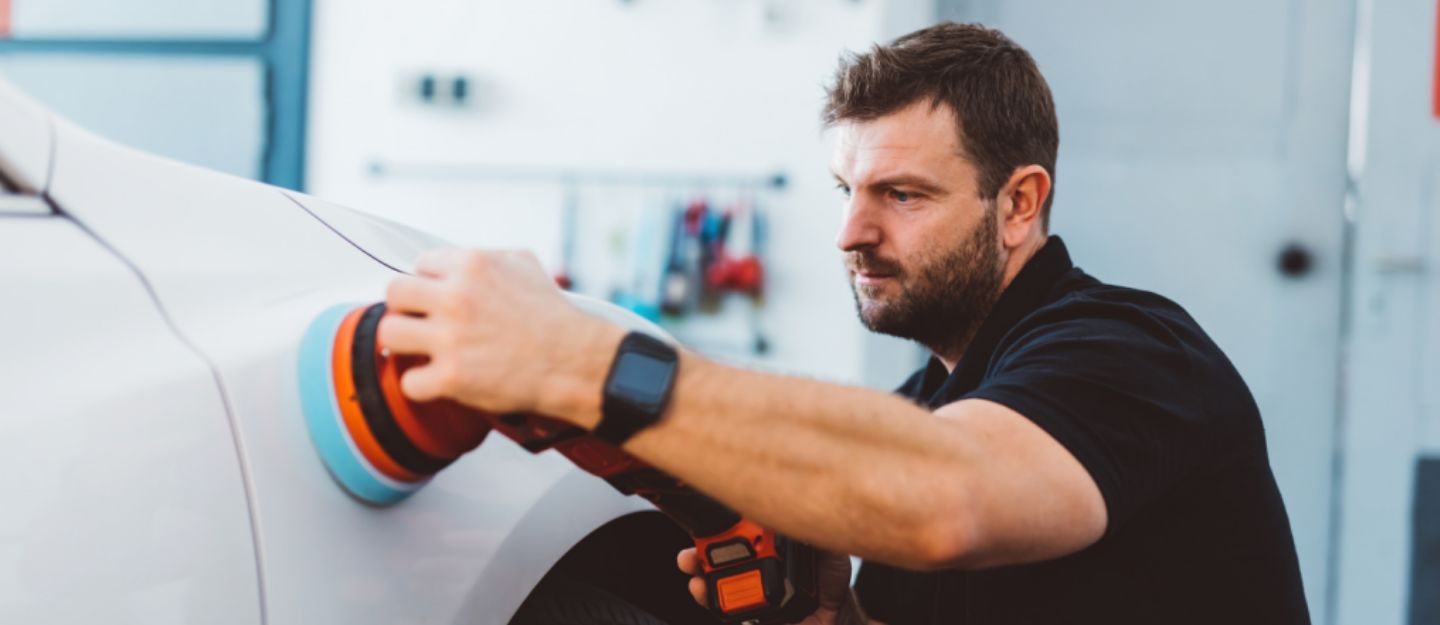
Once the repair plan is established, body filler is applied to restore the panel’s original shape. This is followed by sanding and glazing to smooth the surface and ensure a uniform finish.
After the surface is properly prepared, a primer coat is applied to protect against rust and improve paint adhesion. The area is then sanded once more before the final repainting stage.
To enhance the finish and improve durability, a ceramic coating can also be applied to the car’s paintwork, giving it a more polished and refined appearance. Another option is to rely on dubizzle’s car inspection service for a comprehensive evaluation of your car prior to starting any repair process.
FAQs
How long does it take to repair a car dent?
If the car dents are minor and can be fixed by PDR, the repair will take under an hour. However, if the dent repair also involves fixing the paint job and sheet panel, it can take longer depending on the amount of work required.
How to repair car dents at home?
Minor dents can be repaired at home using a PDR kit or simple DIY methods like a sink plunger with water or hot water, followed by gently pushing the panel from behind.
Depending on the severity of car dents, you can opt for the Paintless Dent Repair (PDR) technique when there is no paint damage or seek professional assistance for conventional repair in the case of deeper dents that require panel work and repainting. If the damage is extensive or the repair costs outweigh the vehicle’s value, it may be more practical to consider replacing the car altogether by exploring used cars for sale in Dubai as a cost-effective alternative in the market.
Stay tuned to the UAE’s leading auto blog for more information on car parts, market trends and automotive technology.
Related Posts