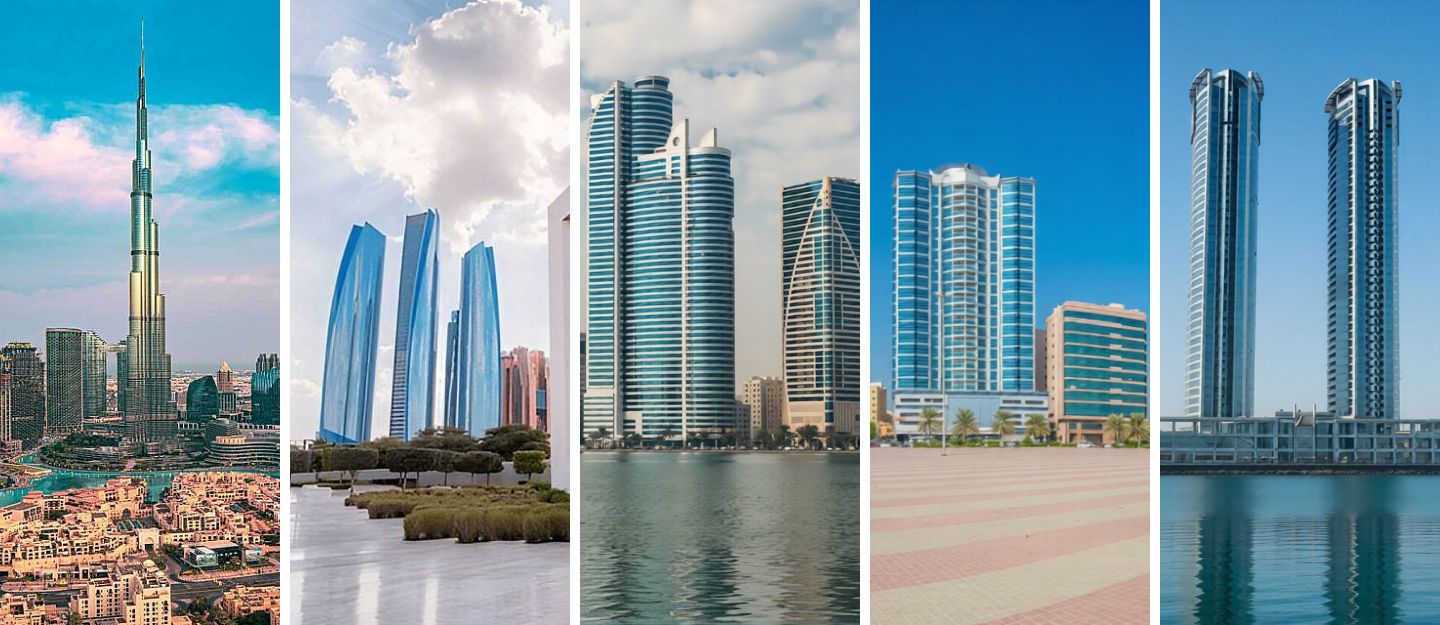
The UAE’s real estate rental market varies in terms of pricing, available options and overall demand. While some emirates command premium rents due to stronger demand, others offer more budget-friendly choices across a wider range of communities. Factors such as infrastructure development, laws and regulations and shifting tenant preferences all play a key role in shaping rental trends across the country. For tenants and investors alike, understanding these differences is essential for making informed decisions.
UAE Rental Market Comparison
The UAE’s rental market spans a wide range of residential options across multiple communities, catering to different lifestyle needs and budget preferences. A rental market comparison of the UAE provides a clear overview of how prices, demand and availability differ between emirates. This helps tenants and investors understand the wider market direction.
Market Growth
Year on year, the UAE’s rental market has maintained an upward trajectory, although growth patterns differ across emirates. Dubai and Abu Dhabi continue to lead in value appreciation, while Sharjah and Ras Al Khaimah have strengthened their appeal through affordability and destination-led developments.
Dubai’s rental growth has been supported by rapid infrastructure expansion, the rise of master-planned communities and investor-focused policies. Initiatives such as the Smart Rental Index 2025, AI-enabled chatbot Malik and the role of Dubai’s Rental Disputes Centre have enhanced transparency and regulatory efficiency.
Abu Dhabi has followed a comparable growth path, with government-led measures such as Madhmoun, the government-backed Multiple Listing Service by Abu Dhabi Real Estate Centre (ADREC) and TAMM.

Sharjah, meanwhile, has positioned itself as a cost-effective alternative within the UAE rental landscape. Ongoing infrastructure upgrades, regulatory reforms and digital platforms such as Aqari have supported steady rental growth.
Ras Al Khaimah has similarly gained momentum, particularly in waterfront and mixed-use communities. Major developments such as Wynn Al Marjan Resort, set to be MENA’s first integrated gaming resort, have elevated the emirate’s investment profile and strengthened rental demand.

Average Annual Rents
The UAE’s rental price comparison reflects year-on-year growth across both affordable and luxury segments, spanning apartments and villas. For example, Dubai Hills Estate recorded a 21.36% increase in annual rent of villas in 2025, reaching AED 517k. Similarly, the average annual rent of Al Raha Beach and Yas Island have witnessed an increase of 16.33%.
The average annual rent for properties in Dubai and other emirates in 2025 is as follows:
| Emirate | Apartment (AED) | Villas (AED) |
| Dubai | 53k to 224k | 119k to 517k |
| Abu Dhabi | 44k to 167k | 139k to 589k |
| Sharjah | 33k to 47k | 68k to 194k |
| Ajman | 33k to 41k | 98k to 110k |
| RAK | 45k to 86k | 119k to 318k |
This represents the estimated rental prices across both luxury and affordable segments in each emirate.
Investment Returns
The Return on Investment (ROI) for rental properties in the UAE has remained relatively steady, averaging 6.2% for apartments and 5.4% for villas. The ROI is supported by several key market drivers, including greater transparency in transactions, investor-friendly policies, the introduction of rental indexes and rapid infrastructure development across emirates.
| Emirate | ROI of Apartments | ROI of Villas |
| Dubai | 4.05% to 7.57% | 2.66% to 10.46% |
| Abu Dhabi | 2.39% to 9.35% | 3.13% to 8.98% |
| Sharjah | 3.73% to 7.10% | 2.88% to 5.90% |
| Ajman | 6.05% to 8.72% | 4.54% to 6.22% |
| Ras Al Khaimah | 3.06% to 11.79% | 3.22% to 4.24% |

Hidden Costs
Along with the annual rent, tenants should budget for additional costs that can increase the overall rental expense by around 10% to 25%. Major charges include utility connections such as DEWA in Dubai, tenancy contract registration such as Tawtheeq in Abu Dhabi and agent fees, which are typically 5% of the annual rent. Other common costs include moving expenses, upfront payments like security deposits and advance rent and maintenance charges, depending on the property and lease terms.
FAQs
How does the rental market differ across the UAE?
Rental markets vary in pricing, demand and property supply. Dubai and Abu Dhabi typically command higher rents due to strong demand and premium developments, while other emirates offer comparatively affordable options supported by growing infrastructure.
Which Emirates have more affordable rental options?
Sharjah, Ajman and Ras Al Khaimah generally provide more budget-friendly rental options with all the basic lifestyle amenities.
What should tenants consider when comparing rental markets in the UAE?
Tenants should evaluate annual rent, additional costs, connectivity, community amenities, regulatory processes and long-term affordability when renting properties in Abu Dhabi, Dubai and other emirates.
This is a detailed rental market comparison across the UAE. Overall, the market has continued on a strong upward trajectory, supported by steady year-on-year growth in rental demand and pricing. This momentum is driven by a combination of government initiatives, ongoing infrastructure development, transparent policies and stricter rules and regulations that enhance market confidence. Together, these factors make the market attractive for buyers to consider properties for sale in the UAE as a way to generate long-term rental income.
Stay tuned to dubizzle’s property blog for more information on residential rent trends by Emirate.
Disclaimer: The above UAE rental market comparison is based on data and search trends derived from dubizzle’s annual market reports. The figures presented are indicative in nature and may not necessarily reflect actual real estate transactions.
![It’s live!
TruEstimate™ Alerts are now on dubizzle.
Get monthly updates on your property’s estimated market value, straight to your inbox.
Stay informed. Stay ahead. Explore TruEstimate™ Alerts via the link in bio!
ابقَ على اطلاع بقيمة عقارك.
تنبيهات TruEstimate™ متاحة الآن على دوبيزل، لتصلك تحديثات شهرية حول القيمة التقديرية لعقارك مباشرةً إلى بريدك الإلكتروني.
ابقَ على اطلاع، واكتشف تنبيهات TruEstimate™ عبر الرابط في البايو!
[dubizzle UAE, dubizzle Dubai, Real estate, buy and sell UAE, Property]](https://www.dubizzle.com/blog/property/wp-content/plugins/instagram-feed/img/placeholder.png)