Financial conditions, preferences, lifestyle and goals influence the decision of buying or renting a property. With its luxurious lifestyle and opportunities, Dubai attracts foreigners looking to invest or work. Besides, options such as flexible payment plans, mortgages or home loans at low interest rates entice people to buy properties. Meanwhile, houses for rent have their perks.
While buying vs renting in Dubai depends upon preferences, let’s weigh the benefits and drawbacks of each to make a better decision.
Difference Between Buying and Renting in Dubai
Individual preferences play a vital part in buying or renting a house in Dubai. Both have pros and cons. That said, an opulent lifestyle with several world-class amenities and facilities remains a constant whether choosing to buy a property or rent one.
Here’s a detailed comparison between buying and renting in Dubai, including their pros and cons.
Buying vs Renting in Dubai: Math and Finances
While several benefits of hiring a real estate agent entice you, they charge a 2% fee on the value, irrespective of buying or renting. Another common hidden cost is the security deposit for DEWA activation, which is AED 2,000 for residential apartments and AED 4,000 for residential villas.
Alongside, there are other costs as well. Here is the math involved in renting and buying a property in Dubai.
Costs of Renting
When you rent a property in Dubai, you must set a budget. You can check the average annual rent using the RERA rental calculator. After renting a property, you have to take into account the following hidden costs of renting in Dubai.

- Registering the tenancy contract on Ejari costs AED 100 + AED 20 (innovation and knowledge fees).
- Although you can request the security deposit refund in Dubai after the tenancy agreement ends, you initially pay 5% to 10% of the annual rent upfront.
- The Dubai Municipality housing fee, which is 5% of the annual rent, is another cost tenants pay over 12 months.
- Tenants can also incur additional costs, such as Ejari renewal and a rent increase.
Costs of Buying
Similar to renting a property, an investor or buyer can incur various factors adding to the buying a house in Dubai cost:
- DLD registration fees, 4% of the sale cost, are paid by buyer and seller (2% each).
- The title deed issuance fee is AED 250.
- DLD charges 0.25% of the mortgage value for the mortgage registration in Dubai.
- AED 2,000 + 5% VAT is the registration fee for property valued below AED 500,000, whereas property valued above AED 500,000 has a registration fee of AED 4,000 + 5% VAT.
Furthermore, a FAQ is if there are taxes when buying a property in Dubai. While the Emirate is tax-free and offers several benefits, a buyer can incur fees for registration processes. If you are a foreign investor, you can learn more about costs and legal issues in the guide to buying property in Dubai as an expat.
Buying vs Renting in Dubai: Stability and Security or Flexibility and Mobility
While the benefits of buying a property in Dubai include a property visa and economic stability, it can also yield risks. That said, there are no major risks in buying a property in Dubai. Calculative investment and market research should always be a priority.
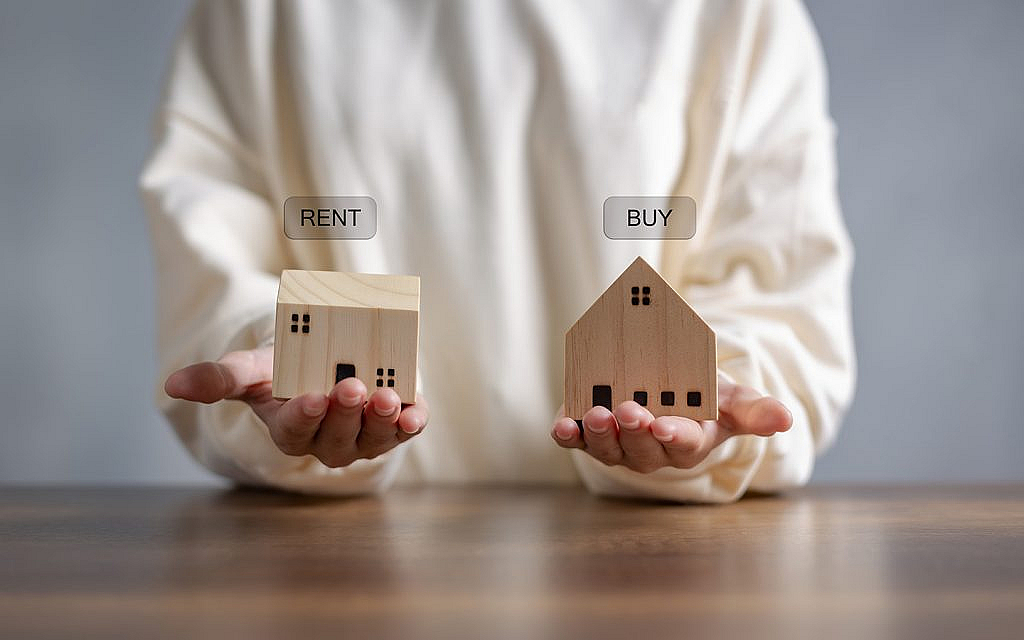
If we speak about the benefits of renting in Dubai, it is surely a luxurious lifestyle. Additionally, renting allows flexibility. For instance, if you switch jobs, you can rent a house in Dubai near your workplace. Moreover, if you are a student, you can look for popular areas to rent for students.
Potential risks when owning a property can include delays in construction if you are investing in off-plan properties. However, intriguing payment plans allow one to own a property by paying at their convenience. On the other hand, renting a property doesn’t create an asset, but it allows you to pay less in terms of down payment and other registration fees.
Buying vs Renting in Dubai: Down Payment and Initial Costs
When you buy a house or apartment for sale in Dubai on a mortgage, you must have a down payment. You can learn to save money for a down payment. Conversely, renting requires one to pay a security deposit.
Whether buying or renting, both have initial costs. In buying, one has to pay more, but the reward is also bigger considering the property value appreciation in Dubai. Moreover, if you request a property valuation certificate in Dubai, it can cost AED 2,000 to AED 15,000.
One can also consider a down payment and buy a house in Dubai on a mortgage instead of renting one. For instance, rent-to-own properties in Dubai can be an option. However, it must only be considered if the person intends to stay more than two years. Besides, it will help create an asset.
Buying vs Renting in Dubai: Property Value and Options

For those leaning towards buying, property values vary on location, property type and market conditions. The real estate market offers options, from apartments and villas to townhouses and luxury properties. Moreover, off-plan properties in Dubai have turned out to be a great investment opportunity.
On the other hand, renting in Dubai also involves considerations related to property values. The rental market offers diverse options, ranging from budget-friendly apartments to high-end luxury rentals.
Lease terms typically span one year, although short-term rentals in Dubai are also available. However, renting gives freedom to individuals to assess their stability and commitment to a location. Renters can move out and choose another place to rent according to their conditions.
Buying vs Renting in Dubai: Property Maintenance
The choice between buying and renting in Dubai often boils down to a trade-off between control and convenience. Property owners have control over their homes but bear the responsibility for maintenance costs. Meanwhile, tenants enjoy the convenience of a landlord managing most maintenance tasks but have less control over the property’s long-term condition.

Tenants report problems promptly but may be liable for damages caused by neglect or misuse. However, a homeowner should budget for these maintenance expenses and the extent of maintenance needed.
Furthermore, DLD has annual maintenance charges based on the RERA Service Charges Index. The landlord is responsible for paying these service charges according to the RERA rental laws in Dubai.
Buying vs Renting in Dubai: Rental Incomes
Investors can earn a high rental yield in Dubai. Moreover, the average rental prices saw a rise in 2023. That said, tenants can enjoy a stable rent mentioned in the tenancy agreement. Moreover, the homeowners can only increase the rent after the completion of the tenancy agreement.
FAQs
Is it risky to buy property in Dubai?
Investing in property in Dubai is relatively low-risk due to the city’s stable economy, robust legal framework and continuous infrastructure development.
Is it better to rent or own in Dubai?

The decision to rent or buy in Dubai depends on individual preferences and circumstances. Both options have their advantages. Owning provides potential long-term equity and stability, whereas renting offers flexibility and fixed costs.
If you are choosing to stay in Dubai for more than two years, you can save for a down payment and buy a property on the mortgage. After a few years, you can enjoy complete ownership.
How much of my salary should go to rent in Dubai?
Tenants can learn to budget the rent according to salary. The popular technique is to spend 30% or less of your income when you rent a property in Dubai.
These are all the considerations one should make when choosing between buying or renting in Dubai. Plus, you must learn about the types of property ownership in Dubai. Some are freehold property areas in Dubai that allow 100% ownership to expats, whereas others are leasehold neighbourhoods that give a buyer the right to the property for 99 years.
Stay tuned to the dubizzle Property blog and learn more tips and techniques about real estate renting and investment.