- First Generation
- Second Generation
- Third Generation
- Fourth Generation
- Fifth Generation
- Sixth Generation
- Seventh Generation
- FAQs
Founded in 1937, Volkswagen is one of the widely celebrated German car brands. It has produced many iconic models in different body types. One such nameplate is the Volkswagen Golf. The hatchback has accumulated a strong reputation in the automotive industry. Now in the eighth generation, the model has been in production for decades. From a daily-driven car to a performance-oriented hatchback, the Golf has evolved significantly throughout the years.
Volkswagen Golf History
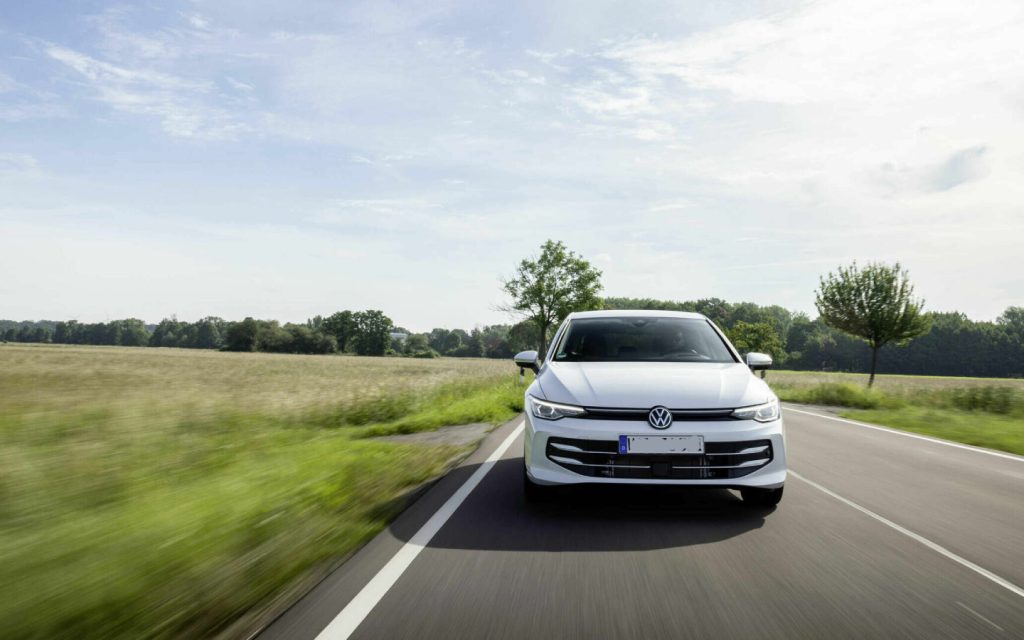
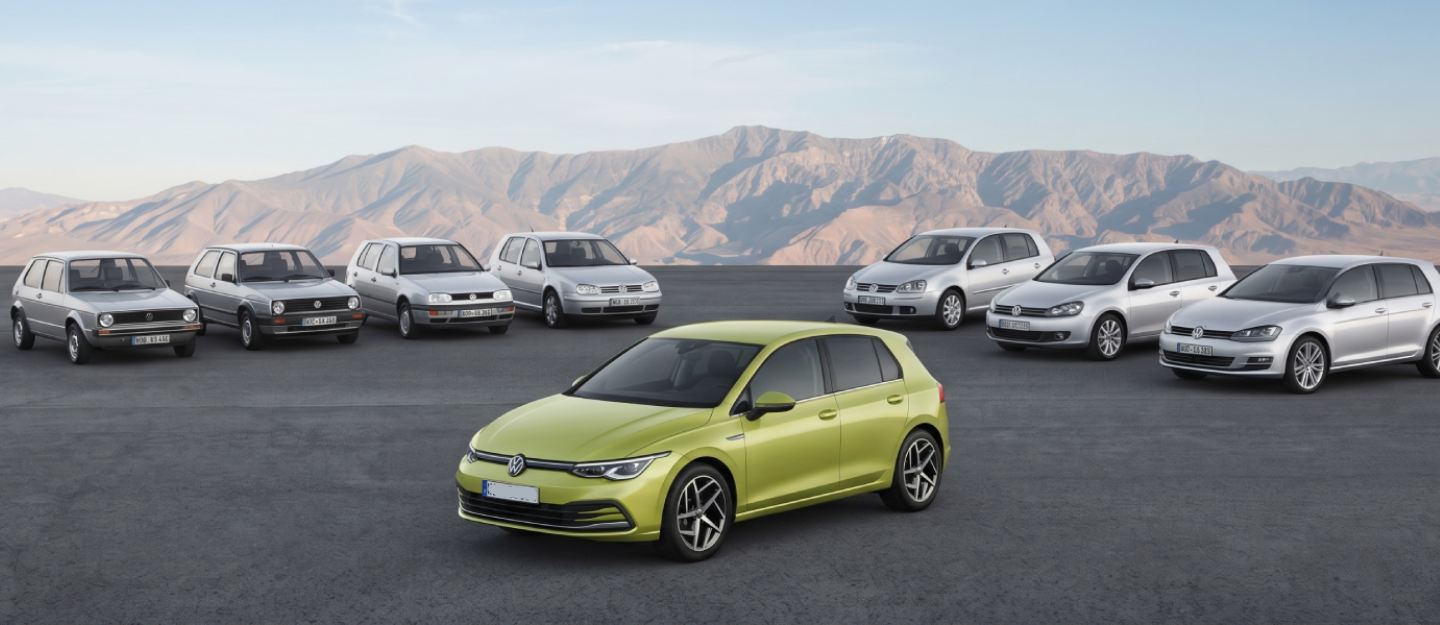
The VW Golf is now in its eighth generation
The history of the Volkswagen Golf spans eight generations. The nameplate has transformed in numerous ways, adapting to the evolution of design and technology.
First Generation of the Golf (Mk1) – 1974 to 1983
The first-ever mass-produced Golf left the assembly line in Wolfsburg in March 1974. It marked a turning point in Volkswagen’s history, which had long been dominated by the Beetle’s rear-engine and rear-wheel-drive layout.
The Golf Mk1 introduced a configuration featuring a transversely mounted front engine and front-wheel drive. This shift had already begun with the introduction of the Scirocco and Passat in 1973, but with the Golf, the high-volume compact segment fully embraced the new engineering approach.
Second Generation of the Golf (Mk2) – 1983 to 1991
The second generation of the Golf introduced technologies such as a lambda probe-controlled catalytic converter, anti-lock braking (ABS) and later the model range’s first all-wheel-drive system. By June 1988, total production had exceeded 10 million units. The second-generation Golf remained in production until summer 1991.

Third Generation of the Golf (Mk3) – 1991 to 1997
Introduced in August 1991, the third-generation Golf marked a shift towards improved safety. It became the first model in the range to offer front airbags from 1992, while changes to the structural rigidity enhanced crash performance.
The Mk3 also introduced several technical developments to the lineup, including a six-cylinder (VR6) engine, cruise control, a diesel oxidising catalytic converter, a direct-injection diesel engine and side airbags. By May 1994, total Golf production had reached 15 million units. According to the Volkswagen Golf’s model history, the third generation remained in production until 1997.
Fourth Generation of the Golf (Mk4) – 1997 to 2003
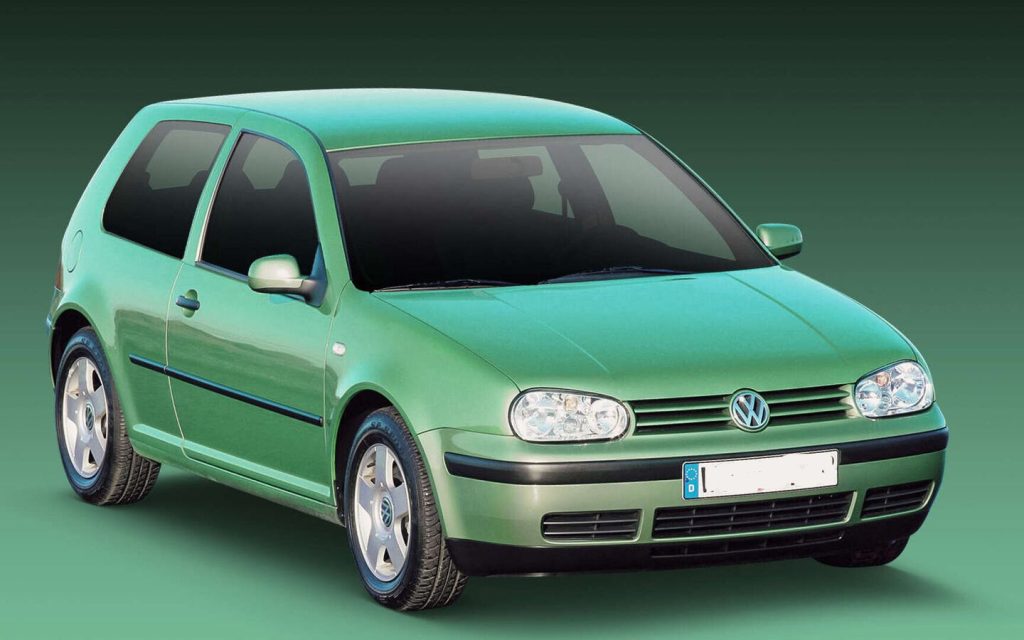
Introduced in 1997, the fourth generation continued the Volkswagen Golf design and technological evolution. In 2001, a 132 kW Golf GTI was launched to mark the model’s 25th anniversary.
This was followed in 2002 by the introduction of a direct fuel injection (FSI) engine and head-protection airbags as standard. The same year, Volkswagen introduced the Golf R32, which had a top speed of 250 km/h. Production of the fourth-generation Golf ended in 2003 after 4.99 million units, making way for the fifth-generation model.
Fifth Generation of the Golf (Mk5) – 2003 to 2007
The fifth-generation Golf introduced updates in structural design, safety and driving dynamics. At its launch in 2003, the body’s torsional rigidity increased by 35%, reflecting changes in construction, including the use of laser welding.
The model was equipped with six airbags as standard, with rear side airbags available as an option, bringing the total to eight. New technical features included a four-link rear suspension and a 7-speed dual-clutch transmission (DSG). The Golf GTI fifth generation also introduced a turbocharged direct petrol injection engine, as well as a twin charging system combining a turbocharger and supercharger.
Sixth Generation of the Golf (Mk6) – 2008 to 2012
Introduced in 2008, the sixth-generation Golf reached a production total of 2.85 million units by the end of July 2012. Structural updates to the laser-welded body contributed to improved crash performance, earning the model a five-star rating in Euro NCAP tests.
The Mk6 incorporated several driver assistance systems, including Light Assist (dynamic main beam control), Park Assist and Hill Start Assist. Additional features included a start/stop system, energy recuperation, dynamic cornering lights and LED tail light clusters. Moreover, the model was named World Car of the Year in 2009.
Seventh Generation of the Golf (Mk7) – 2012 to 2020
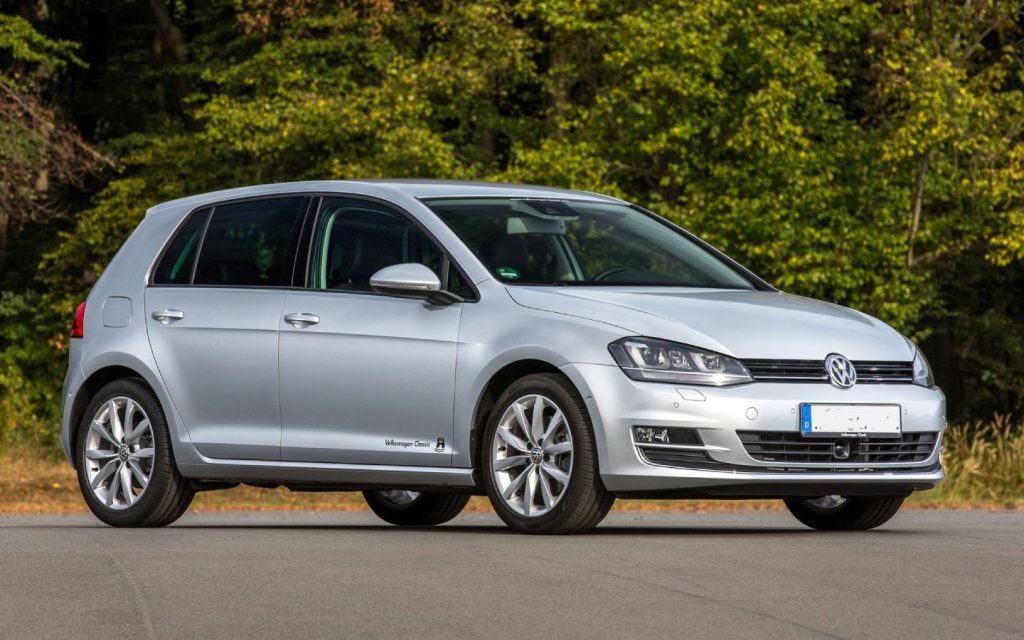
The seventh-generation Golf was introduced on 4 September 2012 in Berlin, with pre-sales beginning the following day in selected markets. At the time of its launch, cumulative Golf sales had reached 29.3 million units.
The new model was up to 100 kg lighter than its predecessor, depending on specification and offered fuel consumption reductions of up to 23%. It also introduced a range of advanced driver assistance systems, including an Automatic Post-Collision Braking System, proactive occupant protection, Adaptive Cruise Control (ACC) and Front Assist with Emergency Braking.
Eighth Generation of the Golf (Mk8) – 2020 to Present
The eighth-generation Golf, launched in 2020, introduced further refinements in chassis and driving systems. In the Golf GTI, updates to steering and vehicle dynamics aimed to improve responsiveness and handling precision.
A key development is the introduction of the Vehicle Dynamics Manager, a central control system that coordinates electromechanical chassis functions. It integrates systems such as ESP, the electronically limited-slip differential and the adaptive dampers of the optional Dynamic Chassis Control (DCC). These advanced systems adjust their operation during driving to support overall vehicle stability and handling, a testament to the adoption of technology in the Volkswagen Golf evolution.
FAQs
When was the first Volkswagen Golf released?
The first Volkswagen Golf was released in 1974. It marked the beginning of the Volkswagen Golf timeline.
How many generations of Volkswagen Golf are there?
There are eight generations of the Volkswagen Golf.
Are new Volkswagen Golf models available for sale?
Yes, there are both new and used Volkswagen Golf models available for sale in the UAE.
Is the Volkswagen Golf still in production?
Yes, the Volkswagen Golf is still in production. The history of the German automaker has seen many Volkswagen golf generations
There you have it – the entire timeline of the Volkswagen Golf history. The nameplate has witnessed significant changes throughout the years of its production, adopting technology and incorporating modern design features.
In addition to the Volkswagen Golf, the available used and new cars for sale in the UAE offer an array of celebrated German makes and models.
For more interesting updates about your favourite nameplates, stay connected to the UAE’s leading autos blog.
Related Posts