- More About Steering Angle Sensors
- Understanding How They Work
- Analogue vs Digital Sensors
- Steering Angle Sensors Failure Symptoms
- FAQs
A car’s drivability and safety is impacted by a host of factors. From the drivetrain to the exhaust system, every component plays an important role in maintaining performance. For instance, the steering system helps with safe and efficient manoeuvring. For proper functioning, it works in synchronisation with different parts and technologies, such as steering angle sensors. Let’s find out how these sensors work and learn about their key functioning factors.
What are Steering Angle Sensors in Cars?
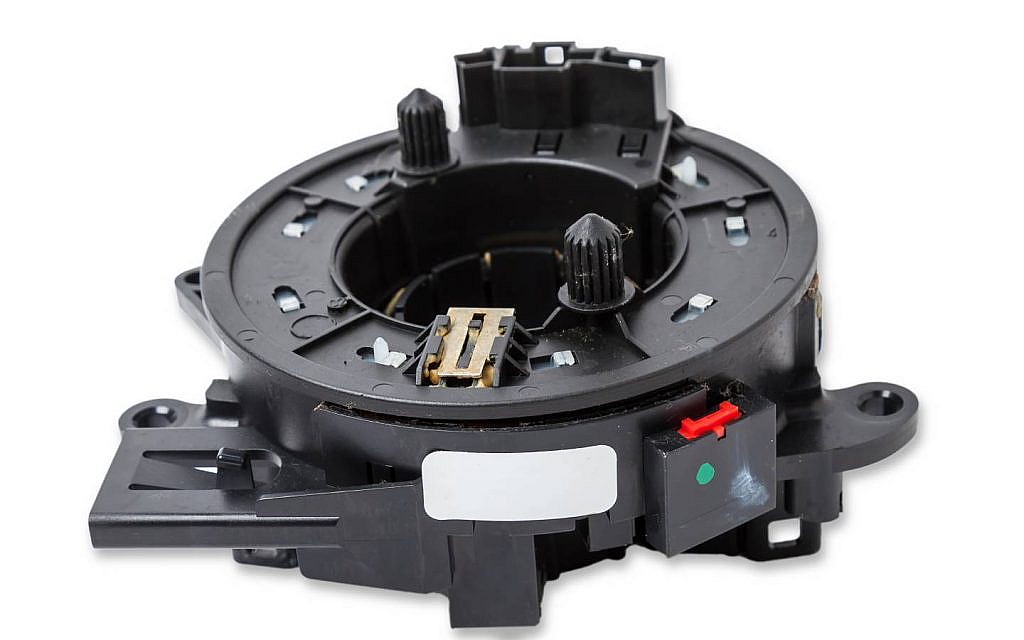
Steering angle sensors measure the position and movement of a car’s steering wheel. These sensors then relay data to systems like stability control, lane-keeping and adaptive cruise control. Working in collaboration, steering sensors help maintain vehicle stability by detecting deviations and adjusting the car’s response accordingly. This sensor is essential for accurate steering assistance and safety features in modern vehicles.
Understanding Steering Angle Sensors and Their Functioning
Wondering how a steering angle sensor works? Comprising optical and magnetic sensors, the system detects the steering wheel’s position and rotational speed. It measures the angle and direction of the turn, sending this data to the vehicle’s electronic control systems. This information enables real-time adjustments for stability, safety and driver assistance features.
Typically a car has multiple steering angle sensors working together. Located inside the steering column, these sensors work as one unit. There is a control module in the system that accumulates the data from different angle sensors for steering.
Analogue vs Digital Steering Angle Sensors

Analogue steering angle sensors use continuous voltage signals to indicate the steering wheel’s position. It offers smooth but less precise readings. Digital sensors, on the other hand, use binary signals, providing more accurate and reliable data for different modern car safety features.

Moreover, digital sensors are less susceptible to signal degradation over time. This makes them a preferred choice in modern vehicles. Analogue sensors are mostly based on limited or obsolete technology. As a result, they are increasingly replaced by digital ones for improved performance and integration with electronic stability control.
Steering Angle Sensors Failure Symptoms
Let’s walk through some of the symptoms of bad steering angle sensors
Dashboard Warning Lights
Keep an eye out for different types of dashboard warning lights. Lights for stability control, ABS, or traction control may illuminate, indicating sensor or system errors.
Inconsistent Steering Assist
Features like lane departure warning system or automatic steering adjustments may function erratically or fail. However, such kinds of symptoms may also depend on the model and availability of features.
Poor Vehicle Stability
The car may feel unstable or harder to control, especially in slippery conditions, due to impaired stability control.
Faulty Traction Control
The traction control system also works in synchronisation of these angle sensors. If they start malfunctioning, traction control may become unresponsive or shut down. This can affect grip on the road, especially during acceleration or on turns.
Error Codes During Diagnostics
A scan tool may show steering angle sensor fault codes, confirming the malfunction for repair needs.
In case you encounter any such problems, visit a certified auto technician for optimal diagnosis and solution. Also, make sure to put together a comprehensive car maintenance checklist and follow it regularly to keep your vehicle in the best condition.
FAQs
What happens when a steering angle sensor goes bad?
The car may lose traction every now or then or the driver may experience poor stability. All such issues can raise road safety concerns. As a result, fixing angle sensors for steering should be a priority for the driver.
Can I drive without a steering angle sensor?
Driving without a functioning steering angle sensor is possible, but it disables critical safety features like stability control, ABS and traction control. As discussed it’s best to repair it promptly.
This is everything you need to know about angle sensors for car steering. Besides, the optimal functioning of these crucial tech components, cleaning and lubrication of moving parts is also crucial. Effectively lubricate the vehicle’s steering and suspension system to keep all related components up and running.
Whether you intend to buy a new car in the UAE or plan to go for a used one, vehicle upkeep is crucial for satisfactory performance and safety. Also, read the car owner’s manual to learn about the different vehicle systems and their functioning.
For more tips on car care and driving, keep reading UAE’s leading auto blog.
Related Posts