- Required Documents
- Shipping Options
- Import Process in Bahrain
- Customs Clearance
- Vehicle Registration
- FAQs
Whether for personal or commercial reasons, anyone can export a car from the UAE to different countries through a streamlined process. However, the exporting party must meet the required criteria and adhere to relevant regulations to ensure legal compliance. The guidelines and procedures for vehicle export may differ depending on the destination. Considering the legal requirements and established standards, exporting a car from the UAE to Bahrain involves several key factors.
How to Export a Car from the UAE to Bahrain: Important Factors to Consider
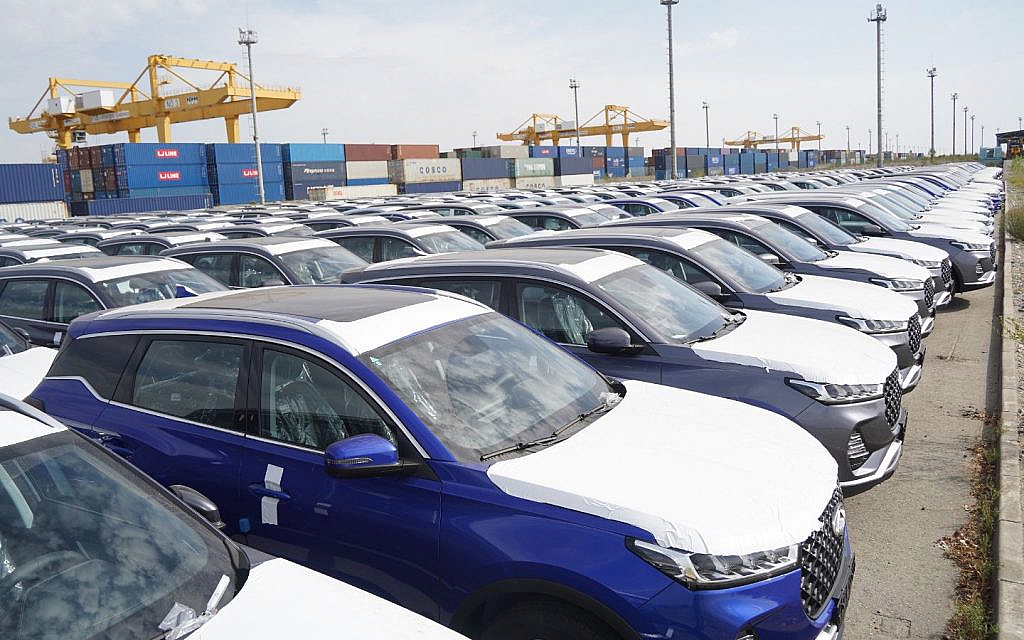
Exporting a car from the UAE to other countries involves different legalities and requirements. If Bahrain is the destination, the requirements include:
Required Documentation
The process begins with deregistering the vehicle in the UAE and preparing it for international shipment. Essential documents to export car from UAE include:
- Export Certificate: Issued by the UAE’s Road and Transport Authority (RTA) or centres like Tasjeel, it confirms that the vehicle is deregistered and cleared for export.
- Vehicle Registration Card (Mulkiya): Serves as proof of vehicle ownership.
- Passport and Emirates ID: Required for individual exporters.
- Commercial Invoice: Details vehicle specifications and sale value, used for customs valuation.
- Bill of Lading: Issued by the shipping line once the vehicle is loaded, serving as a shipping contract.
- Export Insurance Certificate: Optional but recommended, covering potential transit damage or loss.
- Mortgage Clearance/No Objection Certificate (NOC): Mandatory if the vehicle was financed. The NOC must confirm loan clearance.
- Company Documents for Corporate Exporters: Establishment contract (preferably in Arabic), company letter and commercial license.
Any omission or inaccuracy in these documents can result in shipment delays and added costs in the UAE to Bahrain car export process.
De-registration and Export Certificate Process
According to the UAE export car rules for Bahrain, it is mandatory to deregister a car and obtain the export certificate. The steps are:
- Document submission: Provide all required paperwork to the RTA.
- Vehicle inspection: Conducted at centres like Shamil or Tasjeel to verify compliance.
- Clear fines and fees: Settle outstanding traffic fines and related charges.
- Application channels: Submission can be done online via the RTA or TAMM platforms. In person (at RTA centres or inspection centres).
- Return number plates: Return UAE licence plates to the authorities. If lost, a police report is needed.
- Export certificate issuance: Provided electronically after fee payment.
Export Certificate Fee Details
- Light Vehicle, Light Mechanical Device, Light Bus (14–26 passengers) and Motorcycle: AED 50
- Vehicle over 12 tons and Heavy Duty Mechanical Device: AED 100
- Bus with capacity over 26 passengers: AED 50
Note that the fees may vary by vehicle type and weight. Applicants should verify the latest charges with the RTA.
Pre-shipment Vehicle Preparation
Before shipping, the vehicle must be prepared to meet import standards and avoid transit issues.
- Clean Interior and exterior: Particularly undercarriage cleaning, to meet Bahrain’s hygiene regulations.
- Remove personal belongings: Make sure to remove any baggage, luggage or personal belongings from the car.
- Vehicle maintenance check: Ensure the car is in good condition to pass inspection upon arrival.
- Check fuel level: The fuel level should not exceed one-quarter of the tank for safety.
- Remove licence plates: The vehicle must not have any number plates, inside or outside, during the shipping process.
All the pointers mentioned above must be carefully acknowledged before getting started with the vehicle export procedure UAE to Bahrain.

Shipping Options to Bahrain

The available methods for car shipping from UAE to Bahrain include:
Roll-on/Roll-off (RoRo)
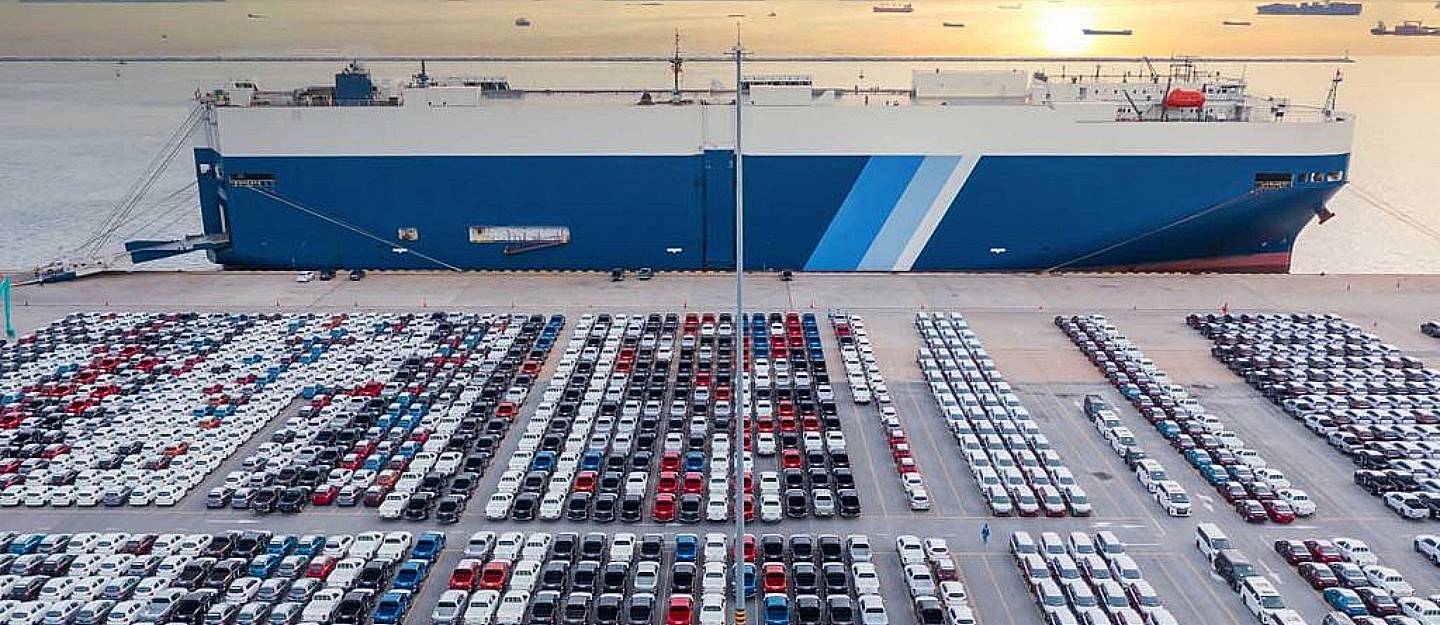
Vehicles are driven onto a ship deck. It is a cost-effective method with efficient loading techniques. However, the vehicle may be exposed to weather conditions.
Container Shipping
This method involves enclosing the vehicle within a shipping container, offering two options: shared and exclusive. The shared container is a cost-effective choice, as it transports multiple vehicles together. On the other hand, an exclusive container has a higher cost and offers more protective measures for the export vehicle. Exclusive shipping containers are more appropriate for luxury vehicles.
Air Freight
In this shipping method, vehicles are transported via cargo aircraft. It is a faster shipping method that comes at a higher cost. Again, this method is often used to ship luxury vehicles and exotic cars.
Road Transport
Car shipping from the UAE to Bahrain can also be done via road. The vehicles are shipped via a purpose-built car carrier or recovery truck. Passing through Saudi Arabia, the cargo is transported directly to Bahrain through the King Fahad Causeway.
Shipping Cost and Time Estimates
Costs for shipping from the UAE to Bahrain generally range between AED 2,000 and AED 5,000 for standard vehicles. Factors that influence cost include:
- Origin location in the UAE
- Shipping method
- Vehicle size and weight
- Additional services (insurance, door-to-door transport).
- Seasonal demand
- Customs and duties
Estimated transit times:
The duration of shipping
- RoRo shipping: 4–10 days
- Shared/exclusive containers: 20–22 days
- Air freight: 1–3 days
- Road transport: 2–4 days (door-to-door)
Import and Registration in Bahrain
Bahrain import requirements and regulations include:
- Left-hand drive vehicles only. Right-hand drive vehicles are not permitted.
- Vehicles must have GCC specs and meet regional standards.
- Cars older than ten years are generally not permitted.
- Cars aged 5–10 years incur a BHD 1,000 fee (AED 9,741).
- Exemptions apply for diplomats, returning nationals and classic or rare vehicles.
- The car emission standards must comply with Euro 4 or higher.
Technical Inspection
A thorough technical inspection is carried out on imported vehicles in Bahrain.
- Lights, tyres, brakes and emissions.
- No salvage titles, major dents or rust
- Windshield transparency (minimum 70% light transmission)
Individuals can also opt for the dubizzle vehicle inspection to make sure everything is in order. Getting a vehicle inspected by experts beforehand ensures compliance and a seamless export process.
Customs Clearance Process
At the Bahraini port, the vehicle must be cleared by customs authorities. The required documents include:
- Commercial Invoice
- Customs Declaration
- UAE Export Certificate
- Vehicle Registration Certificate (Mulkiya)
- Bill of Lading
- Insurance Certificate
- Car Condition Report
- CPR Card (for residents)
Customs Fees:
Here’s a breakdown of the levied customs fees:
- Customs Duty: 5% of CIF (Cost, Insurance, Freight) value
- VAT: 10% on CIF value
- Other Fees: Handling and clearance charges
Exemptions:
- GCC residents may be eligible for VAT exemption.
- Diplomats may be exempt from both VAT and customs duty.
- Tourists may temporarily import cars using a Carnet de Passage (CPD).
Vehicle Registration in Bahrain

The vehicle must be registered before it can be used on Bahraini roads.
Process:
Here’s the step-by-step process:
- Visit the General Directorate of Traffic (GDT)
- Submit the required documents
- Complete and sign the registration form
- Pay the applicable registration fees
Documents Required:
The following are the documents required.
- Customs Clearance Certificate
- Vehicle Inspection Certificate
- Completed Registration Form
- Valid Bahraini Insurance
- Identity Documents (e.g. CPR)
- Bill of Lading
- Address Certificate
Registration Fees:
Vehicle registration fees involve:
- Range from BHD 29.5 to BHD 1,096 (from AED 287 to AED 10,676)
- BHD 1,000 (AED 9741) registration file opening fee for vehicles aged 5–10 years
- BHD 15 (AED 146) for inspection and roadworthiness test
Note that vehicles older than five years require annual inspection. Insurance (minimum third-party liability) is mandatory. Also, the amounts converted in AED are subject to the exchange rate.
FAQs
Can I export a car with an active mortgage or loan?
No, you must first obtain a No Objection Certificate (NOC) from the financing bank confirming the loan is cleared.
What should I do if my export certificate is lost or damaged?
You must visit an RTA Customer Happiness Centre to request a replacement export certificate.
What are the customs duties when exporting a car from UAE to Bahrain?
Bahrain charges a 5% customs duty and a 10% VAT based on the vehicle’s CIF (Cost, Insurance and Freight) value.
Is it legal to export a used car from the UAE to Bahrain?
Yes, it is legal, provided the vehicle meets Bahrain’s import regulations. These include age limits, left-hand drive configuration and GCC specifications.
This is how to export a car from the UAE to Bahrain in a legally compliant manner. Fees and some regulations may vary depending on vehicle body type and weight. There are plenty of export cars for sale in the UAE that individuals or businesses can pick from.
There is also a long list of FAQs on exporting cars from the UAE that can answer many important queries. Having ample information can help exporters make wise and calculated decisions.
For more updates on export regulations and emerging car market trends, keep reading UAE’s top autos blog.
Related Posts