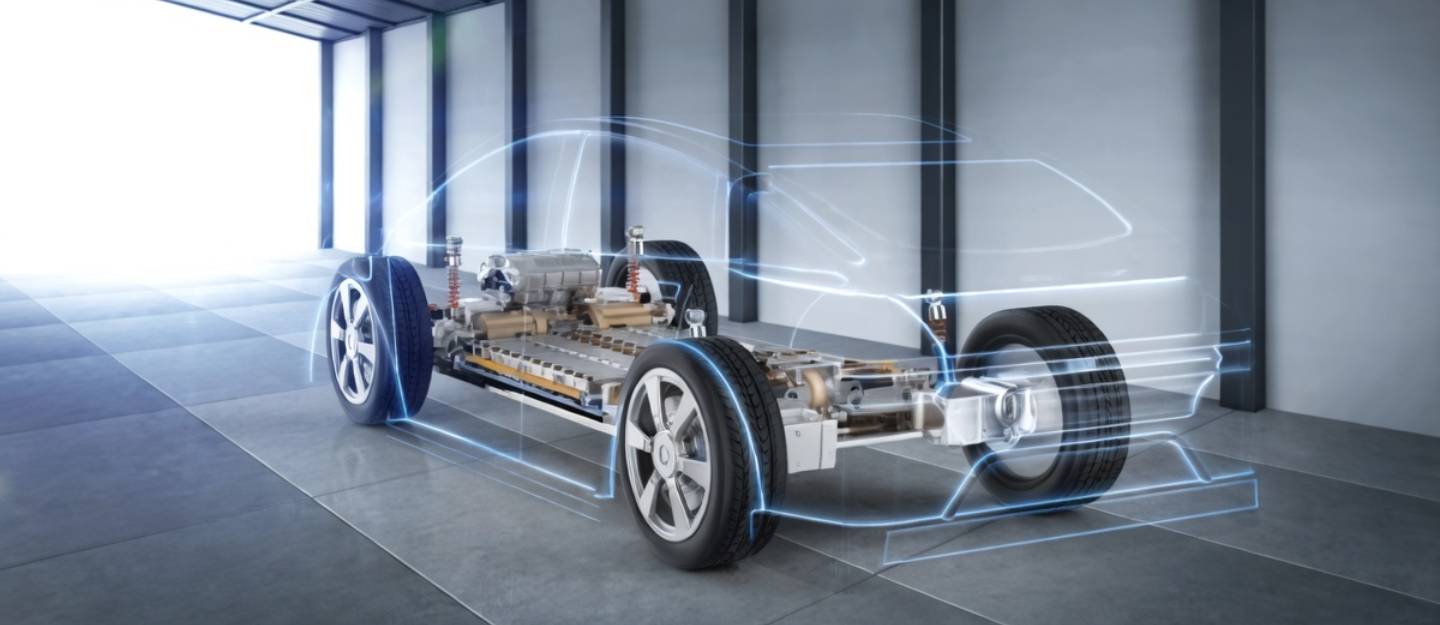
A skateboard chassis for EVs refers to a specific chassis configuration used as the foundational platform in many modern battery-electric cars. In this architecture, key components, including the battery pack, electric motors, suspension and control systems, are integrated into a flat, low-slung structural base. The unique name is derived from the chassis’s resemblance to a skateboard.
Core Features of a Flat-Floor EV Chassis
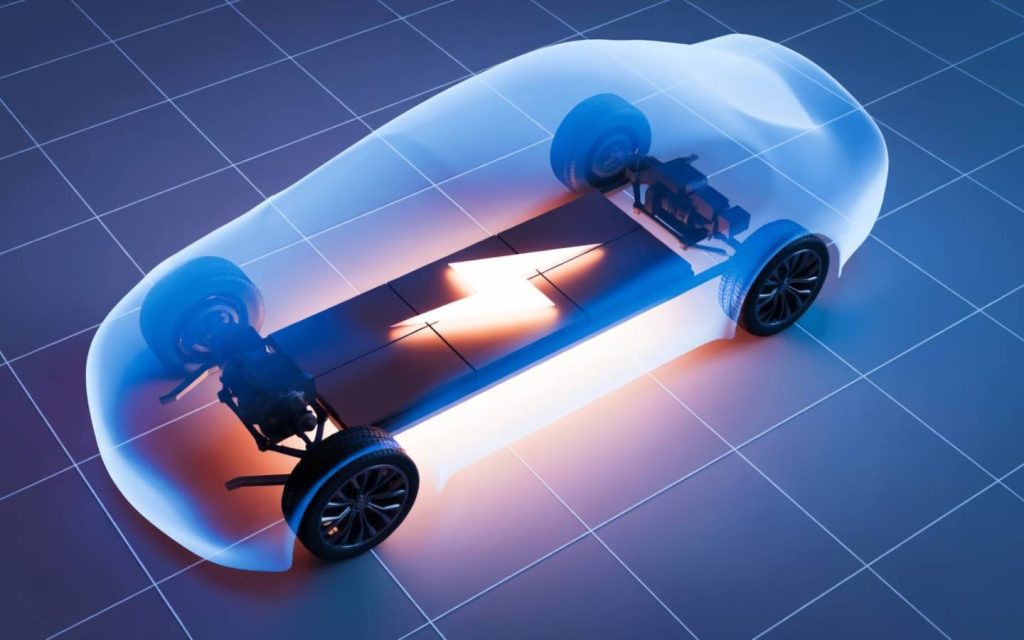
A skateboard EV chassis, also known as a flat-floor EV chassis, has several defining characteristics:
- Flat battery deck: A large lithium-ion battery pack is mounted across the entire floor of the chassis, lowering the vehicle’s centre of gravity.
- Integrated propulsion: Electric motors and power electronics are positioned at or near the axles.
- Simplified structure: There is no driveshaft, conventional transmission or engine bay, which simplifies design and reduces component count.
- Universal mounting: The flat skateboard platform allows different body styles to be placed on top without major re-engineering.
How Skateboard Chassis Works in Electric Vehicles
In a skateboard chassis of an EV design, the battery pack is often a structural element that contributes to rigidity and crash performance. The chassis houses electric motors that drive the wheels directly or via simple gear reductions. Electronically controlled systems, such as drive-by-wire braking, steering and throttle, are also a part of it. The integration of all these systems into the platform itself allows the chassis to act as a complete rolling unit, ready to be fitted as a functional body shell.

Benefits of Skateboard Chassis in EVs
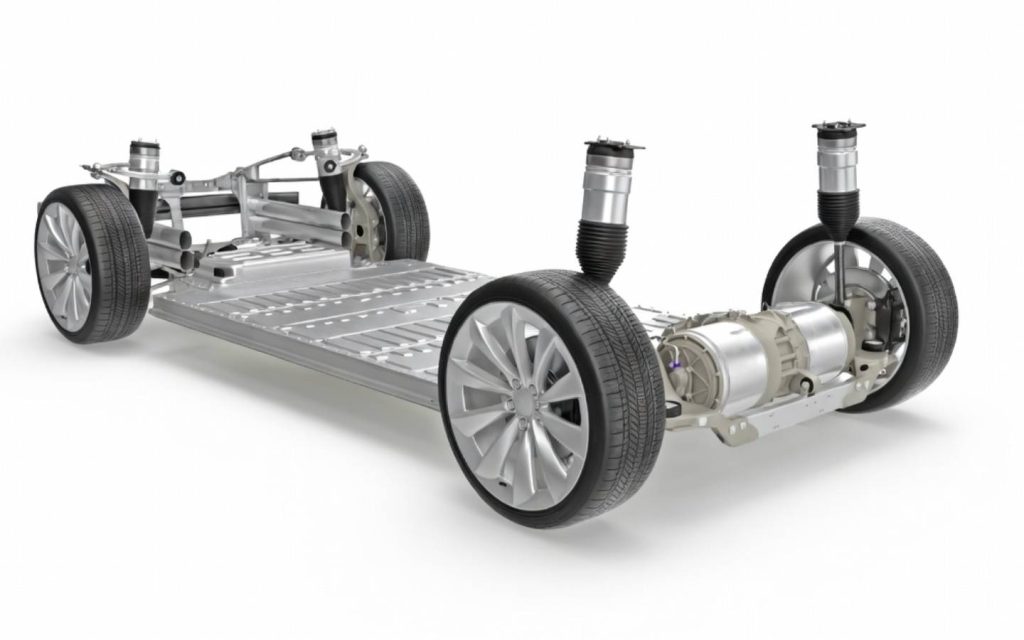
The benefits of skateboard chassis in EVs include:
- Design flexibility: A skateboard platform vehicle design flexibility allows manufacturers to build different vehicle body types (sedans, SUVs, trucks) on the same underlying architecture.
- Improved interior space: With no central tunnel and a flat floor, interior volume and cargo space are maximised.
- Lower centre of gravity: Positioning the heavy battery pack low in the modular EV skateboard architecture improves handling and stability.
- Reduced complexity: Fewer mechanical parts compared to ICE vehicles can lower manufacturing costs and simplify assembly.
- Enhanced aerodynamics: The flat-floor EV chassis allows smoother under-body airflow, reducing drag.
- Even weight distribution: Spreading battery weight evenly improves rolling resistance and tyre performance.
These factors result in a better range per kilowatt hour (kWh) of battery capacity compared with less integrated designs.
FAQs
How does a skateboard chassis differ from a traditional EV chassis?
A skateboard chassis integrates the battery, motors and drivetrain into a flat base, whereas a traditional EV chassis uses a separate body-on-frame or unibody structure.
What are the main components included in a skateboard chassis?
The EV skateboard platform design includes the battery pack, electric motors, power electronics, suspension system, axles and structural frame.
Why is a flat‑floor design important in a skateboard chassis?
A flat-floor design is important because it maximises interior space, lowers the centre of gravity for better stability and improves weight distribution and efficiency.
The electric vehicle skateboard chassis is now a foundational approach in modern EV engineering. Its flat-floor EV layout, modular architecture and integrated systems deliver tangible benefits in design flexibility, manufacturing efficiency and vehicle performance.
Many new EVs for sale in the UAE come with such advanced architecture and designed features, offering enhanced range and efficiency.
For more information on modern car designs and features, stay connected to the UAE’s favourite auto blog.
Related Posts