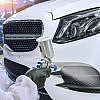
The basic purpose of a car’s windshield is to protect the eyes from dust, debris, UV rays and wind. And while it is made of glass, it also protects the driver and passengers in case of a collision. However, that wasn’t always the case. Early windshields were manufactured from simple glass, which used to shatter on impact and resulted in injuries. This led to the advent of tempered glass.
Tempered glass was much stronger and was used for sides and rear as well. However, it was not until around 1930 that laminated windshields started to replace the front glass of the cars as it offered maximum protection in case of a direct impact.
Let’s take a look at how car windshields are made and what makes them so special.
Understanding Car Windshield
The laminated car windshield does not shatter and stays in place when damaged. This is due to a layer of polymers that keeps the glass bonded and gives it some bending properties.
Windshield Material
The glass in the windshield is made from your regular oxides including silica, sodium oxide and calcium oxide. These raw materials are derived from sand, soda ash and limestone respectively.
Silica is the key ingredient in the glass manufacturing process. Soda ash tends to lower the melting point for an easier process whereas limestone is added to increase the hardness and durability.
Windshield glasses often contain various other oxides of potassium, magnesium and aluminium to further improve the durability of windshield
Manufacturing Process

The manufacturing process is rather straightforward as it involves making glass from raw materials and adding a polyvinyl layer to give some elastic properties.
Initially, the raw materials are mixed with water and heated at high temperatures. The molten mixture forwarded to a float chamber where it is poured over the bed of molten tin. Tin is used as it remains stable at high temperatures in the liquid state. The gradually cooled glass mixture is rolled annealing lehr. The glass is cut into windshield shape and tempered to increase the hardness.
This is where things get interesting. A polyvinyl butyral (PVB) layer is sandwiched between two tempered glasses to form a laminated windshield. Even with the plastic layer, the visibility of laminated glass is exceptional.
The size windshield depends on the vehicle specs. However, the thickness usually remains the same where the thickness of the tempered glass is around 2 mm whereas the vinyl layer is approximately 1 mm thick.
Windshield Safety Features

With a basic understanding of how car windshield glass works, we can take a look at the various safety features it brings to the table.
Passenger Restraint
In case of a high-speed frontal impact, the car windshield acts as a barrier to keep the passengers inside the car. Additionally, windshields also act as a backstop for the airbags. When the airbags are deployed, it bounces off the windshield to protect the passenger’s head.
Rollover Protection
Vehicle rollovers usually result in fatalities due to head injuries or the roof cave in. The laminated windshield is hard enough to support the front roof and maintains the structural integrity of the vehicle. In the event of a rollover, the windshield can prevent roof crushing inward or collapsing.
Weather and Visibility
The primary purpose of windshields is to improve road vision by preventing contact with debris, dust, water and wind. Without windshield barriers, your vision can be impaired, resulting in increased chances of accidents.
During weather conditions like rain and dust storms, cars are outfitted with wipers to keep the windshield clean and clear, thus protecting the occupant from outside conditions.
Maintain Temperature
The windshield can help maintain interior temperature during hot weather conditions in the UAE. When your air conditioning is switched on, the windshield along with side glasses keep the car cool. Using car sunshades can further regulate the interior temperature by preventing direct sun exposure.
UV Protection
Interestingly, car windshields can block over 94% of the ultraviolet radiation whereas the side windows account for only 70% blockage. This makes windshields more integral in the UAE where drivers are constantly under the heat of the sun. As the UV radiations from the sun are blocked, you don’t have to worry about harmful effects like skin damage and cancer.
Cost of Car Windshield Repairs
Tiny cracks on the windshield can be repaired by injecting resin mixture in the chipped area. You can find various repair kits online in between AED 20 to AED 50.
However, in the case of larger ones you will need a replacement. Larger cracks are unrepairable and will usually grow and propagate over time. Hence at some point, you will require the replacement of the windshield. Since windshields are available in various sizes and brands in addition to aftermarket products, the prices vary accordingly.
Car windshields play an important role by implementing various safety features for passengers. In fact, you wont be able to pass vehicle inspection test for renewal of Mulkiya with a broken windshield.
Replacing a car windshield requires professional expertise. However, for accessorizing your car, you can explore your options with various deals on used auto accessories & parts for sale. If your car frequently ends up in workshop for repairs, check out used cars for sale in the UAE with affordable rates.
Stay tuned to the UAE’s leading auto blogs for more information on car parts, market trends and automotive technology.
Related Posts