In today’s connected world, keeping a smartphone charged is essential, especially when you’re on the road. Whether you rely on your phone for navigation, music, calls or emergency assistance, car charging has become a routine part of modern driving. However, many drivers don’t realise that improper charging habits can harm both the phone and the vehicle’s electrical system. For safe and reliable charging on the go, it’s important to understand the essential do’s and don’ts of charging a phone in your car.
Why Car Charging Matters
Most drivers charge their phones in the car because it’s convenient. Long commutes, road trips and using battery-intensive apps or music streaming can drain power quickly. However, vehicle charging ports vary in output and extreme temperatures can affect battery performance.
That is why it is essential to understand the phone charging do’s and don’ts in a car. Let’s go through them:
Dos of Charging a Phone in Your Car
Here are the safety tips for charging a mobile in a car:
1. Use High-Quality Chargers
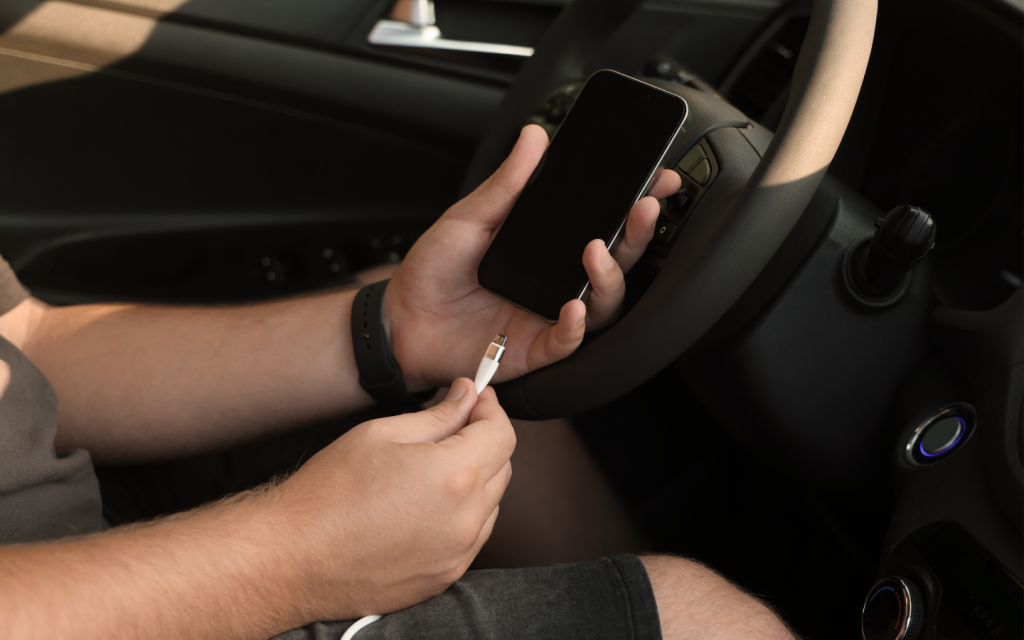
Not all chargers are created equal. Always use OEM (original equipment manufacturer) chargers or good-quality third-party options from reputable brands. Poor-quality chargers may deliver unstable power output, slow charging speeds or even damage the battery over time. Certified chargers usually provide over-voltage and over-current protection.
2. Prefer USB-C or Fast-Charge Compatible Ports
Modern vehicles come with USB-C ports and fast-charging options. These deliver consistent power safely and efficiently. If your car supports fast charging, such as Qualcomm Quick Charge or USB Power Delivery (PD), pair it with a compatible cable for optimal results.

3. Keep Your Phone Out of Direct Sunlight
Cars heat up quickly, especially in summer. Charging a phone while it’s already hot can push the battery into a high-temperature zone, leading to faster wear. Keep the device away from the dashboard and out of direct sunlight whenever possible to avoid phone overheating in the car.
4. Use Aeroplane Mode When Possible
If you’re using the charger for a quick boost and don’t need network connectivity, switching to Aeroplane Mode helps your phone charge faster with less strain. It reduces background activity and heat generation.
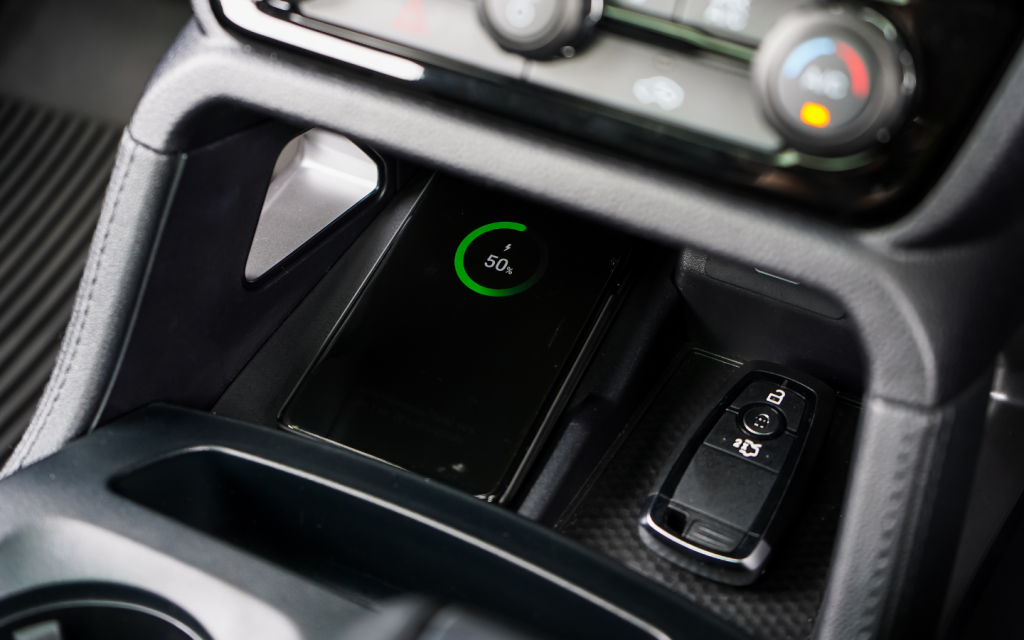
5. Consider Wireless Charging Mats (If a Car Supports Them)
Wireless charging pads built into many modern vehicles are convenient and designed for steady power delivery. They also reduce cable wear and accidental tugs. Just make sure your phone is placed correctly on the pad for efficient charging.
6. Keep Your Phone Updated
Software updates often include battery and charging optimisations. Keeping your phone updated ensures it manages charging cycles effectively, especially when powered by external sources like car chargers.
7. Unplug When Not Needed
If your phone is fully charged, unplug it. Keeping it connected when the battery is already at 100% isn’t harmful for short periods, but prolonged overcharging in a warm environment can degrade long-term battery health.
Don’ts of Charging a Phone in Your Car
Here are some car charging mistakes to avoid:
1. Don’t Use Very Low-Quality or Uncertified Chargers
Cheap chargers can deliver inconsistent power that damages your phone’s battery. In worst cases, they may overheat or cause electrical issues in your car. Avoid roadside chargers, unknown brands, or cables with frayed wires.
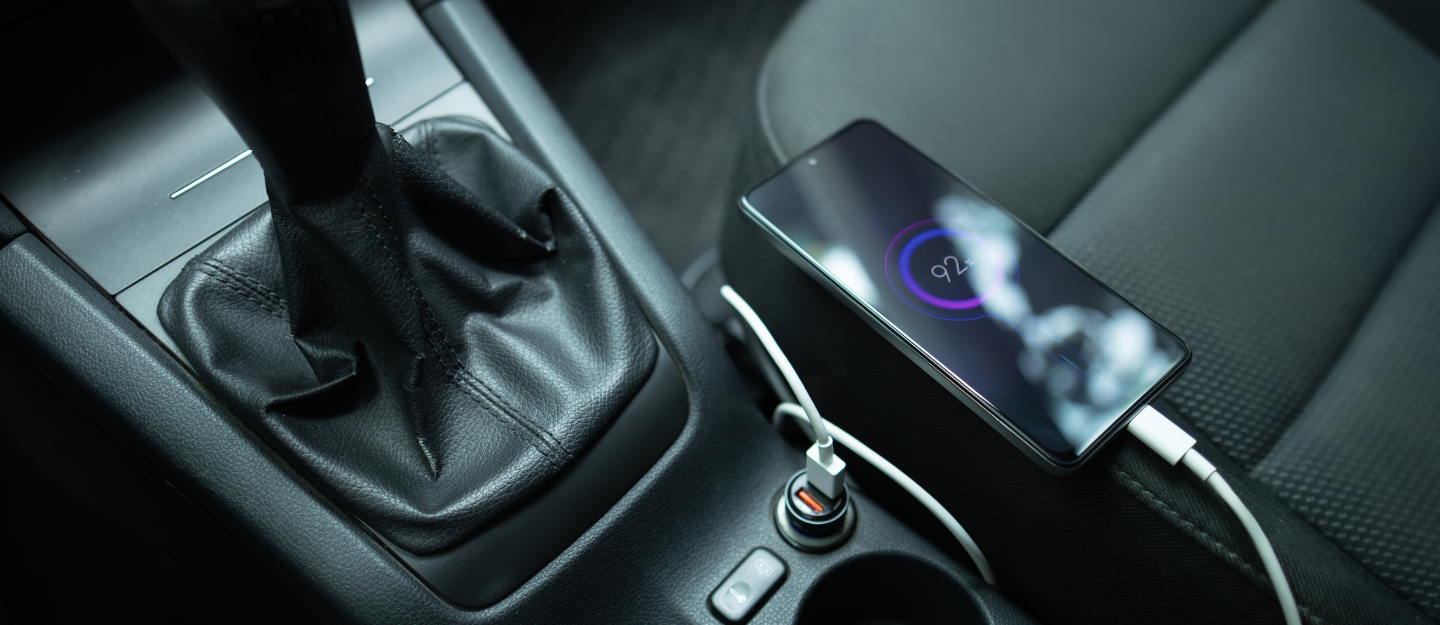
2. Don’t Charge from the Cigarette Lighter Without a Good Adapter
While the cigarette lighter port is commonly used, older cars deliver unstable voltage spikes when starting the engine. Always use a high-quality, surge-protected car adapter to prevent sudden power fluctuations from harming your phone.
3. Don’t Leave Your Phone Charging When the Car Is Off
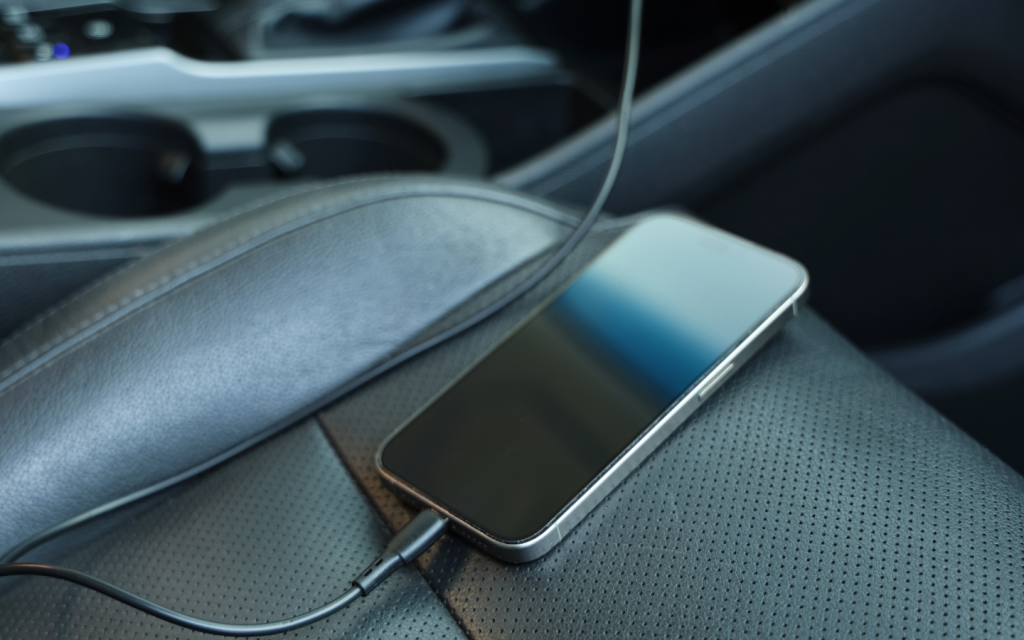
In some vehicles, charging ports remain active even when the engine is turned off. This can slowly drain your car’s battery. Additionally, charging while your phone sits in a hot, unventilated car can lead to overheating.
4. Don’t Place Your Phone Near the Gearshift or Cup Holder
Placing your phone where liquids can spill or where uncontrolled movement can occur is risky. Liquid damage or sudden jerks can easily break charging ports or cables.
5. Don’t Ignore Warning Signs
If your phone displays messages like ‘Charging paused due to temperature’ or the charger feels excessively hot, stop immediately. These alerts signal unsafe charging conditions that can cause lasting battery issues.
FAQs
Can charging your phone in the car damage the battery?
Charging a phone in your car won’t usually drain the battery, but inconsistent power output or poor-quality chargers can reduce long-term battery health.
Does a car charger drain your battery?
A car charger uses very little power and won’t drain your battery unless the engine is off for an extended period.
Can wireless charging in a car overheat the phone?
Yes, wireless charging in a car can generate extra heat, especially in hot weather, which may cause the phone to warm up more than usual.
Charging a phone in your car is safe and convenient when done correctly. By choosing high-quality accessories, avoiding extreme heat and understanding your car’s power output, you can protect your phone’s battery and ensure reliable performance on the road. Whether you’re navigating city streets or driving long distances, these simple dos and don’ts will help you make the most of this useful car gadget.
Besides, if you’re looking for a vehicle that comes with the convenience of phone charging, check out these new cars for sale in the UAE that are laden with several of the latest features.
To learn more about the latest car features, keep reading dubizzle’s autos blog.
Shutterstock image contributor – Skrypnykov Dmytro
Related Posts