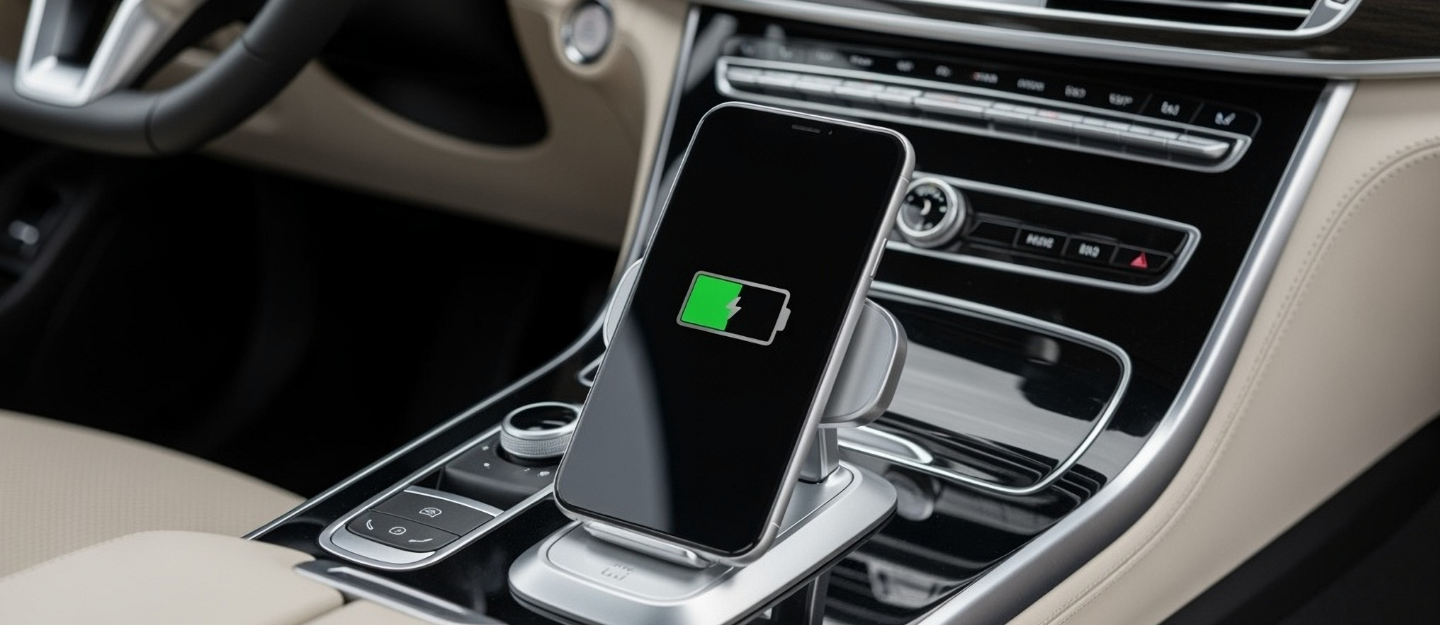
In today’s fast-paced world, wireless smartphone charging in cars has become a convenient feature, allowing drivers to charge their devices without the hassle of cables. By placing a Qi-enabled smartphone on a dedicated charging pad, users can maintain battery life while staying focused on the road. This feature is increasingly being integrated into new vehicles and is also available as retrofit kits for older models, adding practicality and enhanced functionality.
How Does It Work and Integration
Wireless car chargers primarily operate using inductive charging based on the Qi standard. Many automotive wireless phone charging systems provide stable power output, even under varying environmental conditions such as rain or humidity. While electric vehicle charging systems can deliver several kilowatts of power, smartphone charging pads typically offer up to 15 watts, making them ideal for everyday use.

Modern wireless charging systems often go beyond simply powering devices. Many carmakers integrate with other smartphone-to-car features, such as NFC-based virtual keys. They are allowing users to unlock doors, start the engine, or interact with infotainment systems without removing the phone from the wireless charging pads for cars. This integration enhances both convenience and vehicle security, making wireless charging one of the useful car gadgets.
Advantages of wireless charging in cars
Here are some benefits of car wireless charging technology:
Convenience and Reduced Distractions
In-car wireless phone charging allows drivers to quickly place their devices on the pad without fumbling for cables, reducing distractions and improving road safety.

Sleek and Organised Interiors
Charging pads are designed to blend easily with the car’s interior, maintaining a clutter-free and modern look.
Compatibility with Multiple Devices
Most wireless chargers support a range of Qi-enabled devices, including smartphones, smartwatches and earbuds, making them versatile across different brands.
Protection for Charging Ports
By eliminating frequent plugging and unplugging, wireless charging minimises wear and tear on device ports, helping extend gadget longevity.
Faster and Efficient Charging
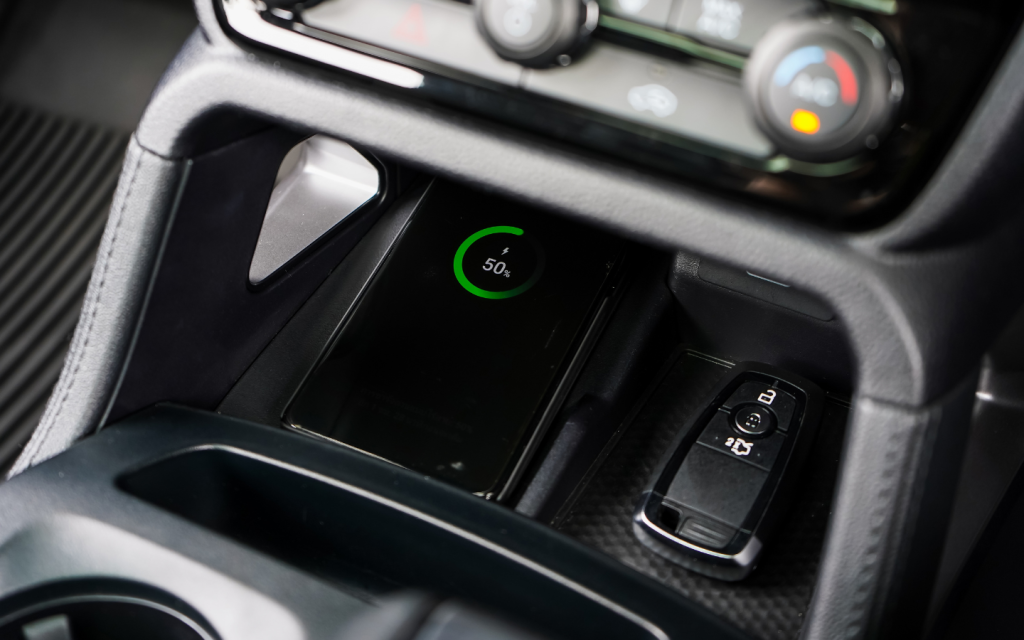
Advancements in technology have improved charging speeds and efficiency, ensuring that wireless chargers keep up with modern device requirements.
Practical Tips for Users
To get the most from wireless smartphone charging in cars, it’s important to position the device correctly on the pad for efficient power transfer. While wireless charging reduces cable clutter, using high-quality cables and chargers for wired connections when needed helps protect the battery.
Drivers should also monitor battery temperature, avoid overcharging and prevent the device from fully draining to prolong battery health. In cars with smaller batteries, it’s wise to be cautious when charging while the engine is off to avoid unintended power drain.
Limitations of Wireless Charging in Cars
Apart from its many benefits, the in-car wireless charging technology has certain drawbacks. They are as follows:
- Wireless charging is generally slower than wired fast charging, especially for high-capacity batteries.
- Devices must be placed correctly on the charging pad for efficient power transfer; misalignment can reduce or stop charging.
- Wireless charging can cause phones to heat up, which may affect battery health over time.
- Only Qi-enabled devices can be charged wirelessly; older phones or non-Qi devices require adapters or wired charging.
- Thick phone cases, metal accessories, or magnetic mounts can hinder charging efficiency.
- Using wireless charging while the car is off may drain the vehicle’s battery, particularly in smaller vehicles or EVs.
FAQs
Are all smartphones compatible with in-car wireless charging?
Not all smartphones are compatible; only Qi-enabled devices can charge wirelessly in most cars.
Which cars have wireless phone charging in 2025?
Several leading car brands, including Volvo, BMW, Mercedes‑Benz and Porsche, offer wireless smartphone charging in their 2025 models.
Can I install a wireless charging pad in my car?
Yes, you can install a wireless charging pad in most cars using aftermarket kits designed for universal compatibility.
Wireless smartphone charging in cars combines convenience, safety and integration with modern vehicle systems. Over the years, it has quickly become a valuable feature in contemporary vehicles, although it does have some limitations. For instance, a wireless charger may not work due to alignment issues.
If you are looking to upgrade your ride with the latest model that offers such convenience features, check out these new cars for sale in the UAE. These listings offer several choices under different price points.
To learn more about the latest car features, keep reading dubizzle’s autos blog.
Related Posts