
- Drag Coefficient and Drag Area
- Production Cars and Their Drag Coefficients
- How Cars Achieve Improved Aerodynamics
- Benefits of Low Drag Coefficient
- FAQs
When a car moves forward, it pushes against the air ahead. Some cars face greater air resistance, while others move more smoothly due to their streamlined shapes. A vehicle’s shape and overall design play a key role in creating this difference. The main component that judges a car’s aerodynamic efficiency is the drag coefficient, which gives a value to how well a vehicle can cut through the air. Knowing about the car drag coefficients helps drivers and designers understand speed, fuel use, and performance.
Understanding Drag Coefficient and Drag Area

The drag coefficient (Cd) quantifies how aerodynamically efficient a vehicle’s shape is. A lower Cd indicates smoother airflow around the car, translating into improved energy or fuel use at speed.
Another measure in real-world conditions is drag area (CdA), the product of Cd and the car’s frontal area. A broader vehicle with a slightly higher Cd can still outperform a narrower one with lower Cd if its frontal area is reduced.
Production Cars and Their Drag Coefficients
Production cars achieve different drag coefficients based on their design, body style and aerodynamic technologies. Below are the drag coefficient figures of some renowned cars.
| Model | Drag Coefficient (Cd) |
| Lucid Air | 0.197 |
| Mercedes-Benz EQS | 0.20 |
| Tesla Model S | 0.208 |
| Porsche Taycan | 0.22 |
| Hyundai IONIQ 6 | 0.21 |
| Audi e-tron GT / RS e-tron GT | 0.24 |
| Volkswagen ID.7 | 0.23 |
How Cars Achieve Improved Aerodynamics
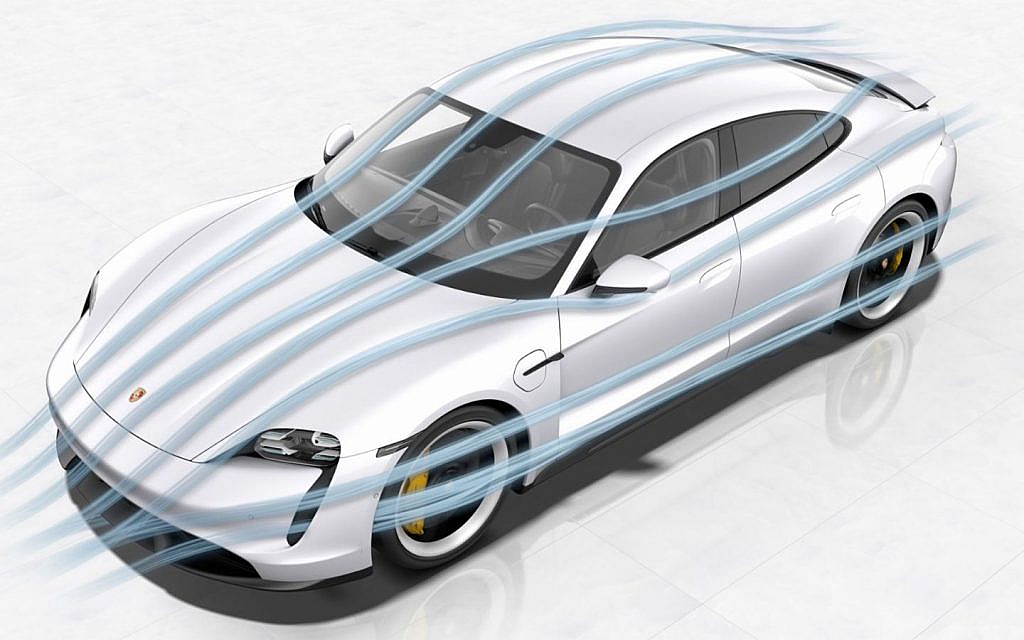
Many modern cars have features and design elements focusing on improving car aerodynamics.

Electric Vehicles’ Advantage
Electric vehicles often have streamlined underbodies, with no front grill to intake air, fewer cooling requirements and no exhaust systems, allowing designers to focus on optimised airflow. Models like the Lucid Air and Mercedes-Benz EQS benefit from this design feature.
Elaborate Bodywork and Active Aerodynamics
These vehicles employ advanced aerodynamic measures such as smooth underbody panels, rear diffusers, active grille shutters and carefully designed wheel arch air curtains to optimise airflow. These elements often work together with active components, adjusting automatically at speed to maintain the lowest possible car drag coefficients.
Impact of Wheels, Mirrors and Fitment
Trim-specific elements such as wheel size, camera mirrors and ride height can significantly influence aerodynamic performance. Even small alterations in these areas may change airflow patterns and lead to variations in a vehicle’s official drag coefficient figures. Manufacturers often test multiple configurations to ensure each trim level achieves the best possible aerodynamic efficiency.
Benefits of Low Drag Coefficient
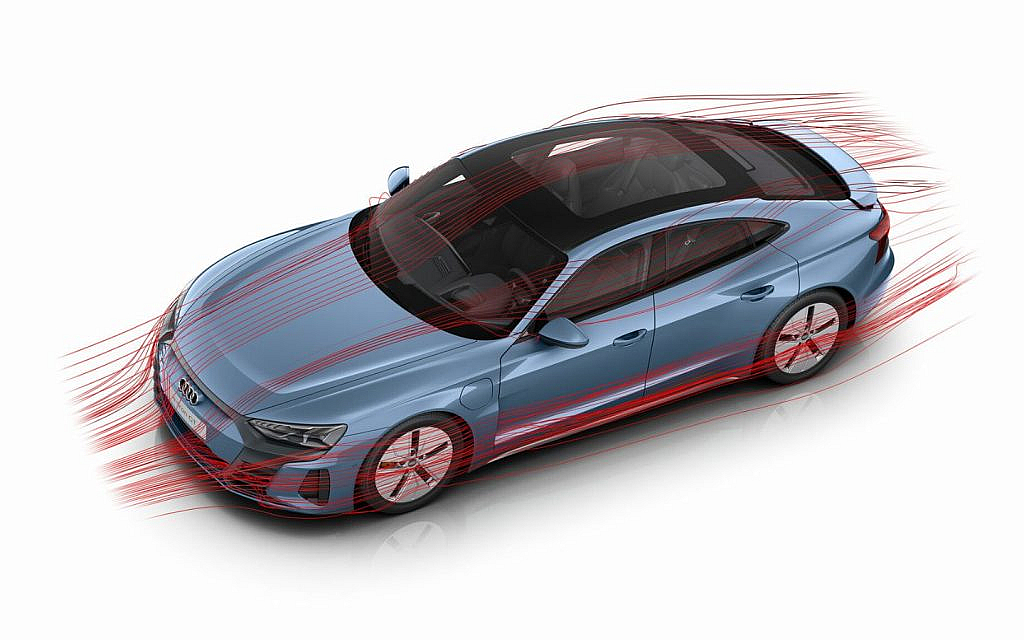
The importance of a low automobile drag coefficient in modern vehicle design has grown considerably in recent years.
Enhanced EV Range
At cruising speeds, aerodynamic resistance becomes the primary force opposing motion. Even a modest reduction in Cd, such as from 0.22 to 0.20, can deliver measurable energy savings and extend the driving range. This improvement enhances overall vehicle efficiency without changing the powertrain or battery capacity.
Improved Fuel Efficiency in Hybrids and ICE Vehicles
Lower car aerodynamics reduce fuel consumption in hybrids and internal combustion vehicles. It also minimises wind noise, enhancing overall comfort and efficiency during driving.
Smoother Driving Experience
A lower drag coefficient contributes to a smoother and more refined driving experience. Reduced aerodynamic resistance minimises wind noise and vibrations, allowing for quieter cabin conditions. This enhanced airflow management also improves vehicle stability at higher speeds, creating a more comfortable and controlled ride.
FAQs
Why is low drag important for electric vehicles?
Lower drag reduces energy consumption at higher speeds, extending battery range and improving efficiency without changing the battery size. Understanding drag in cars helps improve efficiency and performance on the road.
Are drag coefficients the same for all trims of a model?
No. Variations in wheels, ride height, mirrors or additional features can slightly alter Cd between different trim levels of the same vehicle. Besides, the effect of vehicle add-ons on the aerodynamics can also be significant.
Does a heavier car have a higher drag coefficient?
No. Weight affects the energy needed to move the car, but the drag coefficient depends on shape and airflow, not mass. However, bike racks, roof racks or headache racks can increase drag.
Understanding drag coefficients helps drivers and designers appreciate how vehicle shape and features affect airflow, efficiency and performance. Lower drag enables smoother motion, improved range, better fuel economy and quieter rides, highlighting the importance of aerodynamics in modern car design.
Modern cars offer ideal aerodynamics and impressive performance. Explore these used cars for sale in the UAE and choose from various vehicles with aerodynamic designs.
Keep visiting the UAE’s leading autos blog for more information on automotive technologies.
Related Posts