- Overview
- Legal Framework
- Bank Obligations
- Bounced Cheques Penalties
- What to do Afterwards
- How to Avoid Bounced Cheques
- FAQs
Cheque payments remain a cornerstone for property transactions in the UAE. From rental payments and security deposits to property purchases and commercial leases, cheques are widely used across the real estate sector. However, when a cheque cannot be encashed, it becomes a bounced cheque, triggering legal, financial and procedural consequences for both parties involved. Understanding the laws regarding cheque bounce in the UAE is essential for landlords, tenants, buyers and sellers to ensure smooth and legally compliant property transactions.
What Is a Bounced Cheque: A Complete Overview
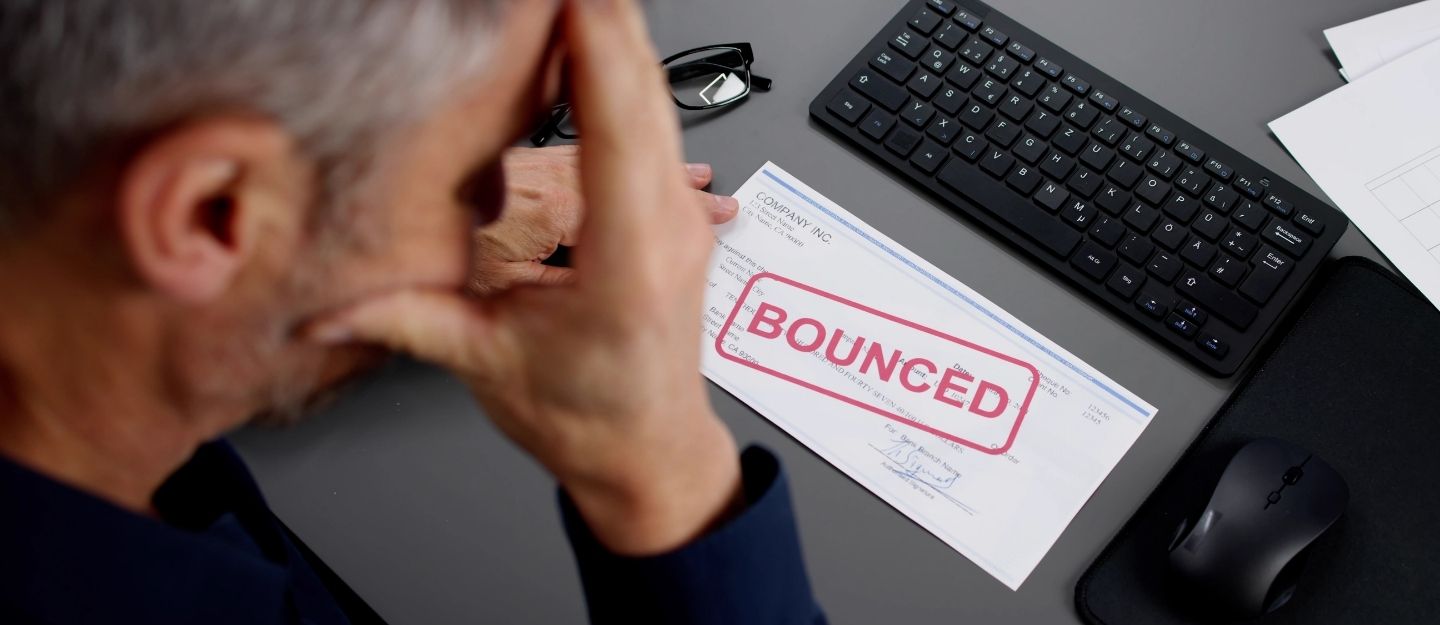
A bounced cheque, also known as a dishonoured cheque, occurs when a bank refuses to process a cheque due to reasons such as insufficient funds, account closure, mismatched signatures or technical errors. In property transactions, bounced cheques commonly arise during rental payments, security deposits or final settlement payments. Tenants issuing bounced rent cheques for apartments for rent in Dubai may face lease termination or legal recovery proceedings if the issue is not resolved promptly.
Laws for Cheque Bounce in the UAE

Previously, under Federal Law No. 18 of 1993, bounced cheques, regardless of reason, were considered criminal offences. This meant cheque issuers could face imprisonment and significant fines even in cases of insufficient funds.
Current Legal Framework
With the introduction of Federal Decree by Law No. (50) of 2022 Concerning Promulgating the Commercial Transactions Law, the UAE shifted towards a more business-friendly and civil enforcement approach. Under the amended UAE’s cheque bounce law:
- Most bounced cheques are now treated as civil matters, not criminal offences.
- The focus is on financial recovery rather than imprisonment.
- Courts and execution judges play a central role in dispute resolution.
Courts and execution judges play a central role in dispute resolution, particularly in property-related disputes covered under landlord rights in Dubai.

When Criminal Liability Still Applies
Despite decriminalisation, certain situations remain criminal under UAE law. These include:
- Issuing a cheque knowing there are no funds available.
- Instructing the bank not to honour a cheque without a legally valid reason.
- Closing, freezing or emptying a bank account before cheque encashment.
- Withdraws funds deliberately to prevent encashment.
- Issuing a cheque with forged, altered or mismatched signatures.
In such cases, imprisonment and financial penalties may apply.
Civil Treatment of Bounced Cheques
Under Article 630 of Federal Decree-Law No. 50 of 2022, cheque issuers are legally required for sufficient funds are available at the time of issuing a cheque. If a cheque bounces due to insufficient funds:
- Imprisonment is no longer the default punishment.
- The beneficiary must approach the execution court rather than filing a police complaint, a process commonly used in property maintenance disputes in Dubai.
- The process prioritises settlement, fines and payment recovery.
This streamlined approach is particularly relevant in property-related cheque disputes.
Bank Obligations for Cheque Encashment

UAE banks have a legal obligation to protect the rights of cheque beneficiaries.
- If funds are available, the bank must honour the cheque even if the issuer objects.
- Banks must release partial payments if full funds are unavailable.
- The bank needs to record each partial payment on the back of the cheque.
- The bank must return the original cheque along with the payment certificate to the bearer.
In cases where multiple cheques are presented and funds are limited, priority is given based on submission time or cheque serial number. These protections are particularly important in high-value transactions involving commercial properties for rent in Dubai and long-term leases.
Penalties for Bounced Cheques in the UAE
Law for cheque bounce in the UAE outlines specific penalties depending on the nature and intent behind it:
| Article | Penalty | Applicable When |
| Article 673 | Fine of at least 10% of the cheque value, with a minimum of AED 5,000, not exceeding double the cheque amount. | The drawer intentionally issues a cheque without sufficient funds or fails to pay partial amounts or recover the original cheque value. |
| Article 674 | Fine of at least 10% of the cheque value, with a minimum of AED 1,000, not exceeding the cheque amount. | The drawer or obligor is aware that the cheque cannot be encashed or that no balance is available. |
| Article 675 | Imprisonment from 6 months to 2 years and a fine of at least 10% of the cheque value (minimum AED 5,000, up to double the cheque amount). | The drawer instructs the bank to dishonour the cheque without valid legal reasons, closes or freezes the account, or signs the cheque in a way that prevents encashment. |
| Articles 676 & 677 | Imprisonment of at least 1 year and fines ranging from AED 20,000 to AED 100,000. For terrorist-related offences: Life imprisonment and fines between AED 500,000 and AED 1,000,000. | Forging cheques, using forged cheques, transferring forged cheques to third parties or fabricating cheques for criminal or terrorist purposes. |
| Article 679 | Confiscation of the chequebook and a ban on issuing new chequebooks for up to 5 years. Failure to return the chequebook may result in fines between AED 50,000 and AED 100,000. Banks violating these rules may be fined AED 100,000 to AED 200,000. | When a conviction is proven under Articles 674 or 675. |
As stated under Article 683, the above penalties apply only if intentional wrongdoing is proven. If a cheque bounces due to genuine financial difficulty without fraudulent intent, the case is generally handled through civil execution and settlement procedures rather than criminal punishment.
What to Do If You Receive a Bounced Cheque

If a cheque bounces during a property transaction, beneficiaries should follow these steps:
- Step 1 – Contact the Bank: Obtain official confirmation of the cheque’s dishonour and the account status.
- Step 2 – Secure Proof: Request written evidence of insufficient funds or the reason for dishonour.
- Step 3 – Notify the Drawer: Issue a formal written notice requesting payment within a specified timeframe and outlining potential legal consequences.
- Step 4 – Approach Authorities
- For insufficient funds: File a case with the execution court
- For criminal violations: File a police complaint within the cheque’s validity period (180 days)
- Step 5 – Claim Partial Payments: Beneficiaries may accept partial payments while retaining the right to recover the remaining amount.
How to Avoid Cheque Issues in Property Transactions
To minimise risks when dealing with property cheques:
- Verify the drawer’s financial capacity before accepting cheques.
- Avoid post-dated cheques where possible.
- Clearly define payment terms in tenancy or sale agreements.
- Maintain proper documentation for all cheque transactions.
- Act promptly if a cheque bounces to prevent escalation.
- Landlords can ask for a one-cheque rent payment in Dubai to avoid conflicts.
FAQs
Are bounced cheques still a criminal offence in the UAE for rental or property deals?
No, bounced cheques caused solely by insufficient funds are no longer automatically criminal offences under current UAE law. However, criminal liability may still apply if there is proof to defraud or deliberate actions to prevent cheque encashment.
What law governs bounced cheques in property and real estate transactions in the UAE?
Bounced cheques are governed by the UAE Commercial Transactions Law, amended by Federal Decree-Law No. 50 of 2022. This law applies to all cheque-related matters, including those arising from rental, residential and commercial property transactions.
What precautions should landlords, tenants and buyers take regarding cheque use in UAE property contracts?
All parties should follow the rental contract checklist, i.e. verify payment capacity, avoid unnecessary post-dated cheques, respond promptly to dishonoured cheques and seek legal advice early to prevent disputes.
While bounced cheques are no longer automatically criminal offences under the laws for cheque bounce in the UAE, they remain a serious concern in property transactions. The shift towards civil enforcement has made dispute resolution faster and more efficient. However, intentional misuse of cheques can still result in severe legal penalties.
When planning to buy properties for sale in Dubai using cheque-based payments, being aware of the laws for cheque bounce in the UAE can help you manage payments securely and minimise legal risks.
For more informative real estate updates and laws, stay tuned to the dubizzle’s property blog.