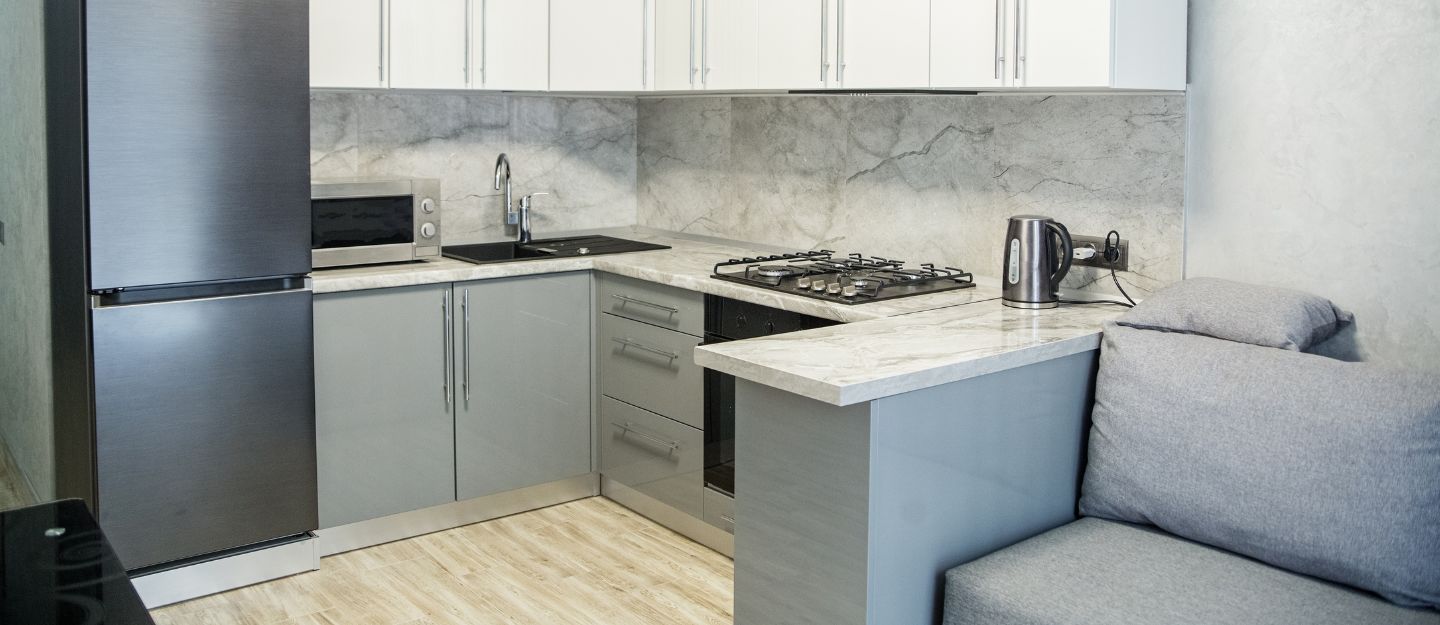
A well-designed kitchen is defined by how efficiently you can move within it. The kitchen work triangle rule plays a key role in achieving that. It is one of the most widely used principles in kitchen design, known for enhancing how people move and work within the space. While kitchens today serve many purposes beyond cooking, this concept still plays an important role in creating a layout that feels efficient and easy to use.
What Is the Kitchen Work Triangle Rule?
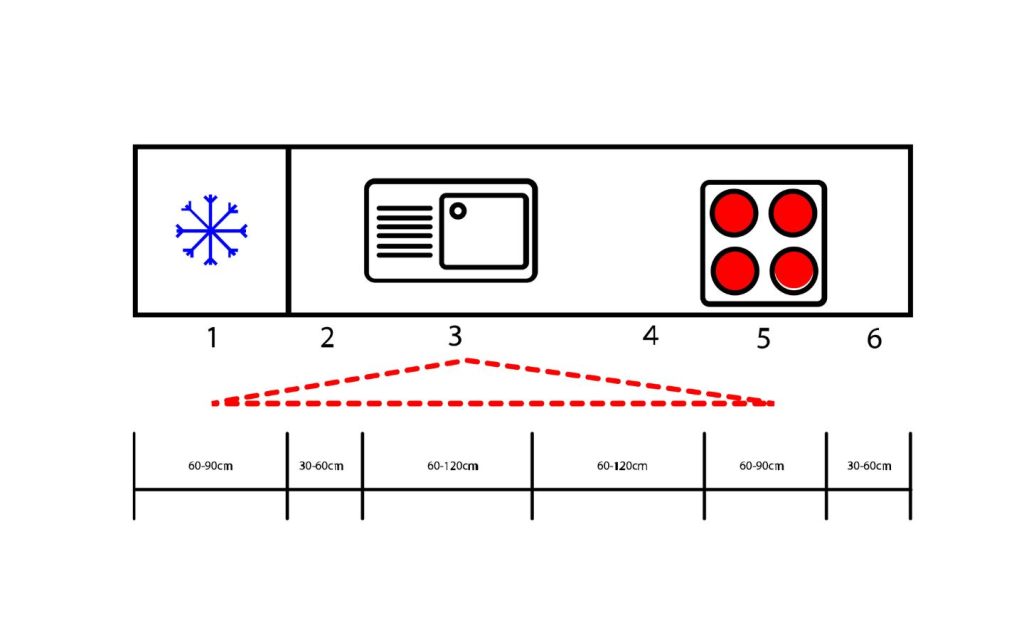
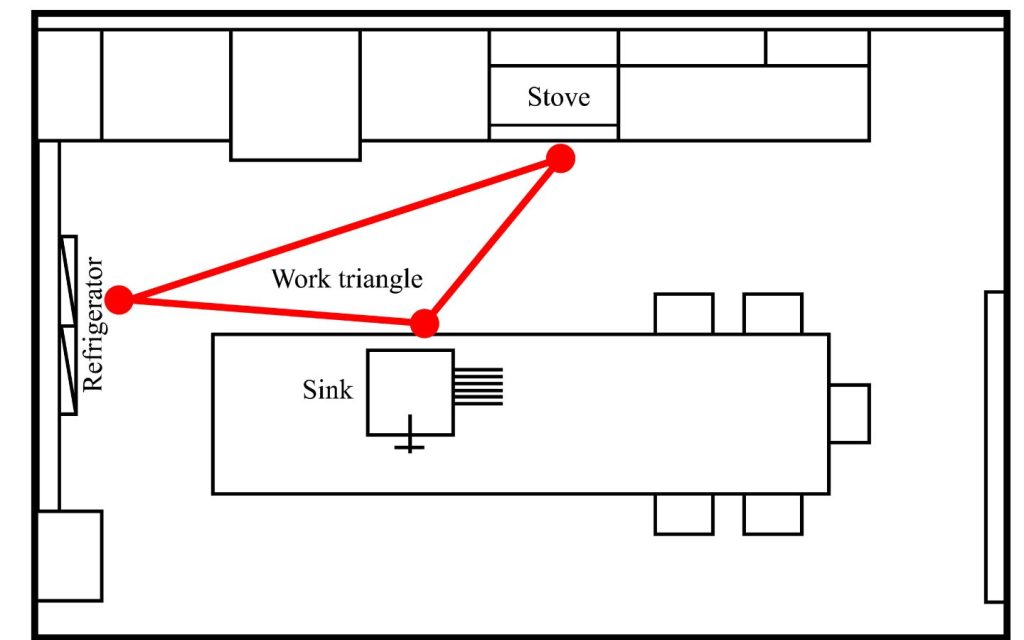
The kitchen work triangle rule is a design principle that positions the three primary work areas, the refrigerator, the stove and the sink, at the points of an imaginary triangle.
The purpose of this arrangement is to improve workflow by minimising unnecessary movement. By keeping these key areas within a comfortable distance, this kitchen solution allows for smoother transitions between food storage, preparation and cooking. This results in a more efficient and organised kitchen environment.
Recommended Measurements for the Work Triangle
To ensure optimal functionality, designers generally follow the following guidelines:
- Each side of the triangle should measure between 4 and 9 feet (1.2 to 2.7 meters)
- The total perimeter of the triangle should range from 13 to 26 feet (4 to 7.9 meters)
- There should be no major obstacles, such as tall cabinets or partitions, between the three points
- The main cooking area should be kept free from heavy foot traffic
These measurements are not rigid rules but serve as a practical reference. Adjustments can be made depending on the size and layout of the kitchen.
Practical Tips for Improving Workflow
In addition to following the triangle dimensions, certain design choices can further enhance usability:

- Position the food preparation space near the stove for convenience
- Store frequently used utensils and cookware close to the cooking area
- Place the refrigerator near the preparation area to streamline access to ingredients
- Provide adequate landing space near the sink and stove for placing items
These considerations play a key role in any kitchen transformation, helping you design a space that’s both efficient and comfortable for everyday use.
Applying the Triangle to Different Kitchen Layouts
The kitchen triangle design rule can be adapted to suit a variety of layouts, each with its own characteristics.
L-Shaped Kitchens
This layout naturally accommodates the triangle by placing key appliances along two adjoining walls. It allows for efficient movement while maintaining an open feel.
U-Shaped Kitchens
With three surrounding walls, this layout offers ample space for efficient kitchen counter organisation while supporting a highly effective triangle configuration. It is particularly suitable for single users or focused cooking tasks.
Galley Kitchens
In this layout, two parallel walls house the main work areas. While the triangle may be more linear, careful placement can still ensure efficient movement.
One-Wall Kitchens
Although forming a true triangle is challenging in this layout, the principle can still be applied by keeping the three key elements within close proximity and ensuring adequate workspace.
Kitchens with Islands
Kitchen islands can either support or disrupt the triangle. When designed thoughtfully, they can serve as additional workstations or even incorporate one of the triangle points, such as a sink or cooktop.
Work Triangle vs Work Zones
As kitchen design has evolved, the concept of work zones has gained popularity. Instead of focusing solely on three points, the kitchen is divided into functional areas such as:
- Food storage
- Preparation
- Cooking
- Cleaning
- Serving
Key Differences
- The work triangle is ideal for smaller kitchens or single users, emphasising efficiency and minimal movement.
- Work zones are better suited to larger kitchens or households with multiple users, allowing simultaneous activities.
In many cases, a combination of both approaches provides the most effective solution, maintaining efficiency while accommodating modern usage patterns.
Common Mistakes and How to Avoid Them
Despite its simplicity, the triangle rule in kitchen planning can be misapplied. Common issues include:
- Overly compact layouts: Insufficient spacing can make movement difficult
- Excessive distances: Placing elements too far apart reduces efficiency
- Obstructed pathways: Islands or cabinets can interrupt workflow
- High-traffic interference: Positioning the triangle in a busy walkway can lead to congestion
FAQs
Why is the kitchen work triangle important?
It improves efficiency by keeping the fridge, stove and sink within easy reach, reducing unnecessary movement.
How does the kitchen triangle improve workflow?
It streamlines movement between key tasks like storage, preparation and cooking, making the process faster and more organised.
Is the work triangle suitable for modern kitchen layouts?
Yes, it remains relevant as a flexible guideline that can be adapted to suit larger, multifunctional, open and closed-plan kitchens.
The kitchen work triangle remains a practical guideline for creating an efficient and well-organised space. Even in modern layouts, its core principles help improve movement, reduce effort and make everyday tasks more convenient.
Rather than a strict rule, it works best as a flexible framework that can be adapted to different kitchen styles and lifestyles. This is particularly relevant when exploring new homes, where thoughtful layouts play a key role in overall comfort and functionality. With that in mind, here are some properties for sale in the UAE that feature well-designed, practical kitchen spaces.
Keep reading dubizzle’s property blog to learn more about smart design tips, home buying insights and practical ways to enhance your living space.