- Historical Facts
- Infrastructure Facts
- Construction & Engineering Facts
- Structural & Safety Design Facts
- Architechture Facts
- Transport Facts
- FAQs
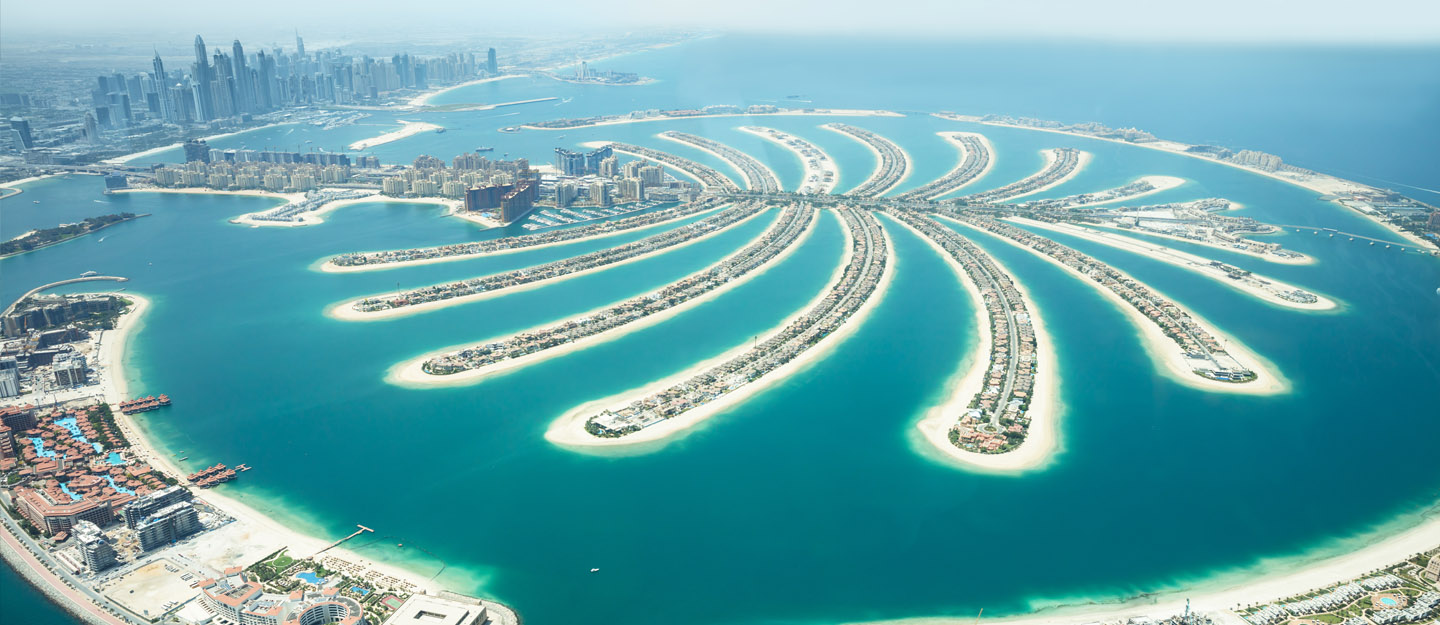
Palm Jumeirah is one of the world’s most iconic man-made islands and a major landmark in Dubai. Stretching approximately 5 km into the Arabian Gulf, the island takes on the shape of a date-palm tree and covers about 560 hectares of land. The artificial archipelago is home to luxury apartments, hotels, resorts, water parks and other attractions. We have compiled some interesting Palm Jumeirah facts in detail.
Historical Facts About Palm Jumeirah
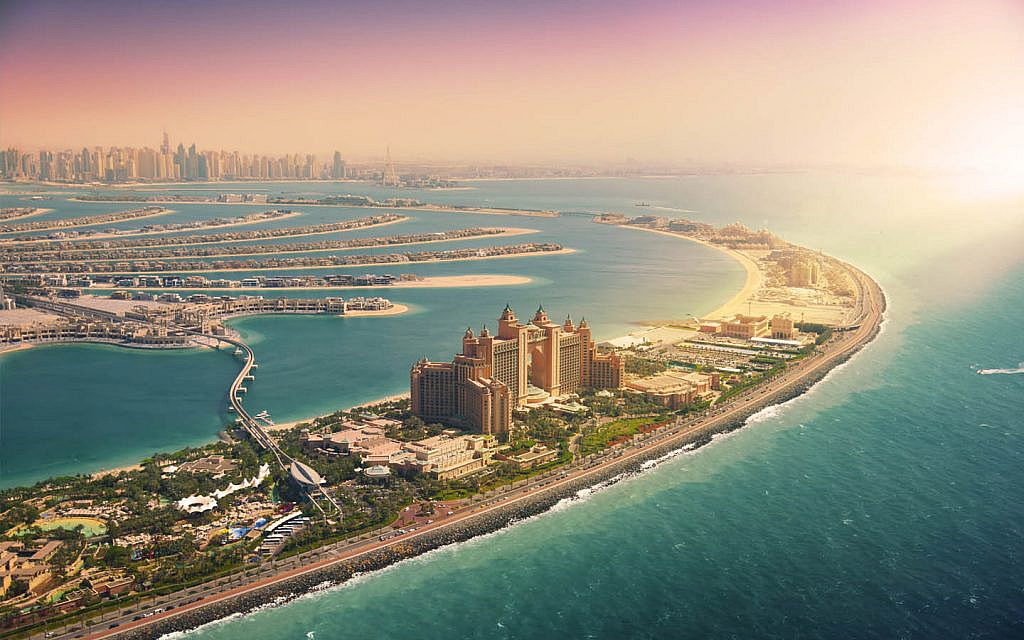
Development of Palm Jumeirah began in 2001 under master developer Nakheel as part of Dubai’s coastline extension strategy to strengthen its tourism and real estate sectors. Extensive planning and engineering studies were undertaken when the development of Palm Jumeirah started.
Infrastructure Facts About Palm Jumeirah
Reclamation of the island was substantially completed in the mid-2000s, with the first residential handovers beginning around 2006. Development has continued in phases ever since, with new hotels, residence and attractions over time.
Today, Palm Jumeirah is home to thousands of residents. The island is connected to mainland Dubai via a bridge approximately 1.4 km in length, providing direct road access.
Construction & Engineering Facts About Palm Jumeirah
The island’s reclaimed land consists largely of rocks and sand, while concrete and steel were used for infrastructure, foundations and the 6-lane tunnel construction.

A fleet of dredgers, barges, cranes and heavy marine equipment was used during the construction phase. The unique structure of this island was created using approximately 94 million cubic metres of sand and about 7 million tonnes of rocks obtained from the Hajar Mountains.
The project significantly expanded Dubai’s coastline by more than 70 km.
Structural and Safety Design Facts About Palm Jumeirah
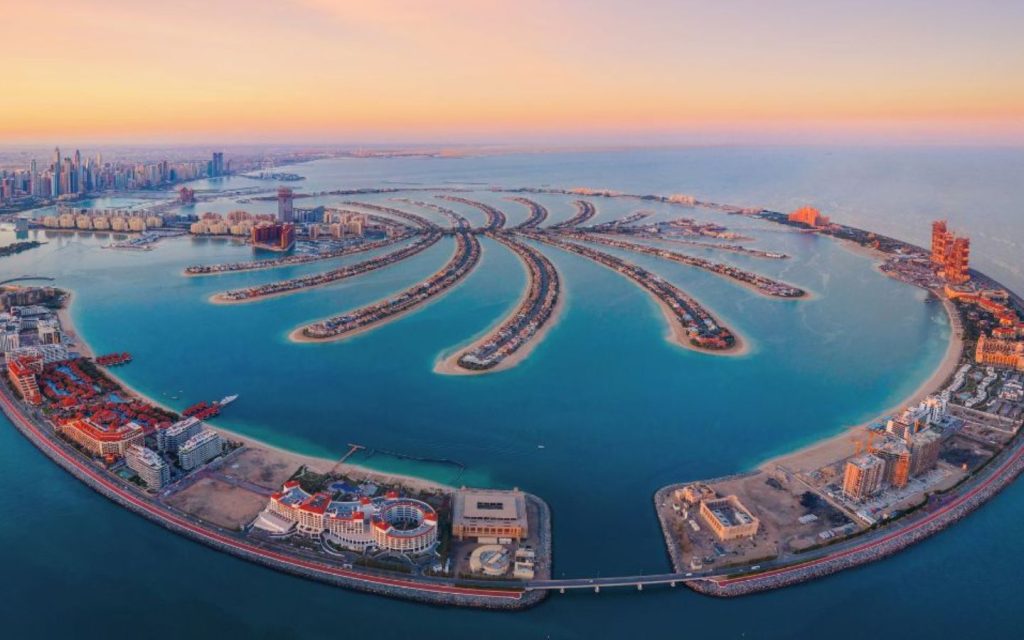
What protects the island from storms and tides is the 11.5 km crescent-shaped breakwater. This consists of about 5.5 million cubic metres of rock, with individual rocks weighing up to several tonnes.
Openings were added at both ends of the crescent to improve water circulation and prevent stagnation. The crescent hosts many lavish Palm Jumeirah hotels, including Atlantis The Palm and Waldorf Astoria.
Architecture Facts About Palm Jumeirah
Architects designed Palm Jumeirah in the shape of a date palm, consisting of a trunk, 16 fronds and a surrounding crescent breakwater. A combination of geotextile, fibre and sand with carefully placed rocks was used to construct the breakwater. The foundation layers were engineered to improve stability and reduce the impact of sea conditions, helping maintain the long-term structure of the reclaimed land.
Global Positioning System (GPS) technology was used during construction to precisely map and position the island’s fronds in the correct geometric formation across the sea.
An underwater road tunnel connects the trunk of Palm Jumeirah to the crescent, forming a key transport link beneath sea level.
Transport and Accessibility Facts About Palm Jumeirah
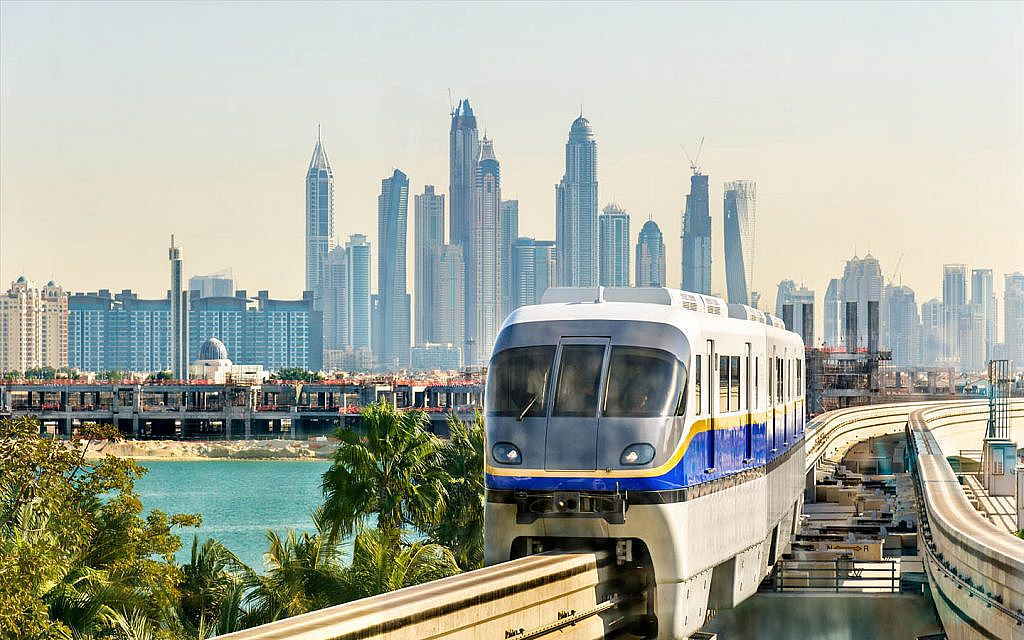
The island can be accessed via several transport options, including road, monorail and nearby metro connections. These services are operated and regulated by the Roads and Transport Authority (RTA).
The Palm Jumeirah Monorail, launched in 2009, connects the Palm Gateway Station with key destinations including Al Ittihad Park, Nakheel Mall and Atlantis Aquaventure. The monorail is fully automated and driverless, with onboard staff for safety and assistance in case of emergencies. The journey offers panoramic views of Palm Jumeirah’s trunk and fronds, making it one of the most scenic transport routes in Dubai.
Moreover, here is a comprehensive guide about public transport in Palm Jumeirah for more on transportation in and near the island.
Other Interesting Palm Jumeirah Facts
Here are a few more interesting Palm Jumeirah facts:
- Palm Jumeirah Island is a part of Nakheel’s wider Palm Islands development concept, including Palm Jebel Ali
- Palm Jumeirah is also home to shopping malls, including Nakheel Mall and Golden Mile Galleria
- Its unique palm-shaped design was chosen to maximise beachfront development and create premium waterfront plots. The island is also among Dubai’s waterfront communities.
FAQs
Why is Palm Jumeirah shaped like a palm tree?
The design reflects the date palm, a culturally significant tree in the UAE and maximises beachfront development.
How many fronds does Palm Jumeirah have?
Palm Jumeirah consists of 16 fronds along with a trunk and crescent-shaped breakwater.
What was the cost of building Palm Jumeirah?
As per industry estimates, the total development cost of Palm Jumeirah is widely reported between $12-14 billion (USD). This excludes private developments such as hotels and residences.
Those were some interesting Palm Jumeirah facts. If you wish to live on rent on this island, you are in luck because there are many apartments for rent in Palm Jumeirah. Moreover, if you want to own a luxurious property here, go through the villas for sale in Palm Jumeirah.
If you liked what you read, stay tuned to dubizzle property blog for more.