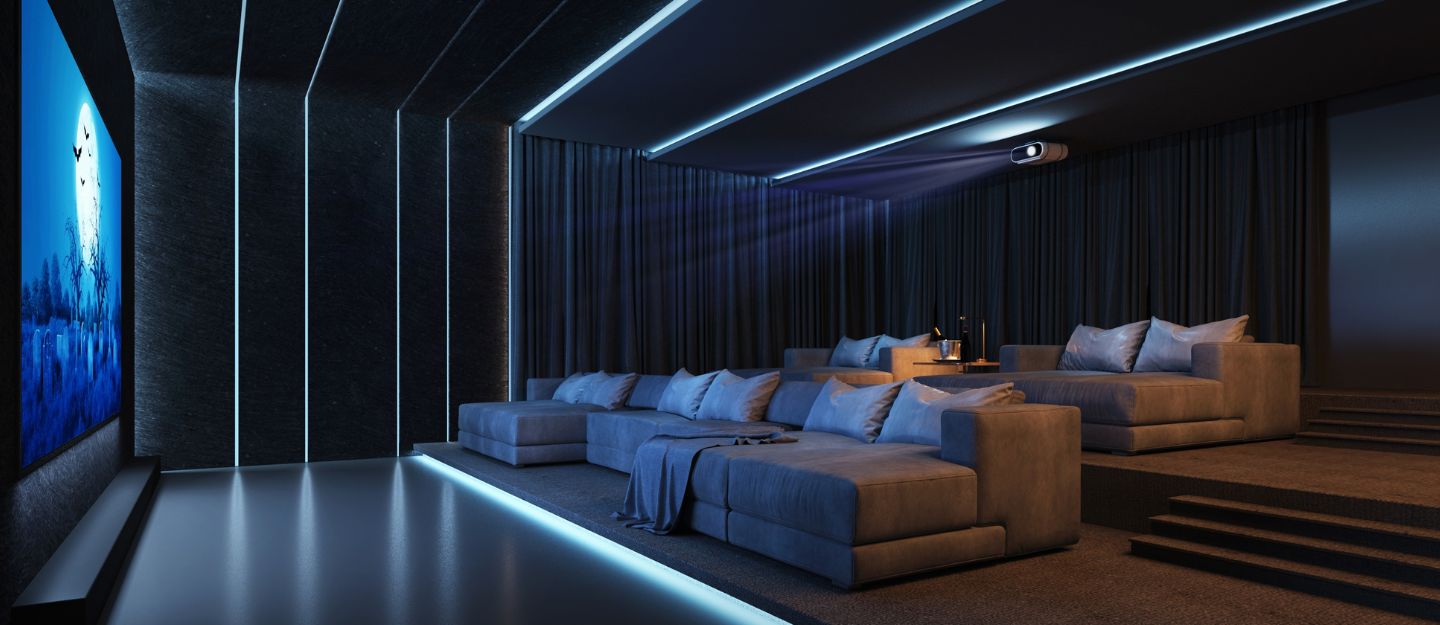
Designing a home theatre system demands a careful balance of sound quality and visual performance. With thoughtful planning and the right components, you can transform an ordinary living area into an immersive personal cinema. Whether creating a multi-purpose space or a dedicated screening room, a structured approach ensures every viewing experience is delivered with clarity and impact.
Start with Planning Your Space
Before buying any equipment, consider which room will become your home theatre. Room size, shape and lighting will influence what kind of display and sound system you choose.
- Small rooms work well with a big TV and a soundbar.
- Larger rooms can handle surround sound systems, projectors and more advanced setups.
- For basements or unfinished spaces, consider DIY basement interior tips such as painting walls darker, adding rugs or installing modular shelving to enhance acoustics and create a more polished look.
Pick a quiet space, away from busy areas of your home. Control lighting with blackout curtains or shades to prevent glare and preserve picture quality.
Set Your Budget and Choose Equipment
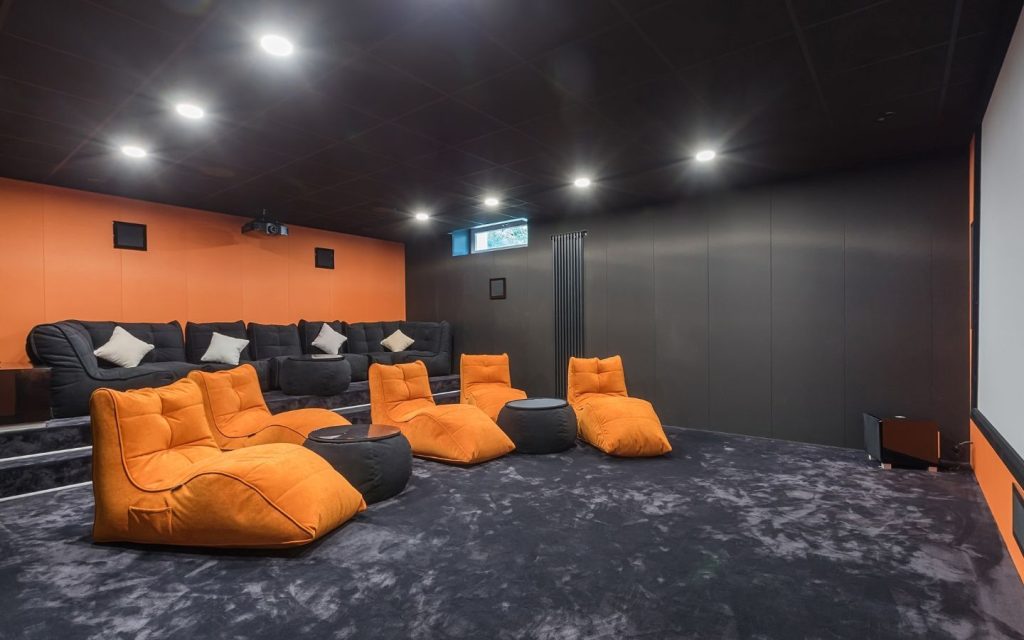
Knowing your budget helps you make smart choices. Decide how much you want to spend on:
- Display: A 4K TV or projector delivers sharp, bright images. OLED TVs perform best in darker rooms, while LED TVs are well-suited for brighter spaces.
- Audio: Sound is key to the cinematic experience. For simplicity, a soundbar works well, but a 5.1 or 7.1 speaker system creates a more immersive surround experience.
- Accessories: Don’t overlook mounts, cables and seating. Even small upgrades can significantly improve your setup.
If your system is simple, you can try a DIY home theatre system installation. For more complex setups, professional help ensures everything works correctly.

Home Theatre Setup Tips
Installing a home theatre system at home requires meticulous planning to ensure both sound and visuals are optimised. Proper placement of displays, speakers and seating can transform any room into a fully immersive cinematic experience. These small adjustments can also make your home look expensive without a major renovation.
Display Placement
A well-placed display is the foundation of a great viewing experience.
- Position your TV or screen at eye level when seated.
- For projectors, ensure the screen is aligned with the seating area.
- Keep ambient light in mind; darker walls and curtains improve picture quality.
Speaker Arrangement
Proper speaker placement makes sound feel natural and immersive.
- Front speakers should be placed on either side of the screen.
- The centre speaker should sit near the middle of the screen.
- Surround speakers should be positioned around the seating area, following the “triangle” principle for optimal sound.
- Add a subwoofer to deliver deep, punchy bass.
Seating and Layout
Comfortable seating and thoughtful layout enhance the overall experience.
- Arrange seats to face the screen directly.
- For multiple rows, consider a riser to maintain clear sightlines.
- Measure the viewing distance relative to your screen size to ensure comfort.
Wiring and Connections
Proper wiring keeps your home theatre both functional and safe.
- Keep cables tidy and organised, using cable management solutions where possible.
- Consider wall mounts or in-wall wiring for a clean look.
- Ensure all devices are connected correctly, leaving space for future upgrades.
Optimise Your Room
Good acoustics and lighting can elevate your home theatre experience.
- Use rugs, carpets and curtains to reduce echo.
- Set speakers at ear level for clear sound.
- Install dimmable lighting to adjust the ambience easily.
Test and Maintain
Once everything is set up, calibrate your system:
- Adjust display settings for colour, brightness and sharpness.
- Use audio calibration tools to balance speaker levels.
- Regularly clean your screens and speakers and check for software updates to keep your system performing well.
FAQs
What do I need to design a home theatre system?
To design a home theatre system, you need a suitable room, a quality display, an audio system, seating and appropriate lighting and acoustics.
What is the best room size for a home theatre?
The best room size for a home theatre depends on your equipment and seating, but a medium-sized rectangular room is ideal for sound and viewing.
How should speakers be placed in a home theatre setup?
Speakers should be placed around the seating area, with front speakers on either side of the screen and the centre speaker near the middle. Surround speakers should form triangles with the listener for optimal sound.
A well-designed home theatre system transforms a standard room into a sophisticated personal cinema. Through careful planning and the selection of quality components, designing a home theatre system allows you to enjoy an immersive experience for films, television and gaming alike. There are various home theatre systems for sale in the UAE that can help you achieve the ideal setup.
To create the perfect home entertainment space, start with the right property. Explore these properties for sale in the UAE, offering a variety of layouts and features to suit your lifestyle.
Keep reading dubizzle’s property blog to discover more tips and insights on real estate in the UAE.