- What is Floor Area Ratio in Dubai
- FAR Calculation
- FAR Importance in Dubai
- How FAR Works
- FAR Impact on Property Value
- FAR Range by Property Type
- FAQs
Floor Area Ratio (FAR) is the regulatory metric that determines exactly how much you can build on your land. It directly impacts your property’s development potential, investment returns and compliance with Dubai’s urban planning regulations. Whether you’re buying a villa plot in JVC, investing in commercial space in Downtown Dubai or developing a mixed-use project, understanding Floor area ratio in Dubai is essential to avoid costly mistakes and maximise your ROI.
What is Floor Area Ratio (FAR)?
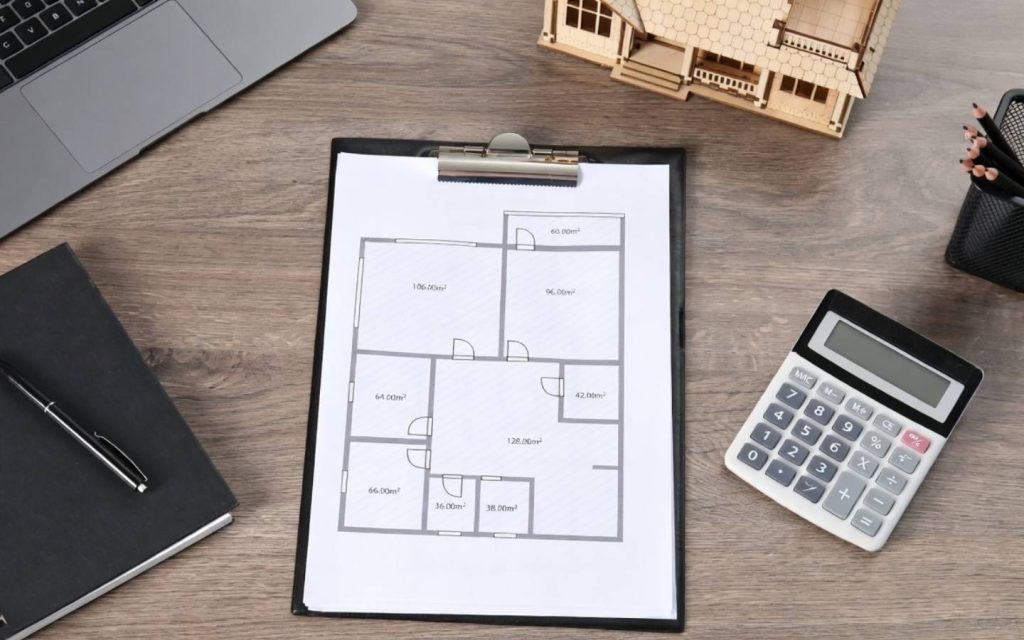
FAR is the relationship between a building’s total gross floor area (GFA) and the total area of the plot on which it is constructed. In simple terms, the floor area ratio in Dubai tells you how much floor space can be built relative to the size of the land parcel. It is commonly used by planning authorities to regulate development intensity and maintain balanced urban growth. FAR is also known in some markets as Floor Space Ratio (FSR), Floor Space Index (FSI), Plot Ratio or Site Ratio.
FAR Calculation
To calculate the floor area ratio in Dubai, understanding its components is important.
Gross Floor Area (GFA)
This refers to the total enclosed built-up area that counts toward development rights. GFA includes:
- Enclosed usable spaces
- Residential units
- Office floors
- Retail spaces
- Internal circulation areas
Plot Area
The total land area approved for development. Certain spaces may be excluded depending on planning regulations and approvals, such as:
- Open terraces
- Some balconies
- Underground parking
- Certain mechanical spaces
Exact treatment varies according to local authority requirements and project approvals.

You can calculate FAR in Dubai using a simple equation:
- FAR = Total Gross Floor Area (GFA) ÷ Total Plot Area
Or rearranged to calculate your allowable buildable area:
- GFA = Plot Area × FAR
For example:
- Plot size = 10,000 sq. ft.
- Permitted FAR = 3.0
Maximum buildable floor area: 10,000×3.0=30,000 sq. ft.
This means the total built-up floor space across all levels cannot exceed 30,000 sq. ft., subject to other planning controls and approvals.
Why FAR Matters in Dubai Real Estate
Dubai’s rapid urban expansion is carefully managed through planning controls and FAR plays a central role in that framework. Rather than allowing unrestricted construction, the FAR in Dubai helps authorities manage:
- Urban density
- Infrastructure capacity
- Building scale
- Open spaces
- Community liveability
- Traffic and utility load
- Skyline development
Dubai Municipality uses FAR with building setbacks, plot coverage limits, building heights and land-use regulations to shape development across the emirate.
How FAR Works in Dubai Real Estate
FAR does not automatically determine building height. Two projects may have the same FAR but look completely different. For instance:
Option A: Vertical Development
- Plot: 10,000 sq. ft.
- FAR: 4.0
- Build: 10 floors × 4,000 sq. ft.
Option B: Wider Footprint
- Plot: 10,000 sq. ft.
- FAR: 4.0
- Build: 5 floors × 8,000 sq. ft.
Both developments achieved the same allowable built-up area but distributed it differently. This is why FAR works alongside:
- Maximum height restriction
- Plot coverage rules
- Parking requirements
- Setback regulations
- Land-use zoning
How FAR Impacts Property Value in Dubai
In Dubai’s real estate market, FAR directly influences pricing, rental income potential and long-term investment returns.
Higher FAR = Higher Development Potential
A higher floor area ratio in Dubai allows more floor space to be built on the same plot, which means more units or larger developments. This usually increases the overall land value, as developers can generate more saleable or leasable area.
Strong Impact on Investment Returns
FAR affects how efficiently a project can generate income:
| FAR Level | Development Output | Impact on ROI |
| Low FAR | Fewer units, more open space | Lower density, often premium pricing per unit |
| Medium FAR | Balanced unit yield | Stable rental income and moderate ROI |
| High FAR | More units / commercial space | Higher revenue potential but higher competition and costs |
That said, FAR directly influences a project’s ROI potential and feasibility.
Shapes Supply and Pricing in Communities
FAR also affects pricing dynamics within the same master community:
- Low-rise, low-FAR zones → more exclusivity, larger plots, higher price per square foot
- High-rise, high-FAR zones → more units, relatively lower entry price per unit but higher overall density
FAR Range by Property Type in Dubai
Floor area ratio in Dubai varies depending on the property type, planning vision, land use and intended population density of a community.
| Community Type | Typical Development Style | Common Property Types | Indicative FAR Range* |
| Low-density residential areas | Spacious layouts with greater open space and lower building mass | Villas, standalone homes, gated communities | Below 1.0–1.2 |
| Medium-density communities | Balanced residential development with moderate density | Townhouses, low- to mid-rise apartment buildings | Around 1.5–3.0 |
| High-density and commercial districts | Intensive land utilisation with vertical development | Mixed-use towers, commercial buildings, and high-rise residential projects | 5.0 and above (subject to zoning approvals) |
*Indicative FAR ranges may vary based on plot designation, master developer requirements, zoning controls and local planning approvals.
FAQs
Who determines the FAR for a plot in Dubai?
FAR is set by Dubai’s planning and regulatory authorities, mainly through zoning and land-use regulations under the Dubai Municipality. It is also influenced by relevant master developers such as free zone authorities and master planners.
What is the difference between FAR and plot coverage ratio?
FAR measures total built-up area across all floors, while plot coverage measures only the ground floor footprint as a percentage of the plot. FAR controls overall density, while plot coverage controls land usage at ground level.
What are the benefits of understanding FAR before investing in property?
Understanding FAR helps investors evaluate development potential, estimate returns, accurately compare land values, and avoid overpaying for plots with limited buildability.
This is all about the floor area ratio in Dubai. It is a key planning tool that quietly shapes how Dubai’s real estate market grows and evolves. For investors and buyers, FAR is especially important when assessing new projects in Dubai. It gives a clearer idea about the true scale, density and long-term growth potential behind each development.
Moreover, those comparing properties for sale in Dubai can also use FAR to better understand land utilisation and future community growth.
To learn more about real estate terms, stay tuned to dubizzle’s property blog.
![Every home has a story. Every story has a next step.
From your first key to the place you’ve always dreamed of, dubizzle Property is there for every move along the way.
Find your next moment with dubizzle Property .
لكل بيت حكاية، ولكل حكاية خطوة جديدة.
من البدايات الأولى إلى اللحظات التي تحلم بها، دوبيزل للعقارات تساعدك في العثور على المكان الذي يناسب كل مرحلة من حياتك.
اعثر على مكانك القادم مع دوبيزل للعقارات.
[dubai property, dubai real estate, dubai apartments, finding a home in dubai, dream home dubai, property in dubai, uae real estate, dubizzle property, dubai homes, luxury properties dubai]](https://www.dubizzle.com/blog/property/wp-content/plugins/instagram-feed/img/placeholder.png)