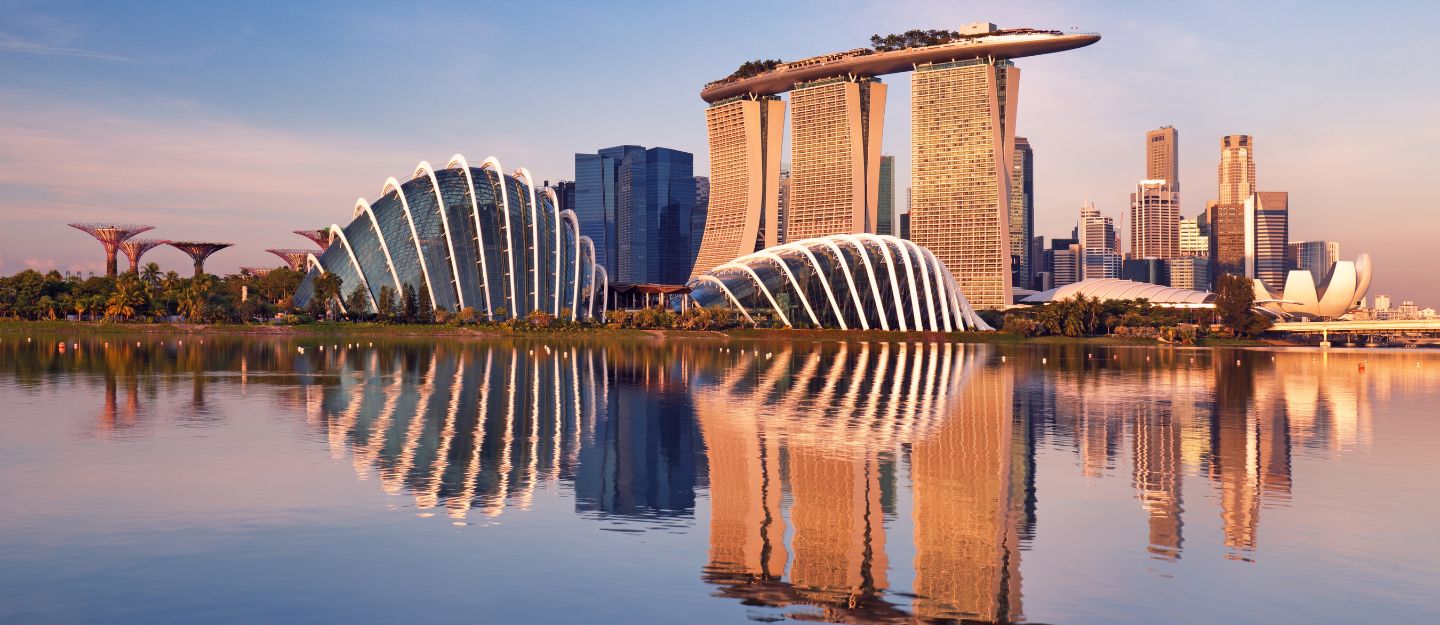
Dubai and Singapore are widely regarded as two of the world’s leading investment destinations, each offering economic stability, investor-friendly policies and strong long-term growth potential. While Dubai is often recognised for its notable returns and tax-efficient environment, Singapore is known for its tightly regulated market and consistent performance. For investors, choosing between the two cities depends on several factors, including entry costs, expected returns and broader financial objectives. Understanding how Dubai vs Singapore real estate investment compares can help investors make a more informed decision.
Property Market Comparison: Dubai vs Singapore
Dubai and Singapore rank among the world’s leading metropolitan cities, offering modern infrastructure, strong governance and attractive economic opportunities. While the two markets share similarities in terms of property types, investment policies and long-term growth potential, they differ in multiple ways.
Market Trends
The real estate markets of Dubai and Singapore have followed two distinct growth patterns, shaped by their economic strategies, long-term development plans and regulatory frameworks.
As per Digital Dubai, In 2025, emirate’s real estate investments exceeded AED 680 billion, up 29% in value and 20% in number compared to 2024. The overall value of market transactions also reached AED 917 billion, highlighting the emirate’s rapid expansion and strong investor activity.
By contrast, Singapore’s property market has reflected a more measured pace of growth. Residential property prices in Singapore have increased by 3.3% in 2025. Whereas the rental market recorded a 1.9% annual rise compared to 2024.

Economic Indicators
Economic indicators have played a key role in shaping the real estate markets of both Dubai and Singapore. Dubai’s overall GDP recorded growth of 4.7%, while the real estate sector grew by 6.7%, contributing 8.2% to the total GDP. By comparison, Singapore’s GDP increased by 4.8%, with the real estate sector contributing around 3.4% to the national economy. This highlights the larger role real estate plays in Dubai’s economic structure.
Beyond GDP, government agendas and long-term development visions also have a significant impact on market performance. Initiatives such as the Dubai 2040 Urban Master Plan and the Dubai Economic Agenda D33 reflect the government’s focus on real estate market growth. In Singapore, strategic frameworks such as the Master Plan and Vision 2050 guide the real estate sector through a measured and policy-led approach. Together, these plans show how both cities view real estate as an important economic sector, although each market is being shaped by a different long-term strategy.
Foreign Ownership
Foreigners can buy properties in the designated freehold areas of Dubai. These zones include areas such as Palm Jumeirah, Dubai Marina and Downtown Dubai. Within these freehold areas, foreigners are allowed to purchase all kinds of properties, ranging from studios to villas. Moreover, foreign buyers are not subject to any additional property tax, investment cap or similar restrictions.
On the other hand, Singapore allows foreigners to buy properties such as condominiums and apartments. However, for landed homes, terrace houses, bungalows and shophouses, foreign buyers are required to seek approval under the Residential Property Act. Moreover, foreign buyers are subjected to 60% Additional Buyer’s Stamp Duty (ABSD) of the total property’s value, which significantly increases the entry price.
Infrastructure
Dubai and Singapore both offer world-class infrastructure, supported by modern road networks, advanced public transport systems and globally recognised airports. Dubai International Airport handled 95.2 million passengers, while Singapore Changi Airport welcomed around 70 million, highlighting the footfall and connectivity of both cities.
Similar to air transit, both cities also have an established public transportation system. Dubai’s public transport network of buses, taxis, metro and tram has expanded significantly to support its fast-growing urban landscape. Whereas Singapore’s MRT system and extensive bus network are widely recognised for their efficiency, integration and affordability.
A further point of similarity lies in their infrastructure planning priorities. Both Dubai and Singapore have placed growing emphasis on sustainability, with long-term urban strategies focused on green development and smart city initiatives.
Taxation
There is no property tax in Dubai on either owner-occupied or investment properties, providing it with an edge over other cities. This tax-efficient environment has given the emirate a significant edge in attracting foreign investors and strengthening its position as a real estate investment destination.
By contrast, Singapore has an annual property tax based on the estimated rental value of the property. For owner-occupied residential properties, the tax ranges from 0% to 32%. Investment properties are taxed at higher rates, starting from 12% and going up to 36%. For instance, if the estimated rental value of an investment property in Singapore is $15,000, 20% tax of $3,000 will be charged.
Property Types
Dubai is known for its iconic skyline, shaped by landmarks such as the Burj Khalifa and Cayan Tower. Beyond some of the world’s tallest buildings, the city also features a wide mix of high-rise and mid-rise residential developments, offering different property types such as apartments, penthouses and serviced residences. In addition, townhouses, stand-alone villas and exclusive waterfront homes form an important part of Dubai’s real estate market.
Singapore also has a prominent skyline, supported by a large number of high-rise residential developments. The city is known for its private condominiums and public housing blocks. Alongside these, low-rise apartments and a limited number of luxury villas are also available.
FAQs
Is it easier for foreigners to invest in Dubai or Singapore?
Dubai is generally more accessible for foreign investors, with designated freehold areas and fewer restrictions on property ownership. In Singapore, foreigners can buy certain property types but face stricter regulations and require government approval.
Are there tax benefits for investing in Dubai or Singapore?
Dubai offers a tax-efficient environment with no annual property tax on real estate. In contrast, Singapore imposes an annual property tax and additional charges such as the Additional Buyer’s Stamp Duty for foreign investors.
How does the legal process differ for property investment in Dubai and Singapore?
Dubai’s property buying process is relatively straightforward, supported by clear regulations and freehold ownership options for foreigners, whether buying property in new projects in Dubai or pre-constructed ones. Singapore follows a more controlled legal framework, with additional approvals and taxes, particularly for overseas buyers.
This sums up the comparison of Dubai vs Singapore real estate investment. Both cities are known for modern urban infrastructure, upscale lifestyles and a strong law and order environment. Dubai’s tax structure and property policies are relatively favourable to investors. On the other hand, Singapore is recognised for its controlled and highly regulated market. Ultimately, choosing between properties for sale in Dubai or Singapore depends on individual financial goals, risk appetite and long-term investment priorities.
Stay tuned to dubizzle’s property blog for the latest updates and market trends.