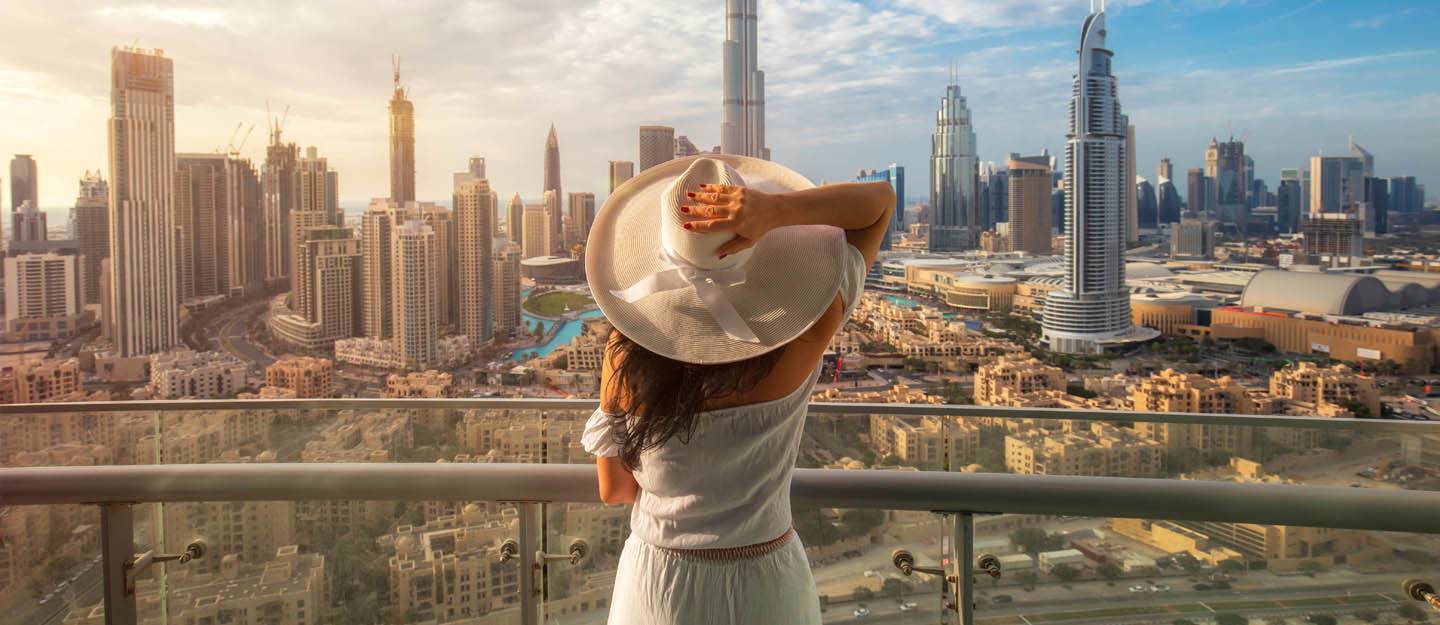
A balcony is an elevated platform attached to a building and enclosed by a railing, providing additional outdoor space. Its construction, use and maintenance are subject to rules aimed at keeping a particular property or building’s elevation safe and maintained. Following the applicable balcony rules and regulations in Dubai can help property owners and tenants avoid violations and potential fines.
Balcony Rules and Regulations in Dubai

According to Dubai Building Code, requirements for legally constructing a building in Dubai include:
- Privacy: The location and orientation of balconies should be planned with the privacy of neighbouring plots in mind. Privacy partitions must also be provided between connected balconies serving different residential units.
- Guardrail and Parapet Height: Any walking surface elevated 760 mm or more above the finished floor level must have a guardrail. The guardrail must be at least 1,200 mm (1.2 metres) high, measured vertically from the finished floor level or the top of any stepping feature.
- Vertical Post Separation: Gaps between vertical balusters, curved frames or other design elements must be narrow enough to prevent a 100 mm-diameter sphere from passing through.
- Anti-Climb Zone: Horizontal climbable elements, stepping features and bars are not permitted within 865 mm of the base of the guardrail.
- Bottom Component Clearance: The gap between the finished floor surface and the lowest horizontal rail component must not exceed 100 mm.
- Access Door Safety: Doors providing access to balconies or terraces should not have self-closing, self-latching or self-locking mechanisms that could accidentally lock occupants outside.
- Elevation and Setbacks: Balconies or projections extending over pedestrian paths or sidewalks must maintain a minimum clear height of 3 metres from the sidewalk level. Projections over vehicle roads must maintain a vertical clearance of at least 5.5 metres, or 4.5 metres over fire truck accessways, along with a minimum horizontal setback of 0.6 metres from the road edge.
- Projection Limits into the Right-of-Way (ROW): Balcony projections into the ROW are permitted only where the street is wider than 9 metres. The projection must not exceed 10% of the street width, subject to a maximum projection of 1.8 metres.
Dubai Balcony Regulations for Usage

According to the Dubai Municipality guidelines, residents and property owners should avoid the following activities on balconies and windows:
Installing satellite dishes or antennas: Avoid installing satellite dishes or other types of antennas on balconies unless permitted by the relevant building or community management.Safety Precautions for Balconies

Hanging laundry: Do not hang clothes or laundry from balconies or windows.
Discarding cigarette waste: Throwing cigarette butts or scattering ash from balconies is prohibited.
Throwing waste: Do not throw rubbish or other waste from balconies.
Pouring or draining water: Avoid allowing water to flow down while cleaning balconies or letting air-conditioning water spill onto lower areas.
Feeding birds: It is discouraged to feed birds on balconies as their droppings can affect the building’s appearance and cleanliness.
FAQs
Are there safety regulations for balconies in Dubai?
Yes, balconies must have guardrails at least 1,200 mm high and withstand specified loads under ASCE/SEI 7-16, the Structures standard published by the American Society of Civil Engineers (ASCE) in coordination with the Structural Engineering Institute (SEI).
How much is the fine for violating balcony rules in Dubai?
The amount of fine for balcony rules violations in Dubai may vary according to the balcony size and location. Individual property owners and developers may also impose penalties.
How do Dubai community rules affect balcony usage?
The rules for balcony use can vary from community to community. According to the Dubai balcony guidelines, developers are allowed to enforce rules in accordance with Law No. (6) of 2019 and Dubai Municipality oversight.
Balcony construction and use in Dubai are subject to specific safety, privacy and structural requirements. From guardrail heights and spacing to projection limits and privacy partitions, these regulations help ensure balconies are safe and do not affect neighbouring properties or public spaces. Anyone considering buying property in Dubai should also be aware of these balcony rules for Dubai apartments, particularly when planning to construct, modify or renovate their space.
Stay tuned to dubizzle’s property blog for more information on balcony rules and regulations.