The connection between man and machine has shaped the automobile industry over the years. Vehicles with manual transmission give drivers greater power and control when accelerating and manoeuvring, while automatic transmission emphasises convenience. However, with modern technology, automakers have found ways to achieve a balance between control and ease of use. A trend known as virtual gear shifting is now entering mainstream production vehicles. It is a tech-enabled system that simulates manual gear changes.
Understanding More About Virtual Gear Shifting
A virtual gear-shift system uses software to simulate gear changes by adjusting motor torque, sound and acceleration patterns to mimic the feel of shifting. The system doesn’t have physical gears; it simply creates timed power dips and audio cues so the driver experiences a ‘shift’ like in traditional cars.
History and Practical Application of Virtual Transmission System
The concept of a virtual gear shift system, also known as fake gear shifting, is not new. The idea was actively explored and presented in research as early as 2004. Fast forward to 2023 and the first noteworthy application of virtual gear change in cars appeared in the Hyundai Ioniq 5 N. The model introduced the e-Shift system, simulating an 8-speed dual-clutch transmission (DCT).

Adoption and Scope of the Car Virtual Gearbox
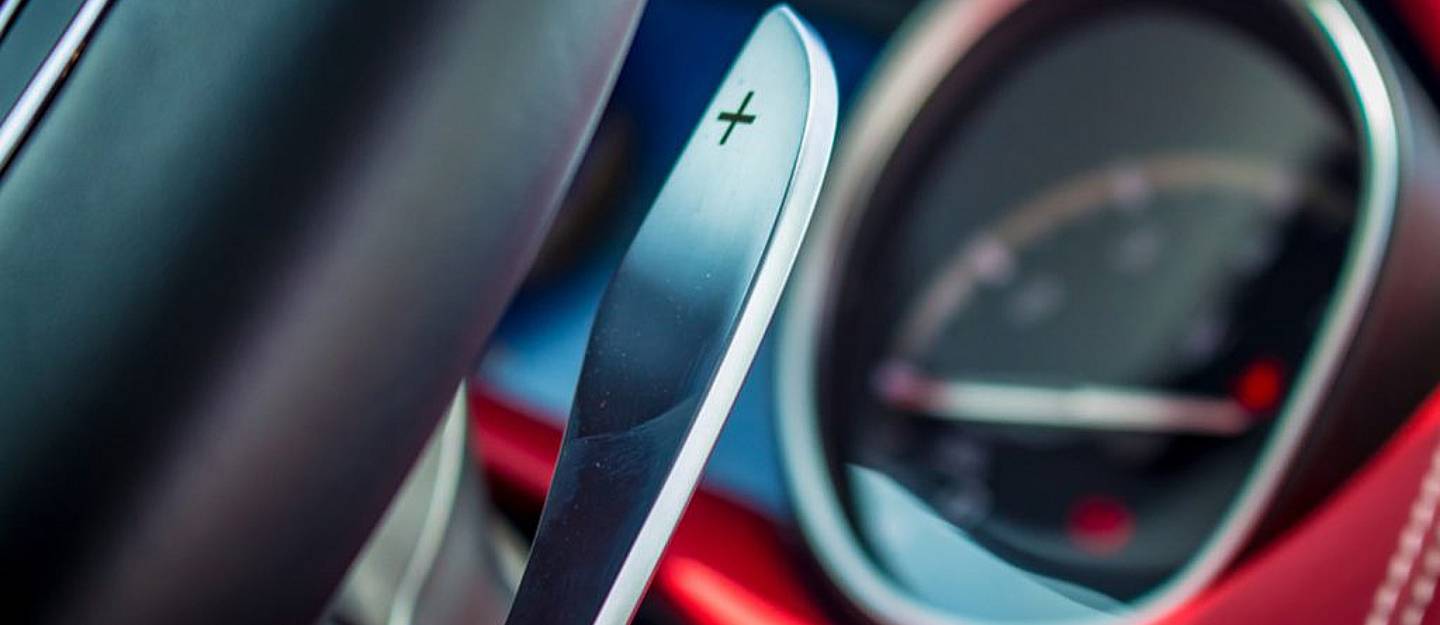
Alongside Hyundai, Genesis and Kia also introduced the digital gear shifting system in their electric cars. Many of the production models also feature an RPM display to recreate real upshifts and downshifts. There are automatic and manual transmission modes, paddle shifters for shifting. The experience is enhanced with virtual engine sound and rev-matching effects.
The accessibility of virtual gear shifting may be limited in case of driving modes, battery saving or communication errors. The accessibility and restriction of the digital gear shifting system may also vary from model to model.
Future Electric Vehicles With Simulated Gear Shifting
Ferrari Elettrica will use a virtual gear-shifting system that mimics real RPM build-up and gear changes to deliver the signature Ferrari driving sound. Moreover, the supercar brand is working to amplify authentic vibrations from its electric motors through sensors, creating an authentic driving experience. Porsche has also hinted at introducing a virtual gear shift in their upcoming EV models.
FAQs
What are the benefits of virtual shifting technology?
Fake gear shift adds driving experience by simulating real gear changes, improving engagement without affecting EV efficiency.
Is virtual gear shifting similar to paddle shifters?
It uses paddle shifters but only simulates shifts, unlike real multi-gear transmissions.
Which car brands offer virtual gear shift technology?
Many renowned brands have joined the race to introduce virtual gear shifting. Hyundai, Genesis and Kia have already introduced the technology in their electric nameplates. Similarly, Ford, Ferrari and Porsche have been working on these next-gen transmission systems to introduce in future models.
This is everything to know about the developing technology of the virtual gear system in EVs. Tiptronic transmission is also a similar technology that simulates gear shifting in automatic cars with the help of paddle shifters. All these advancements are blending the differences between automatic and manual cars by offering interchangeable experiences.
When picking among new cars for sale in the UAE, look out for these tech-driven features enhancing driving experiences.
For more updates on EV virtual gear shifting, stay connected with the UAE’s favourite car blog.
Related Posts