Plastic windshields are common on motorcycles, scooters, ATVs and even golf carts. Although they are not used in cars, windshields made of plastic offer their own set of benefits. For example, they are more durable and less likely to shatter in a collision. They are not used in cars because vehicles depend on laminated safety glass, which complies with strict safety standards and resists scratches and UV damage much better than plastic. On bikes and similar vehicles, however, plastic is preferred for its lightweight and impact-resistant qualities. Let’s explore the common issues and simple ways to repair a plastic windshield.
Common Problems with Plastic Windshields
Given that plastic windshields are prone to scratches, cloudiness and small cracks over time, there is a tradeoff. In many cases, you don’t need a full replacement. A bit of repair work and the right tools can get your windshield looking clear and sharp again.
The usual damages that plastic windshields are prone to include:
- Light surface scratches
- Scuff marks or haze
- Cloudiness due to UV exposure or weathering
- Minor cracks or edge chips
Simple DIY Plastic Windshield Repair Solutions

Usually, cruisers, touring bikes and even some sport bikes come with plastic windshields made from clear materials like polycarbonate or acrylic (Plexiglas). Such windshields not only help block wind, rain and debris; they also improve the aerodynamics. Additionally, they are instrumental in reducing rider fatigue at higher speeds. Given that they’re built to handle the road, plastic windshields can still wear down over time.
Wind, dust, UV rays’ exposure and everyday handling can leave scratches. They also make the windshield hazy or give it a dull appearance. Thankfully, these problems can be easily solved at home. All that is required is a bit of patience and the right type of materials.

Step 1: Give the Windshield a Good Clean
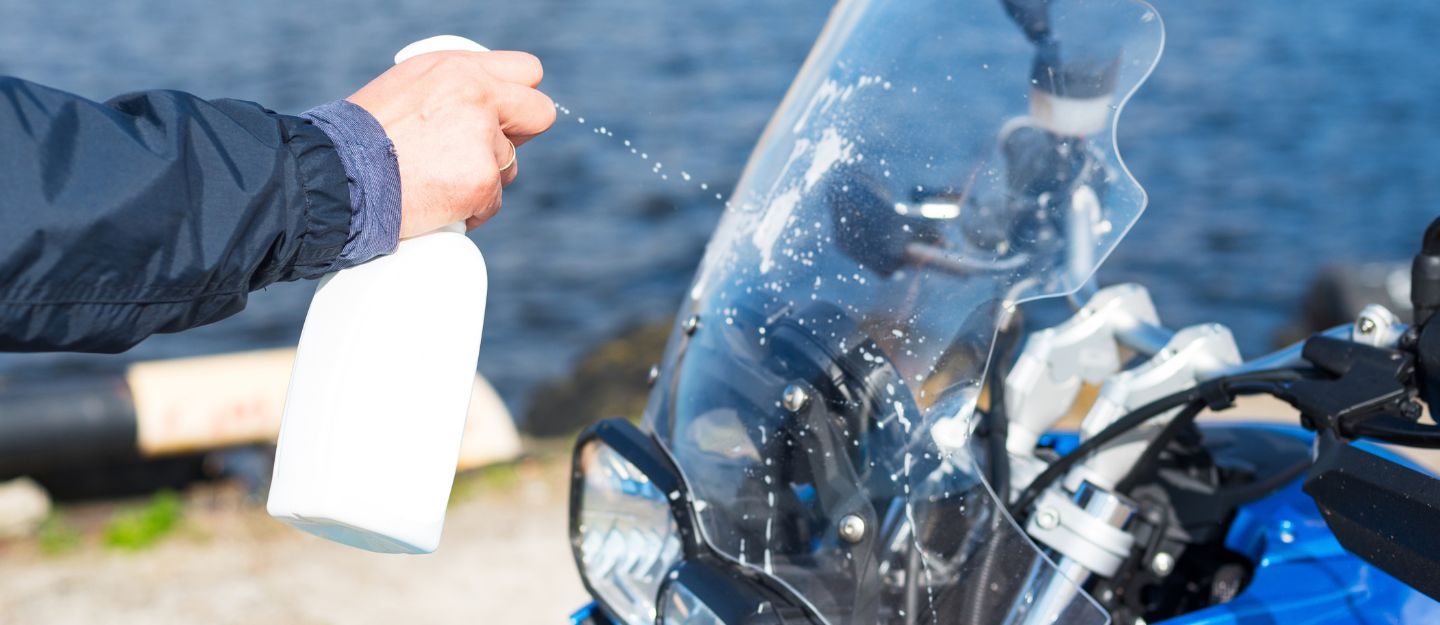
Before getting into any repairs, start by thoroughly cleaning the entire plastic windshield, front and back. Mix warm water with a mild dish soap and clean the windshield with a 100% cotton cloth to avoid scratching the surface.
Pay special attention to the cracked or damaged area. Dirt, grease or oil can stop the adhesive from working properly and may even cause more cracking later on. This is why it is necessary to stay cautious when cleaning the plastic windshield’s surface. On the contrary, for cars, here is how to maintain car windshields.
Step 2: Mask the Area Around the Crack with Tape
Once the windshield is dry, apply painter’s masking tape (a low-adhesion tape) around the crack. Around the damaged spot, leave about a quarter-inch of space. This taped-off area will protect the rest of the plastic in case any solvent cement drips. Remember, masking the area around the crack is necessary because if the spills are left unattended, they can leave permanent marks or clouding on the plastic.
Step 3: Prepare the Solvent Cement
Pour some acrylic solvent cement into a squeeze bottle or applicator. Just halfway is enough. It works best with clear plastics. Before applying, gently squeeze the bottle to bring the liquid up near the tip, then ease off a little to create a bit of suction. This helps with flow control so you don’t end up spilling more than you need.
Step 4: Apply Cement to the Crack
Tilt the bottle and carefully apply a thin line of cement along the crack on one side of the windshield. The liquid will seep into the crack on its own thanks to capillary action. Let it dry for at least two hours before peeling off the tape. Then, flip to the other side of the windshield and repeat the process: tape, apply a thin layer of cement and let it dry. Leave it for 24 hours for the adhesive to fully dry.
Step 5: Buff and Polish the Repaired Spot
After everything dries completely, remove the leftover tape (if there is any). Put a small amount of buffing compound on a clean cotton rag and gently buff the repaired area in small, circular motions. The compound will help smooth out any excess adhesive without damaging the plastic. Once it’s clear and even, give the windshield one last wash with soap and warm water to finish the job.
FAQS
What is the best method to repair a plastic windshield?
Using acrylic solvent cement is one of the most effective ways to fix small cracks. It bonds the plastic from the inside, helping stop the damage from spreading. As for light scratches, they can be polished out with a plastic-safe buffing compound.
Can I fix a crack in a plastic windshield at home?
If the crack is small and hasn’t spread too far, it can be fixed. With a few basic tools and the right adhesive, most minor damage can be repaired at home without professional help.
What tools are needed for plastic windshield repair?
You’ll need acrylic solvent cement, painter’s masking tape, a microfiber or cotton cloth, plastic polish or buffing compound and optionally, fine sandpaper for deeper marks.
That’s a wrap on how to repair a plastic windshield. With these steps, your windshield should be clearer, stronger and road-ready again. Regular cleaning and a bit of care can go a long way in keeping it in good shape.
If you’re looking for a new ride, check out these motorcycles for sale in the UAE. You’ll find several models that already come with a plastic windshield or ones where you can easily add one.
Thinking about switching to four wheels instead? Browse through these cars for sale in the UAE. Even though cars don’t come with plastic windshields, keeping their glass windshields well-maintained is just as important. Here are some common car windshield problems and how to fix them.
Stay tuned to the dubizzle cars blog for more tips on vehicle maintenance and part repairs.
Related Posts