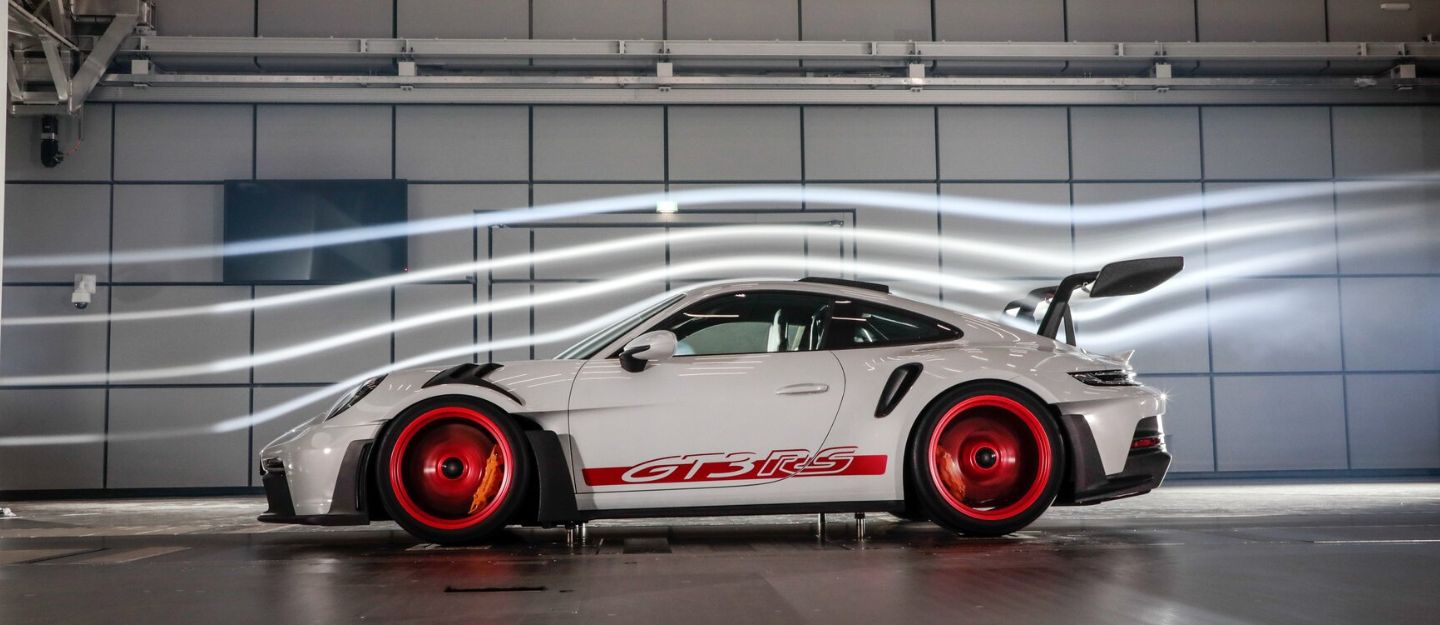
Blending engineering brilliance with a relentless pursuit of performance, Porsche offers its customers an unmatchable driving experience. One of the standout features that shape the brand’s legacy is Porsche Active Aerodynamics (PAA). This system adjusts a vehicle’s aerodynamic elements to optimise stability, efficiency and speed across multiple driving conditions. Let’s explore the Porsche Active Aerodynamics features, evolution, milestones and future potential in this detailed overview.
Porsche Active Aerodynamics Explained
As seen in Porsche’s history, the company has long been at the forefront of automotive innovation. Porsche Active Aerodynamics (PAA) is one such example. It is a dynamic system that adjusts a vehicle’s aerodynamic properties in real-time. By actively modifying elements like spoilers and air intakes, PAA optimises airflow to balance drag and downforce. This ensures optimal vehicle dynamics.
Let’s take a look at Porsche Active Aerodynamics years of innovation:
Early Developments: The Porsche 964
The concept of active aerodynamics in Porsche vehicles began with the 964 Carrera models (1989–1994). These models featured a retractable rear spoiler that extended at 80 km/h to improve high-speed stability by increasing rear downforce. The spoiler retracted below 10 km/h to maintain the vehicle’s design aesthetics. Additionally, the extended spoiler enhanced airflow to the engine bay and as a result, aided in cooling.
Advancements in the 991 Turbo (2014-2019)
The 991 Turbo series (2014–2019) introduced more sophisticated Porsche Active Aerodynamics specs with three operational modes:

- Mode 1 (Start): Both front and rear spoilers are retracted for everyday use.
- Mode 2 (Speed): At speeds over 121 km/h, both spoilers partially extend to reduce drag and enhance stability.
- Mode 3 (Performance): In ‘Sport Plus’ mode, spoilers fully extend and the rear wing tilts up to 15 degrees to generate up to 150 kg downforce.
This system allowed the 991 Turbo to adapt its aerodynamics to different driving conditions by balancing efficiency and performance.
Innovations in the 918 Spyder (2013-2015)
The 918 Spyder generations from 2013 to 2015 featured adjustable air flaps under the front underbody. This created low-pressure zones to generate additional downforce. The system operated in multiple Porsche driving modes:
- In the ‘Race Hybrid’ and ‘Sport Hybrid’ modes, air intakes remained open for cooling.
- In ‘E-Power’ and ‘Hybrid’ modes, air intakes closed to reduce drag and reopen when speed reaches 130 km/h or when additional cooling is needed
This integration of active aerodynamics with hybrid technology showcased Porsche’s commitment to performance and efficiency.
The 992 Turbo (2020–Present): A New Benchmark
The 992 Turbo series (2020–present) introduced eight aerodynamic configurations including:
- Airbrake Function: During hard braking, the front spoiler lowers and the rear wing extends to increase resistance and help in deceleration.
- Wet Mode: Porsche wet mode adjusts the rear spoiler to provide maximum downforce in wet conditions.
- Performance 2 Mode: Activates at speeds over 257 km/h. Balances drag reduction and rear downforce.
These advancements allowed the 992 Turbo to adapt its aerodynamics to a wide range of driving conditions, enhancing both performance and safety.
Porsche 992 GT3 RS: Formula One-Inspired Aerodynamics
The 992 GT3 RS (2022) boasts a two-piece rear wing taller than the car’s roofline. It is capable of multiple adjustments based on steering angle, driving mode, lateral acceleration and speed. It also introduced a Drag Reduction System (DRS) similar to those used in Formula One:
- When activated, the wing flattens and front diffusers open to reduce drag on long straights.
- Activation requires specific conditions: speed over 100 km/h, engine RPM above 5,500, less than 0.9G lateral acceleration and at least 95% throttle input.
- Manual activation is possible under certain conditions with the help of a steering wheel button.
This system enhances high-speed performance and stability and reflects Porsche’s dedication to cutting-edge technology.
The Future of Porsche Active Aerodynamics
Porsche continues to innovate in active aerodynamics. It integrates advanced systems in newer models to enhance vehicle performance, safety and efficiency. Future developments are expected to further refine aerodynamic adaptability to ensure Porsche vehicles remain at the forefront of automotive engineering.
FAQs
Which Porsche model has the best aerodynamics?
The Porsche Taycan boasts the best drag coefficient among all current Porsche models with a remarkable cd value of just 0.22. Combined with its frontal area of 2.33 m², this results in an impressive effective drag of 0.513 m².
What is the meaning of active aerodynamics?
Active aerodynamics uses movable elements like wings, flaps and vents to adjust airflow around the vehicle dynamically and in real-time.
What is the Porsche active safe option?
Porsche Active Safe (PAS) is a collision prevention system that uses radar to detect vehicles ahead and enhances safety and driver confidence.
By integrating cutting-edge technology with practical performance benefits, PAA enhances the driving experience. It also sets a benchmark for innovation in the automotive industry. If you want to experience this dynamic system, browse through these used Porsche cars for sale in the UAE.
Keep reading dubizzle’s auto blog for more insight on advanced car features.
Cover Image Credits: Porsche Official Website
Related Posts