- Motorcycle Sprocket Explained
- Front vs Rear Sprocket
- Sprocket Functioning
- Sprocket Wear Causes
- Sprocket Wear Signs
- FAQs
A motorcycle is a two-wheeled vehicle functioning with the help of several mechanical components. In chain-driven motorcycles, the sprockets form an important part of the final drive system and determine how engine power is converted into wheel speed and torque.
What is a Motorcycle Sprocket?
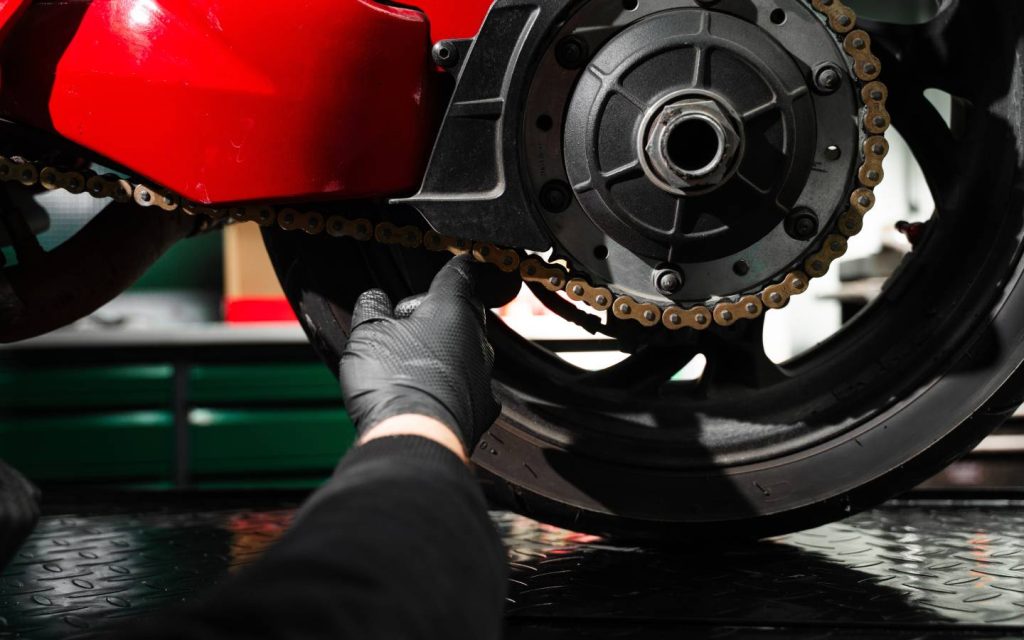
A sprocket is a toothed mechanical component designed to engage with the links of a chain. A conventional gear meshes directly with another gear, but a sprocket transfers rotational motion through a chain.
Motorcycle Sprocket Types
A typical chain-driven motorcycle has two main sprockets:
- Motorcycle Front sprocket: It is also called the countershaft or engine sprocket. The front sprocket is connected to the motorcycle’s transmission output shaft.
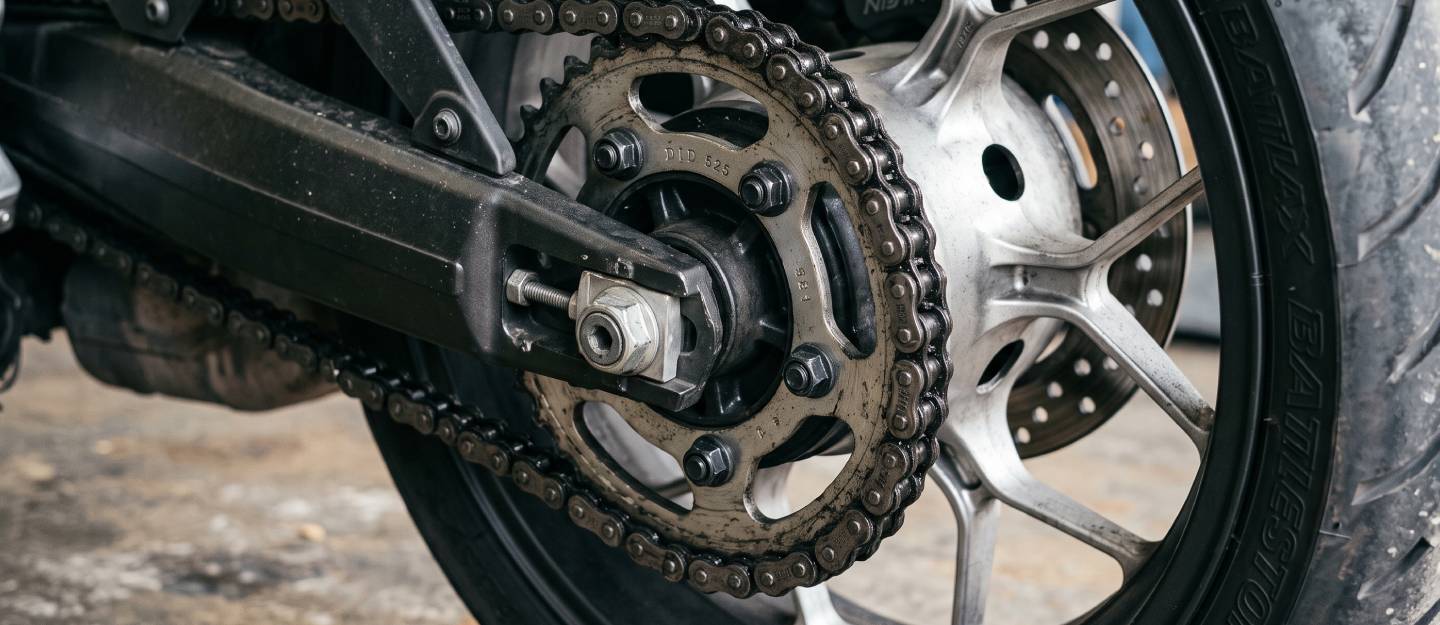
- Motorcycle Rear sprocket: Mounted on the rear wheel or rear wheel hub, it receives power from the chain and turns the rear wheel.
The front and rear sprockets work together with the drive chain to transmit power from the engine to the rear wheel.
How does a motorcycle sprocket work?
On a conventional chain-driven motorcycle, engine power passes through the clutch and transmission before reaching the front sprocket. The front sprocket rotates and moves the drive chain. The chain then rotates the larger rear sprocket, which transfers the rotational force to the rear wheel.
The difference in the number of teeth between the front and rear sprockets determines the motorcycle’s final drive ratio.

For example, if a motorcycle has a 15-tooth front sprocket and a 45-tooth rear sprocket, the final drive ratio is:
45 ÷ 15 = 3
This means the front sprocket rotates three times for every one rotation of the rear sprocket. A higher final drive ratio generally increases torque at the rear wheel and improves acceleration, while a lower final drive ratio reduces rear-wheel torque and can favour higher-speed riding with lower engine RPM at a particular speed.
What causes sprocket wear?
Sprockets remain in continuous contact with the drive chain while the motorcycle is operating. This contact between the chain and sprocket teeth, combined with several factors, can gradually wear down the teeth.
Factors that can accelerate sprocket wear include:
- Poor chain lubrication
- Incorrect chain tension
- Excessive chain wear
- Dirt, dust and sand
- Water and moisture
- Heavy or severe usage
- Damaged or poorly maintained chain components
How to identify a worn sprocket
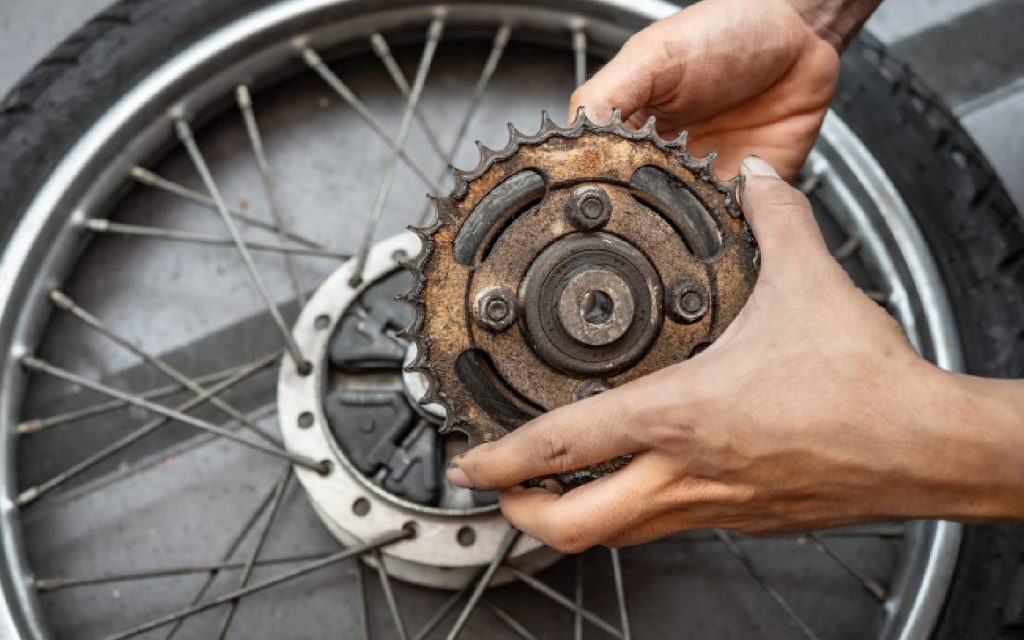
Inspect sprocket teeth regularly as part of motorbike maintenance. Common signs of excessive wear include:
- Sharp or pointed teeth
- Teeth that have developed a hooked shape
- Uneven tooth wear
- Damaged or broken teeth
- Irregular contact between the chain and sprocket
- Increased chain noise
Sprocket teeth have a consistent profile, while worn teeth can become pointed or develop a hooked shape.
A severely worn sprocket can reduce proper chain engagement and increase the risk of the chain slipping or disengaging. Excessive sprocket wear can reduce power transmission to the rear wheel and damage the teeth.
Why chain and sprocket maintenance is important
The chain and sprockets function as a system, so maintaining one component while ignoring the others can accelerate wear.
Regular maintenance generally involves:
- Checking the chain for correct slack.
- Inspecting the sprocket teeth for wear or damage.
- Cleaning the chain according to the manufacturer’s recommendations.
- Lubricating the chain at the specified intervals.
- Checking for damaged, kinked or binding chain links.
- Replacing worn motorcycle parts when required.
The correct chain slack varies between motorcycle models, so the vehicle owner’s manual should be used for the specified measurement.
FAQs
Should the chain and sprockets be replaced together?
Yes, replacing the chain and sprockets together is generally recommended when they are worn, as worn sprockets can accelerate chain wear.
Can you change the sprocket size?
Yes, the sprocket sizes can be changed on many chain-driven motorcycles. However, doing so changes the final drive ratio.
How long does a motorcycle sprocket last?
There is no universal mileage at which every motorcycle sprocket must be replaced. Its service life depends on factors such as riding conditions, chain maintenance, lubrication, chain tension, load and the motorcycle itself.
Motorcycle sprockets are key components of the final drive system on chain-driven motorcycles. When buying a used motorcycle in the UAE, check the sprocket teeth for wear, ensure the chain has the correct tension and look for signs of proper lubrication and timely maintenance.
For more tips and guidance on vehicle maintenance, stay connected to the UAE’s leading autos blog.
Related Posts