Whether you ride through city streets or enjoy weekend rides across the UAE’s open highways, your motorcycle is constantly exposed to dust, sand and UV rays. That’s where motorcycle detailing comes in. Unlike regular washing, detailing involves deep cleaning, restoration and protection of motorcycles. From paintwork and chrome to wheels and engine surfaces, a proper motorcycle detailing routine reduces wear from environmental exposure and preserves long-term value.
What Is Motorcycle Detailing?
Motorcycle detailing is the process of deep cleaning, restoring and protecting different parts using specialised techniques and products. Unlike standard washing, detailing targets:
- Painted surfaces
- Chrome and metal parts
- Engine casings
- Wheels and rims
- Plastic fairings
- Windscreens
- Seats and trim
- Chain and exposed components
Because motorcycles have more exposed surfaces and tight spaces than cars, detailing often requires greater precision and extra care.
Step-by-Step Motorcycle Detailing Process
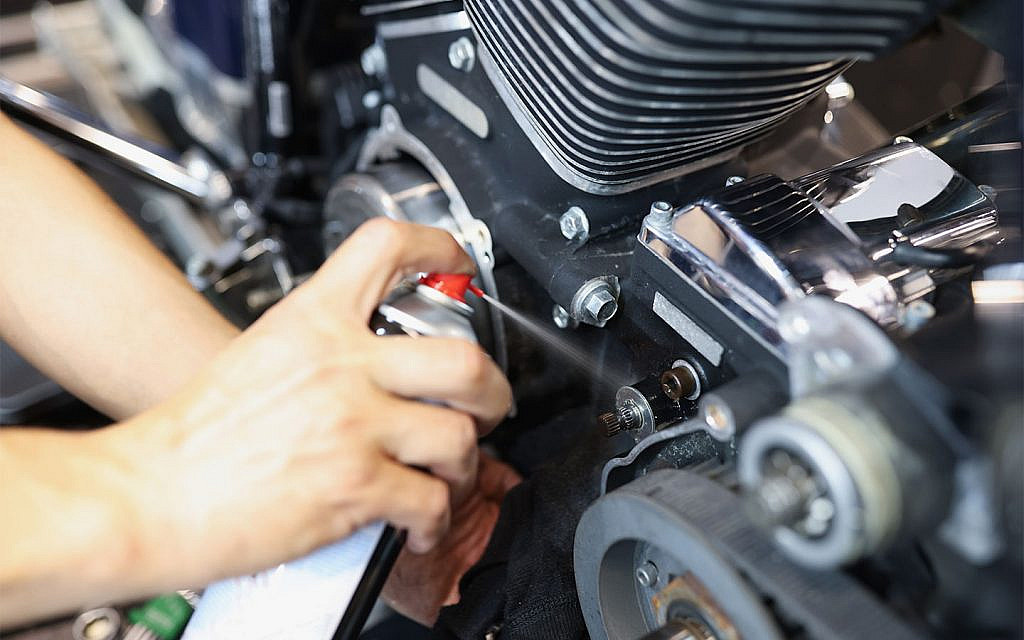
Gather the right motorcycle tools before starting the process. Using motorcycle-safe products is generally recommended to avoid damaging exposed materials and finishes.
Use Motorcycle-Specific Cleaning Products
Motorcycles contain multiple surface materials in proximity, including:
- Painted fairings
- Chrome parts
- Aluminium surfaces
- Plastic trim
- Rubber seals
- Vinyl or leather seating
Using household detergents or strong degreasers may remove protective layers and damage sensitive finishes. Choose products based on the area being cleaned:
| Product | Where to Use | Purpose |
| Motorcycle shampoo | Tank, fairings, painted panels | General washing |
| Degreaser | Engine casing, swingarm | Remove grease |
| Wheel cleaner | Wheels and brake areas | Remove brake dust |
| Metal polish | Chrome and exposed metal | Restore shine |
| Plastic cleaner | Dashboard and trim | Maintain clarity |
| Protectant | Rubber and plastic | UV protection |
Step 1: Allow the Motorcycle to Cool
Never detail immediately after riding. A hot surface can cause water spots, dry soap too quickly and increase the chance of scratching. Park the motorcycle in a shaded area and allow all surfaces, especially the fuel tank, engine casing and exhaust, to cool before starting.
Step 2: Pre-Rinse the Motorcycle
A low-pressure water flow is enough to loosen surface dirt. The goal is not to clean fully but to remove abrasive particles before touching the paint.

Use gentle water flow to remove loose dirt and dust. Avoid spraying into:
- Exhaust outlets
- Air filters
- Electrical connectors
- Instrument clusters
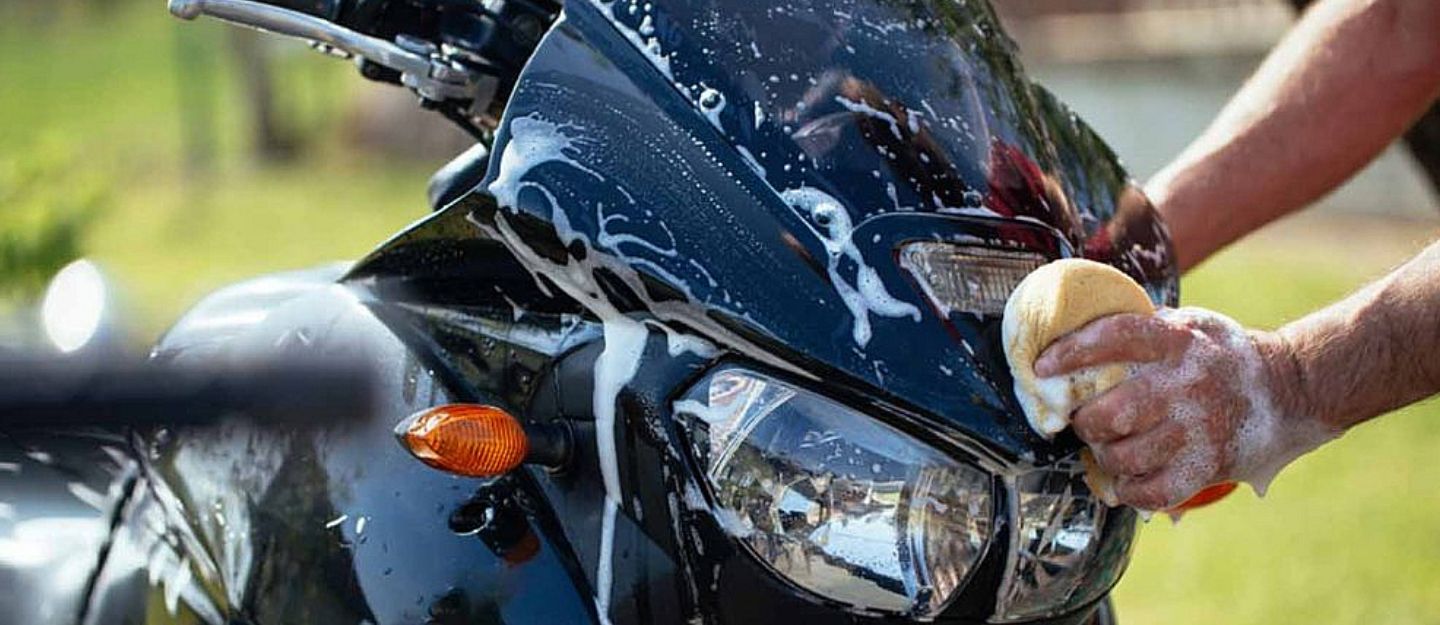
Step 3: Wash Using the Two-Bucket Method
Once pre-rinsed, the motorcycle should be washed using the two-bucket method, which is widely used by professional detailers.
- Bucket 1: Clean shampoo solution
- Bucket 2: Rinse water
This method reduces dirt transfer back onto painted surfaces and helps minimise swirl marks. For better results, work from top to middle, then move to the lower section of the bike. Leave wheels and lower engine areas until the end.
Step 4: Clean Tight Areas and Engine Surfaces
Several places on the bike are hard to reach. For that, you can use:
- Small detailing brushes
- Soft microfiber cloths
- Motorcycle-safe degreasers
Don’t forget to pay attention to engine fins, bolts, foot pegs and underseat section. Detailing motorcycles requires more attention to small crevices than detailing cars.
Step 5: Clean and Maintain the Chain
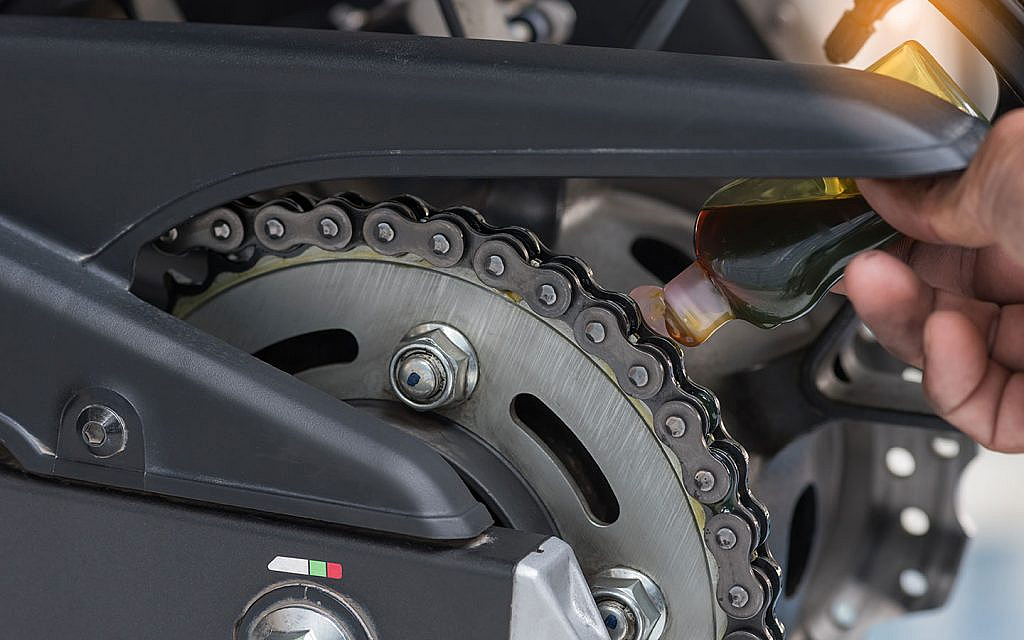
If your motorcycle uses a chain drive:
- Apply chain cleaner
- Remove grease and debris
- Dry completely
- Reapply chain lubricant
Avoid leaving moisture on the chain after washing.
Step 6: Polish Paint and Metal Surfaces
Once the wet surface is clean and dry:
- Polish painted areas to restore gloss
- Use metal polish for chrome and exposed metal
- Apply carefully using microfiber cloths
Polishing can help reduce the appearance of light swirl marks and oxidation.
Step 7: Apply Wax or Sealant
This is what separates detailing from basic cleaning. Protection includes:
- Wax: It enhances gloss and creates temporary protection.
- Paint sealant: It offers longer motorcycle durability than wax.
- Ceramic coating: It provides long-lasting protection against UV exposure, contaminants and easier motorcycle maintenance.
Paint protection products help preserve finishes and reduce future cleaning efforts.
Step 8: Don’t Overlook Seats and Trim
Seats and trim materials also require care. Leather seats should be cleaned using a leather-safe product and conditioned to maintain flexibility and prevent cracking. For synthetic seats, a vinyl protectant helps maintain appearance and reduce UV damage.
Step 9: Keep the Underside Clean
The underside of a motorcycle is often ignored, but it accumulates some of the heaviest dirt buildup. Areas like the swingarm, lower engine casing and frame rails often collect road grime, oil mist and chain residue.
These areas should be cleaned carefully using a degreaser and soft brush, followed by wiping with a microfiber cloth to prevent corrosion and long-term buildup.
Step 10: Use Light Cleaning Between Full Details
A full detailing process is not needed after every ride. Between deep cleans, a waterless cleaner can be used to remove light dust, fingerprints and bug splatter.
Step 11: Protect the Motorcycle After Cleaning
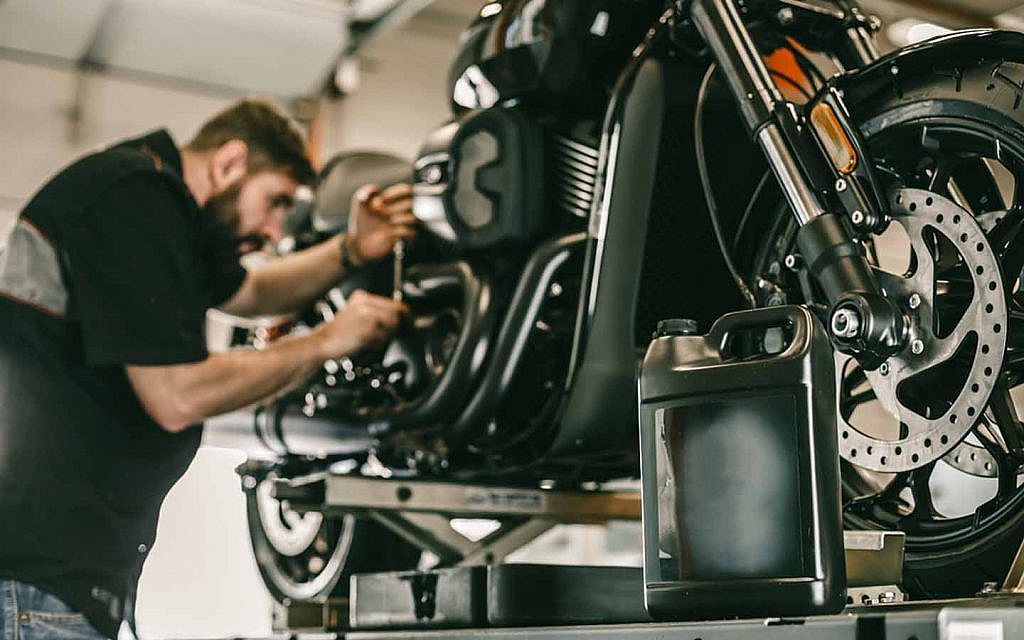
Once the motorcycle has been fully cleaned and detailed, cover it if parked for extended periods.
A breathable motorcycle cover helps protect against dust, UV rays, moisture and environmental contaminants such as bird droppings or tree sap. For professional assistance, you can also head to motorcycle workshops in Dubai for quick service and detailed repair.
FAQs
How is motorcycle detailing different from a regular bike wash?
A regular bike wash removes surface-level dirt using basic water and soap. Motorcycle detailing is more in-depth and includes cleaning, polishing and protecting all visible and hidden areas.
How often should a motorcycle be detailed?
In the UAE, you should fully detail your motorcycle every 4 to 8 weeks, depending on usage. If you ride daily or expose your bike to dust and heat, you may need more frequent care.
Is motorcycle detailing important for bike maintenance?
Yes, it helps prevent dirt buildup and reduces the risk of corrosion on exposed parts. It also keeps the bike in better condition and helps identify issues early.
What is ceramic coating for motorcycles?
Ceramic coating is a protective layer that bonds to the surface of the bike. It makes cleaning easier and protects against UV damage, dust and light contaminants.
Motorcycle detailing is a structured maintenance practice that goes far beyond simple cleaning. It helps preserve finishes, maintain appearance and protect exposed components from the UAE environmental conditions.
A well-detailed bike often reflects better overall care and maintenance history, which becomes especially important if you are buying a used motorcycle in the UAE.
Stay tuned to dubizzle’s autos blog for expert motorcycle care and maintenance tips.
Related Posts