- First Generation
- Second Generation
- Third Generation
- Fourth Generation
- Fifth Generation
- Sixth Generation
- FAQs
The Mitsubishi Mirage is a subcompact car introduced in the 1970s. It has evolved through multiple generations, adapting to changing market demands. Known for its affordability and fuel efficiency, the Mirage is a globally acclaimed car. Its practicality and modern features have also made it quite popular in the UAE. Let’s understand more about the Mitsubishi Mirage history and find out how the nameplate gained fame over the years.
Mitsubishi Mirage History: Timeline and Facts
In the history of Mitsubishi motors, we see several popular models and Mirage is among them. Let’s learn when it first debuted and how far the lineup has come by exploring the Mitsubishi Mirage generations.
First Generation (1978-1982)
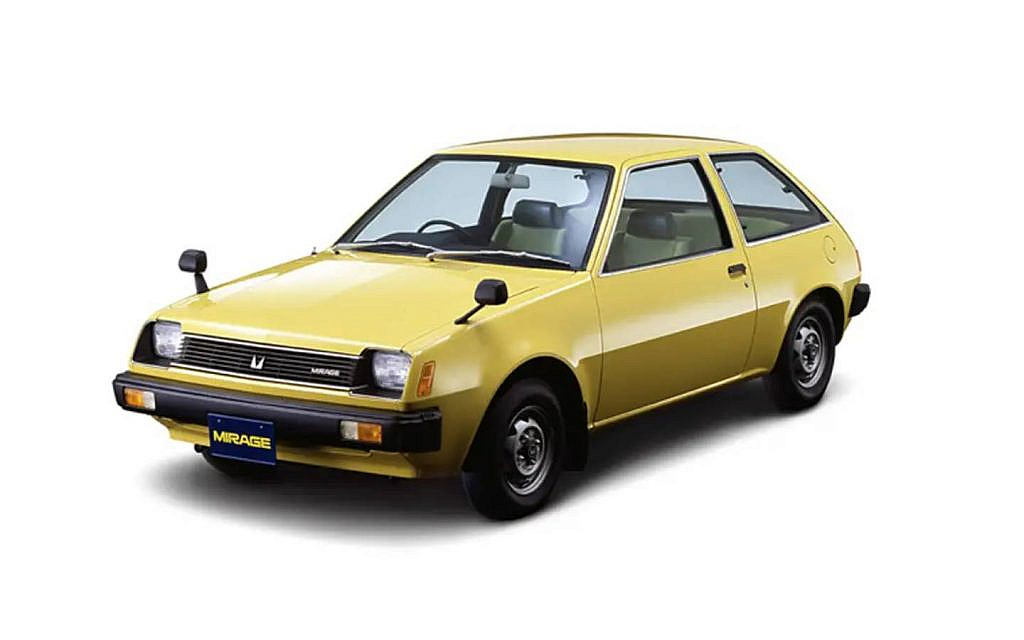
The first generation in the Mitsubishi Mirage timeline debuted in 1978. It featured a compact design and was available as a three-door hatchback. Engine options included a 1.2-litre and 1.4-litre inline-four.
In March 1979, Mitsubishi introduced a more powerful model in the Mirage lineup, boosting power for the 1600 GT model. Moreover, a facelift in February 1982 included flusher headlamps, a redesigned grille and larger tail lights.
The facelifted version also featured firmer engine mounts and a lighter transmission case. One of the little-known Mitsubishi Mirage history facts was that it was marketed as the Colt in select export markets.
Second Generation (1983-1986)
Mitsubishi launched the second-generation Mirage in Japan in 1983. The range included Mirage (hatchback and sedan) and Lancer Fiore (sedan) models. One of the major Mitsubishi Mirage redesigns was the introduction of a station wagon version. It debuted in 1985, with a four-wheel drive option available from 1986.
According to the Mitsubishi Mirage model history, in some parts of the world, hatchbacks were sold as Mirage or Colt. Similarly, Mirage sedans and wagons were badged Lancer. Due to its durability and spacious interior, the wagon became popular globally, especially in the commercial and private sectors. However, it’s important to know the difference between hatchbacks and station wagons and to know their intended usage.

Third Generation (1987-1990)
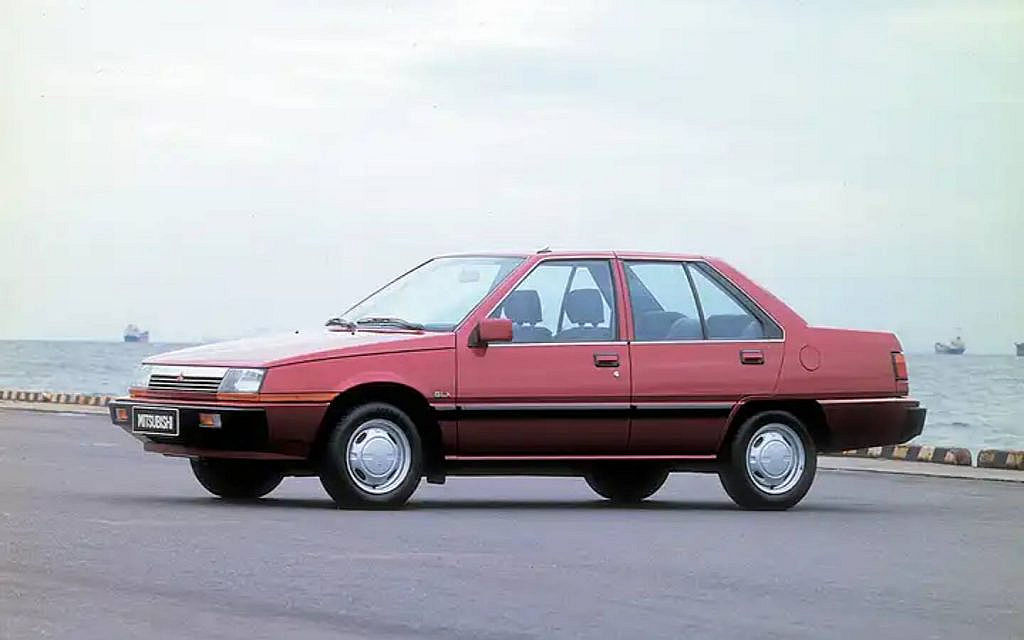
The year 1987 marked the introduction of Mirage’s third generation. Mitsubishi introduced it in Japan. Initially, it was a three-door hatchback, followed by a sedan model surfacing in January 1988. Featuring an almost vertical rear glass, it was among the most unique Mitsubishi Mirage old car models. The car’s unconventional aesthetics stood as a testament to the ongoing evolution of automotive designs.
Moreover, a five-door liftback was added in June 1988, but the station wagon variant was discontinued. The third Mitsubishi Mirage generation also underwent a minor facelift. The facelifted model came out in September 1989. These models featured advanced engines, some from even the upcoming generations. The turbocharged 4G61 engine of the third generation produced 160 PS (118 kW) at 6000 rpm.
Fourth Generation (1991-1994)
Making some evident changes to the lineup in 1991, Mitsubishi debuted the fourth-generation Mirage in Japan. This time the Mirage nameplate featured a rounder body design. It was in response to the 1990s paradigm shift in automotive designs.
The lineup included a three-door hatchback (Mirage Cyborg), a sedan with a six-window design and a new coupé (Mirage Asti). Export names varied, with the three-door called Mirage or Colt and the Asti coupé often badged as Lancer.
The sedan was sold as a Lancer or Mirage with a four-window design. The new platform offered various powertrains, primarily front-wheel drive and some models with all-wheel-drive systems. A notable variant included a 1.6-litre V6 engine, the smallest mass-produced V6 ever.
Fifth Generation (1995-2011)
Continuing its body styling trend, the fifth-generation Mirage launched in Japan with a diverse lineup. Surfacing in 1995, the new generation included a three-door hatchback, sedan and two-door coupé (Asti). The sedan grew in size, while the coupé became smaller.
The 1995 sedan’s design and character lines were similar to the Lancer with minor trim differences. Another key similarity between the two closely associated nameplates is the iconic Mitsubishi logo on the grille. It hasn’t been changed since 1985 and is widely recognised.
In 2000, a new Lancer generation led to the Mirage sedan’s discontinuation in Japan, though its export continued. In 2002, the five-door Colt replaced the Mirage hatchback, offering a taller design for more interior space. However, Colt production ended in 2012 and the Mirage name returned, focusing on low pricing for emerging markets. Different car body types have led to the diverse evolution of the Mitsubishi Mirage through the years.
Sixth Generation (2012 Onwards)
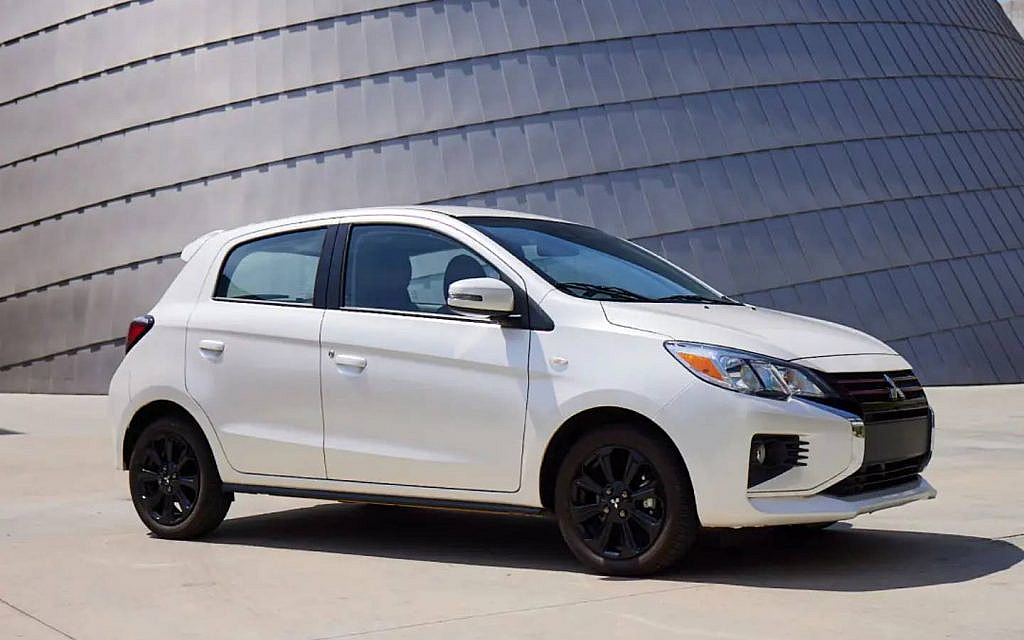
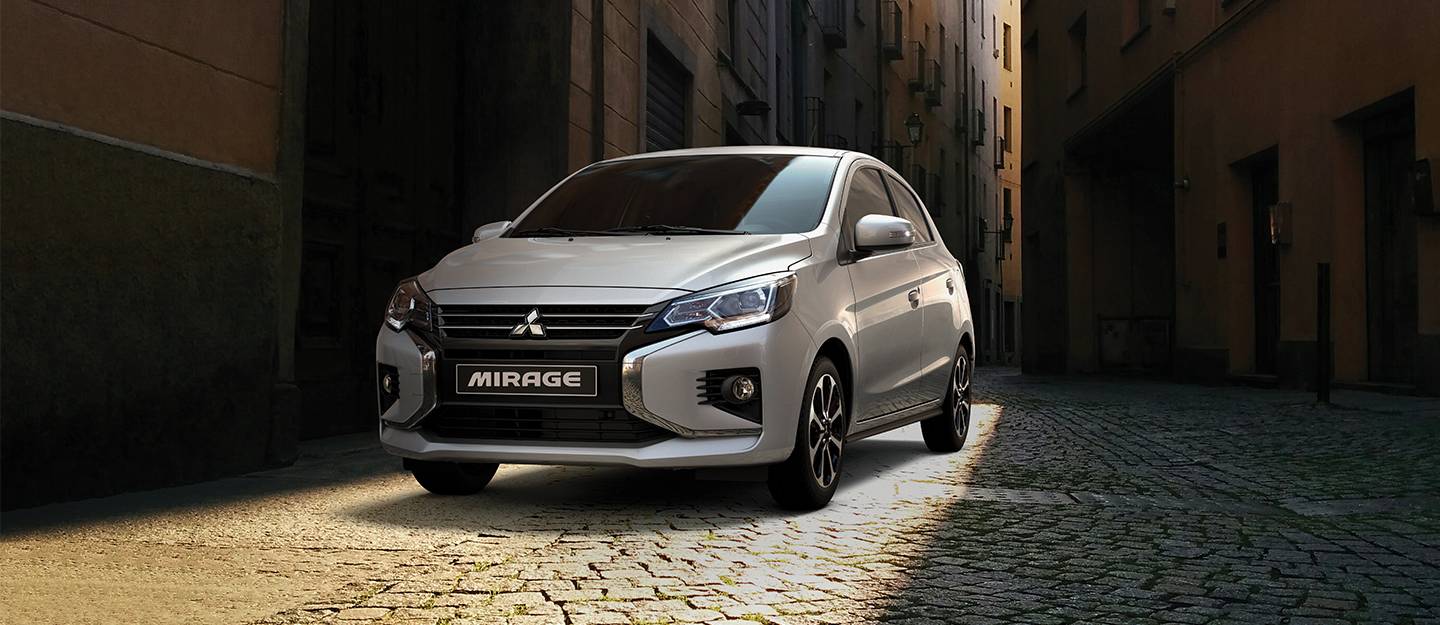
As the Japanese automaker revived its Mirage nameplate, it marked the beginning of the sixth generation. Similar to the origin of the Mitsubishi Mirage, it was reintroduced as a compact hatchback. The new Mirage was unveiled as an auto prototype at the 2011 Geneva International Motor Show.
Catering to diverse driving preferences, the sixth generation of the Mirage was offered in both manual and CVT transmission. Besides the hatchback, there is also a sedan version of Mirage. No, it is not Lancer anymore as the Lancer badge was discontinued in 2017. The sedan model of the Mirage is called Attrage in some markets.
According to the history of Mitsubishi Attrage, the sedan lineup has witnessed two generations so far. However, in some markets, it is also sold with the name ‘Mirage Attrage’, but in the UAE, it has a distinct presence. In the comparison of a sedan vs a hatchback, manoeuvrability and fuel economy are among the key factors considered. These aspects also make it easier for people to pick between the Mirage and Attrage.
An impressive fuel economy, compact design and affordable price tag are all prominent Mirage characteristics. These are among many reasons why the Mitsubishi Mirage makes the list of popular used hatchbacks under AED 50k.
FAQs
Are Mirage and Attrage the same?
No. Mirage is a hatchback while Attrage is a sedan. However, the Attrage lineup has been derived from the Mitsubishi Mirage nameplate.
Can you buy a Mitsubishi Mirage under AED 100k?
Yes, the car is famed for its affordability and compact design. However, there is a range of other top used hatchbacks under 100k in the UAE to explore.
Which hatchback is comparable to the Mitsubishi Mirage?
The comparable hatchback to the Mitsubishi Mirage is the Suzuki Swift. The dimensions, fuel efficiency and price tag of Mirage vs Swift have quite similarities.
Well, that’s pretty much it. Now we know all about the key events that shaped the diverse timeline of Mitsubishi Mirage history. The evolution of the Mitsubishi Mirage has plenty of model rebadging involved.
The concept of car rebadging is not limited to one brand. There are cases when the same model is sold under different company names in different export markets. This factor hints at the diversity of the global auto market, where consumer demand and preferences go hand-in-hand.
If you are eyeing a compact car, consider buying a used Mitsubishi Mirage for sale in the UAE. With a rich history, the nameplate has been serving consumers for over 45 years.
To learn more about Mitsubishi mirage models by years, keep reading dubizzle’s auto blog.
Cover Image Credits: Habtoor Motors – Mitsubishi UAE
Related Posts