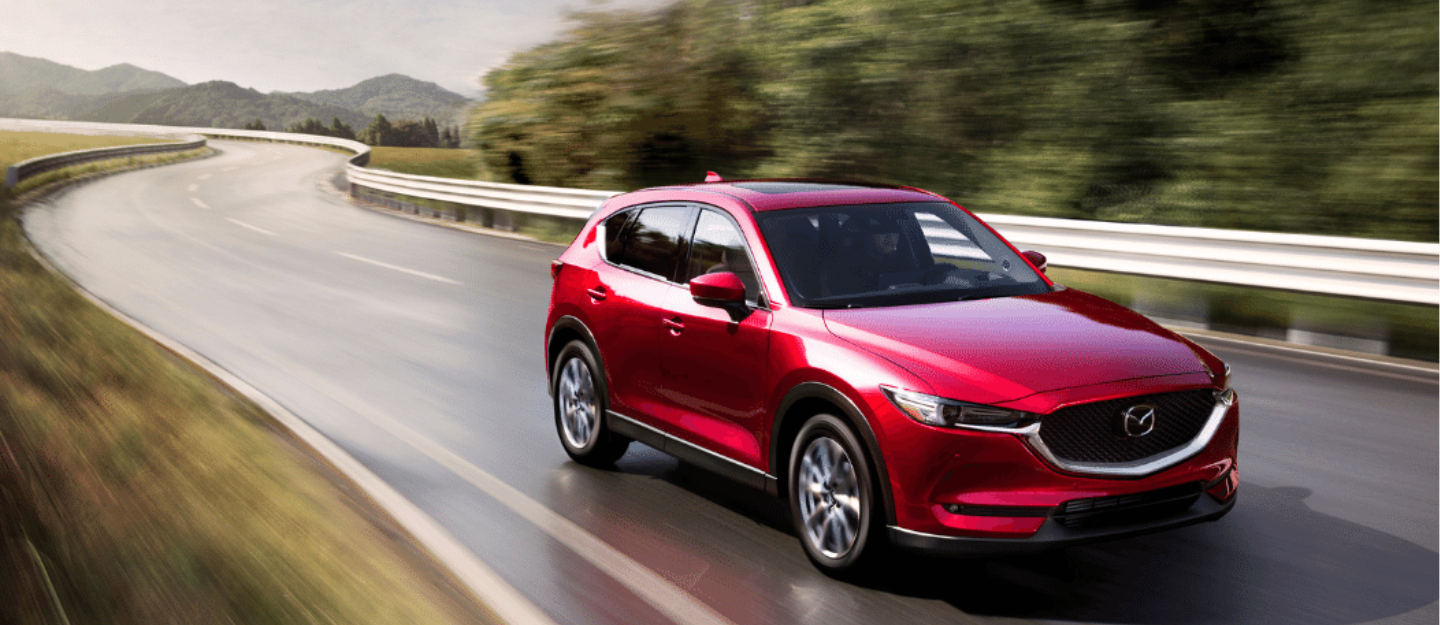
Mazda is one of the mainstream automakers that is committed to delivering a refined and engaging driving experience. Among its advanced vehicle dynamics technologies, G-Vectoring Control and its updated version, G-Vectoring Control Plus, are intelligent systems that help improve handling, stability and overall comfort. By subtle weight transfer and engine torque alongside vehicle balance optimisation during steering inputs, the G-Vectoring Control technology contributes to a smoother, more controlled driving experience.
What Is Mazda’s G-Vectoring Control (GVC)?
G-Vectoring Control is Mazda’s proprietary system that improves cornering performance by subtly adjusting engine torque. When the driver turns the steering wheel, even slightly, the system instantly responds by reducing engine torque for a brief moment. This happens in less than 50 milliseconds through spark timing adjustments.
The slight torque reduction creates a small amount of deceleration, up to 0.05g, which shifts the vehicle’s weight forward. As a result, the front tyres gain additional grip, allowing the vehicle to turn more precisely. This process is so smooth that the driver does not notice any loss of speed. Instead, the vehicle feels more responsive and stable.
Introduced in 2016 in Mazda’s history on models such as the Mazda3 and Mazda6, GVC was developed to reduce unnecessary rotational movement, including yaw, roll and pitch. By optimising weight transfer during cornering, the system minimises the need for constant steering corrections. This leads to a more natural driving experience and reduces driver fatigue, particularly on winding roads or uneven highways.
Working of Mazda’s G-Vectoring Control Explained
The system is based on the principle of weight transfer. During cornering, weight naturally shifts toward the front wheels when the steering wheel is turned. GVC enhances this natural movement by proactively adjusting engine torque before instability occurs.

When entering a corner, torque is briefly reduced to increase front tyre grip. As the car exits the turn and the driver straightens the steering wheel, engine torque is smoothly restored. This helps stabilise the rear of the vehicle and ensures a balanced transition.
Unlike traditional stability systems that react after detecting wheel slip, GVC works preventively. It fine-tunes vehicle dynamics in real time, creating a smooth and controlled driving feel without interfering with the driver’s input.
What Is G-Vectoring Control Plus?
G-Vectoring Control Plus builds on the original system by adding selective braking for enhanced yaw control. While GVC focuses mainly on torque adjustments during corner entry, GVC Plus provides enhanced control when the vehicle exits a corner.
As the steering wheel returns toward the centre position, GVC Plus lightly applies braking force to the outer wheels, both front and rear. This generates a stabilising force that helps the vehicle regain straight-line balance. The result is improved stability during high-speed manoeuvres, quick lane changes and emergency situations.
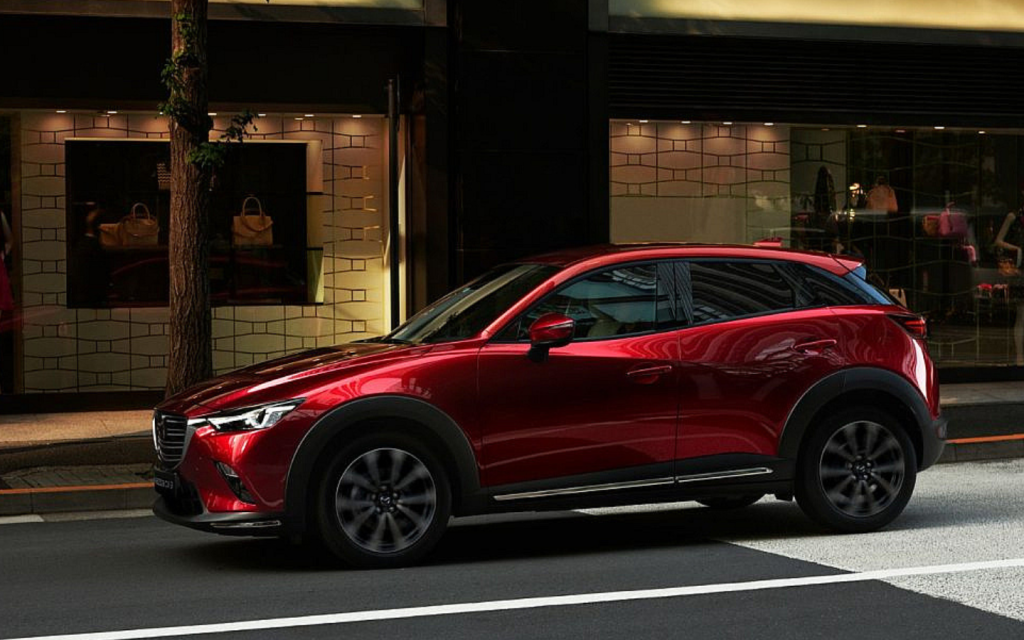
First introduced in 2018 on updated models such as the Mazda CX-5, GVC Plus has since become standard on many new Mazda vehicles in the UAE, including the 2026 CX-30, Mazda3 and CX-5.

Key Differences Between GVC and GVC Plus
The primary difference between the two systems lies in their control mechanisms. GVC relies solely on engine torque adjustments to enhance car weight transfer and improve cornering smoothness. GVC Plus, on the other hand, combines torque adjustments with selective outer-wheel braking for added stability.
While GVC is most effective during corner entry and steering refinement, GVC Plus enhances corner exit control and overall vehicle stability. This makes GVC Plus particularly beneficial during sudden manoeuvres, lane changes or driving on slippery surfaces such as wet roads.
Models Equipped with GVC Technology
Mazda’s G-Vectoring Control technology is now standard on most modern new and top used Mazda vehicles in the UAE, particularly front-wheel-drive and all-wheel-drive models. Vehicles such as the 2026 CX-30, CX-5, Mazda3, CX-50 and CX-90 integrate GVC Plus alongside Mazda’s i-Activ AWD system for enhanced traction and control.
FAQs
Does GVC slow the car down?
No, the torque adjustment is minimal and usually not noticeable to the driver.
Is GVC the same as stability control?
No, GVC works proactively to improve balance, while stability control reacts to wheel slip.
Does GVC work in wet or slippery conditions?
Yes, especially GVC Plus, which improves stability during sudden manoeuvres and low-grip situations.
These were the details of the Mazda’s G-Vectoring Control system. By adjusting engine torque and balancing car weight, the system creates a smoother and more controlled driving experience.
Those who want to experience such an advanced and controlled driving experiences first hand can pick from a range of new and used Mazda cars for sale in the UAE.
To learn more about the latest car technologies, keep reading dubizzle’s autos blog.
Cover image credits: official website of Mazda
Related Posts