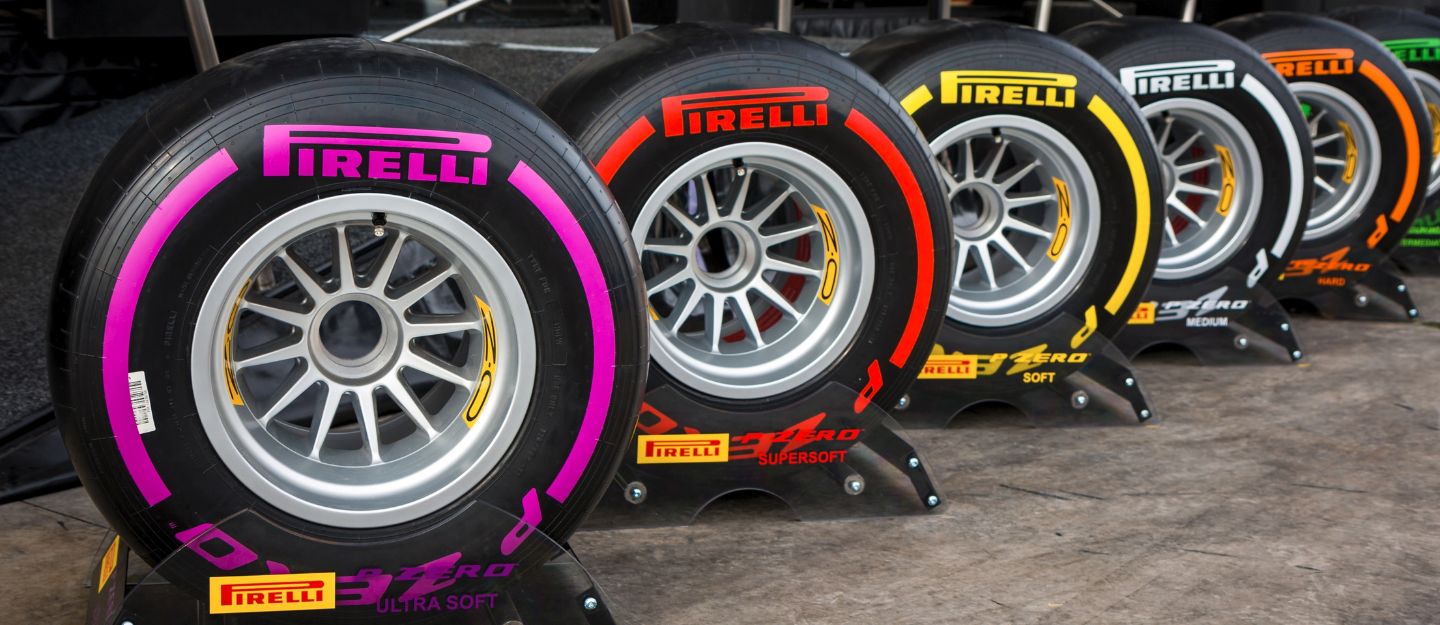
As the only point of contact between the track and the vehicle, Formula 1 tyres are fundamental to both performance and race strategy. Designed to withstand high speeds and extreme forces, these tyres are far from ordinary. With carefully engineered compounds and adaptability to temperature changes, the choice of tyres can be the difference between victory and defeat. Each track demands a unique tyre strategy where compound selection and pit stop tactics are crucial for the race outcome. Dive in for a detailed overview of F1 tyres and their role in Formula 1 races.
Types of F1 Tyres
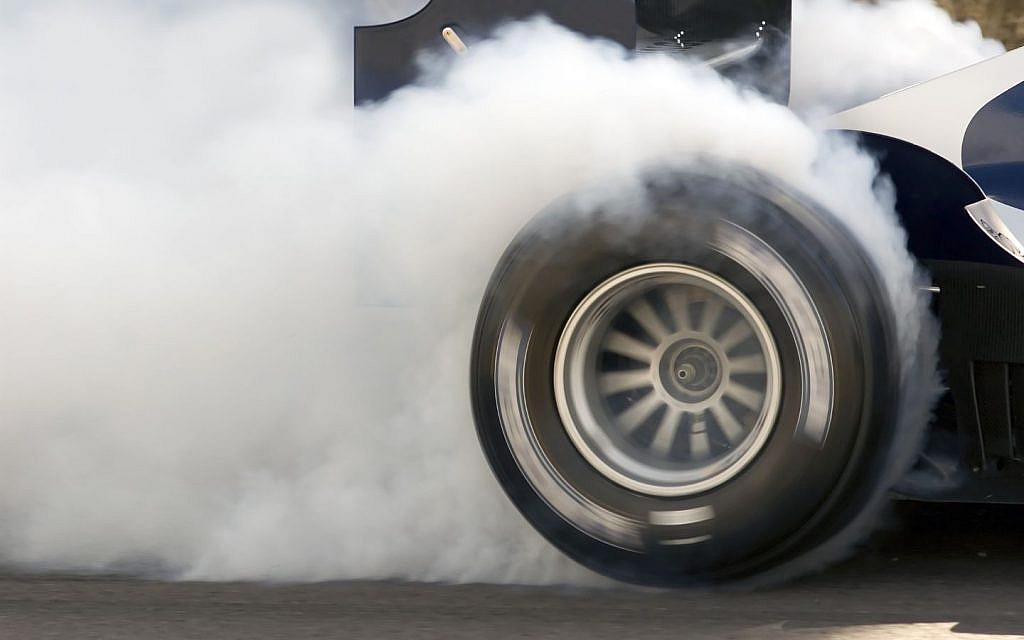
Tyres play a critical role in Formula 1 racing. It not only influences car performance, strategy and the final race outcome but also serves as F1 safety equipment. The type of tyre used in a race depends upon the weather and road conditions.
Let’s go through all the F1 tyre types:
- Wet Tyres: F1 wet tyres are used in rainy conditions. These tyres consist of grooves on their surface that are used to displace water. Similar to the tyres used on regular roads, the grooves help break the thin layer of water on the tarmac and increase the grip.
- Intermediates (Green): Used for light rain.
- Full Wets (Blue): Designed for heavy rain. These tyres allow drivers to maintain control on waterlogged tracks.
- Dry Tyres (Slicks): The primary tyres used in dry conditions. These consist of six slick F1 tyre compounds from C0 to C5. C0 is the hardest tyre in the range while C5 is the softest. Tyres also have coloured bands on their walls to indicate their compound. A white band on the wall denotes hard tyres, yellow indicates mediums and red indicates the softest.
Tyre Specifications
F1 tyres have shifted from the 13-inch standard to newly developed 18-inch models. This aligns with major technical regulation changes. This redesign included every element from profile and structure to compound formulation. Testing for these tyres included over 10,000 hours indoors, 5,000 hours of simulations and the creation of 70 virtual prototypes. Following this extensive process, 30 different specifications were finalised with teams testing them across 20,000 kilometres to ensure performance and adaptability. These 18-inch tyres not only meet the rigorous demands of F1 but also align closer to modern road tyres. This enhances the transfer of technology from track to everyday use.
Role of Tyres in F1 Racing
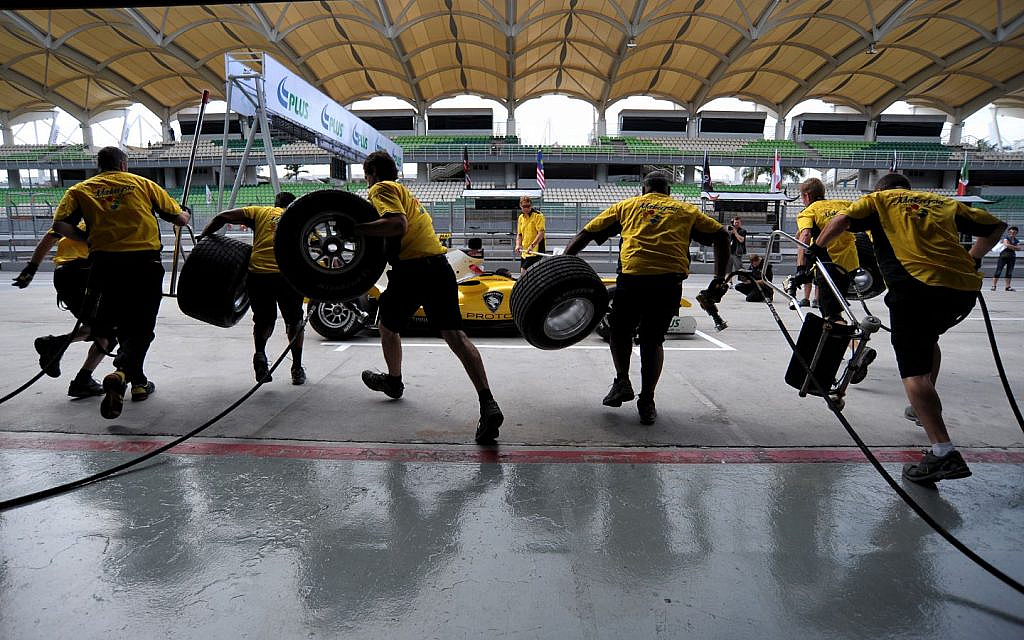
Formula One tyres play a crucial role in race outcomes. They are part of the strategy and impact the overall performance of the vehicle on the track.

Here is how tyres impact F1:
Grip
Tyres provide grip which is critical for control at high speeds. Softer compounds grip better but wear faster. Whereas, harder compounds last longer but reduce traction.
Race Strategy
Tyre selection and wear impact pit stops and overall strategy. F1 racing requires at least two different dry compounds in a race to ensure variability.
Adaptability
Tyres are chosen based on weather and track. Slicks are used for dry conditions, intermediates for light rain and full wets for heavy rain.
Temperature
Optimal tyre temperature is essential as tyres that are too hot or too cold can affect grip.
Durability
Tyres degrade over time and impact pace and pit timing. Managing degradation helps control race outcomes.
FAQs
Why do F1 teams use multiple tyre compounds during a race?
Using different tyre compounds depending on the track conditions enables teams to strategise for both performance and tyre life.
What is the difference between wet and dry tyres in F1?
Wet tyres are used in rainy conditions and are designed with grooves to prevent hydroplaning. Whereas dry tyres are used in dry conditions and have a slick surface to maximise grip.
What happens if a team doesn’t use multiple compounds during a race?
Failing to use at least two different tyre compounds in a race can result in penalties or disqualification. You can also discover some more Formula 1 facts to increase your racing knowledge.
In the high-stakes world of Formula 1 racing, tyres play an important role in defining a team’s performance. From selecting the right compounds to perfecting pit stop timing, tyre management can make or break a race. These factors show how each component of an F1 car is meticulously engineered for speed and control. To understand more about the unique differences between F1 cars and regular sports cars, take a look at F1 Cars vs Sports Cars.
If F1 excites you, check out these sports cars for sale in the UAE to bring a similar thrill to your daily drive. Many modern sports cars provide a powerful blend of speed, precision and design inspired by the top tier of racing performance.
Stay connected to dubizzle’s auto blog for more information on different car components.
Cover Image Credits: Shutterstock Photo Contributor – ZRyzner
Related Posts