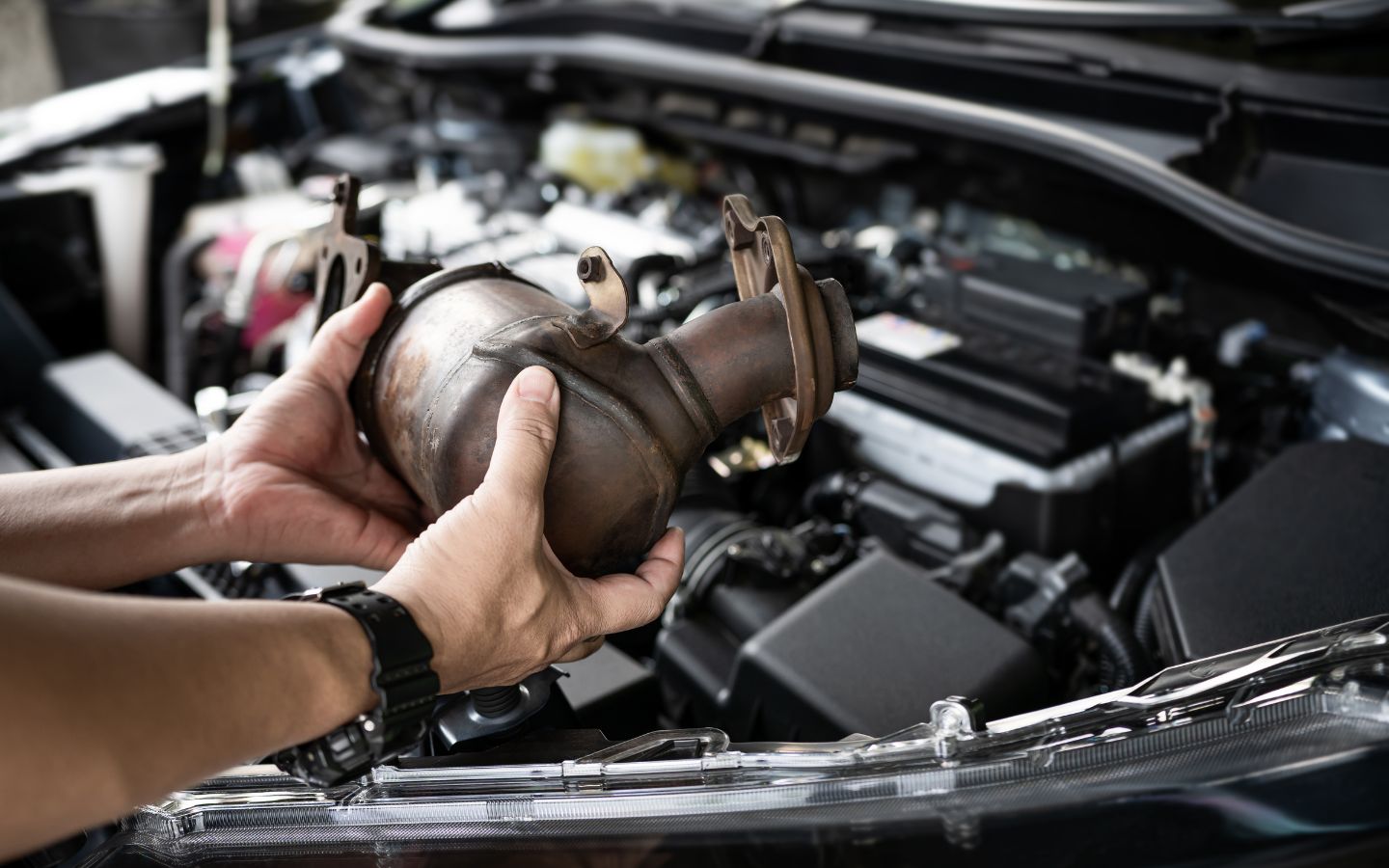
A smooth functioning catalytic converter is essential for a vehicle’s performance. It is responsible for reducing harmful emissions generated during the combustion process and converting them into safer elements. But what happens if it fails? Catalytic converter failure can lead to several issues. For instance, increased pollution, overheating and reduced engine performance, among others.
Let’s explore the common causes of catalytic converter failure and its solutions. Understanding the reasons behind these issues and their preventive measures will allow car owners to keep their vehicles in top shape and avoid such issues.
Catalytic Converter Failure Causes
A catalytic converter may fail due to various reasons. Some common catalytic converter failing symptoms and causes are as follows.
Bad Spark Plugs or Spark Plug Wires
A bad spark plug that misfires or doesn’t fire at all leads to unburned fuel entering the exhaust system. This unburned fuel can ignite in the converter due to extremely high temperatures. This can cause the ceramic catalyst to overheat and melt, leading to complete or partial catalytic converter failure.
Oil or Antifreeze Entering the Exhaust System
If oil or antifreeze enters the exhaust system, it forms soot and carbon deposits in the converter. These deposits then coat and clog the air passages in the catalytic converter’s ceramic honeycomb. This leads to two major issues.
Firstly, the carbon deposits prevent the catalytic converter from effectively removing harmful emissions from the exhaust flow. Secondly, the clogged pores in the ceramic catalyst restrict the exhaust flow. As a result, back pressure is elevated. This increased back pressure causes exhaust gases and heat to back up into the engine, which may lead to engine damage.

Secondly, burnt exhaust gases may be pulled back into the combustion chamber potentially reducing power. This overheats several engine components and decreases the next combustion cycle’s efficiency. Some causes of this problem could be connected to failing gaskets, worn-out piston rings, faulty valves or other warped engine components. This may lead to a failed catalytic converter.
Road / Structural Damage
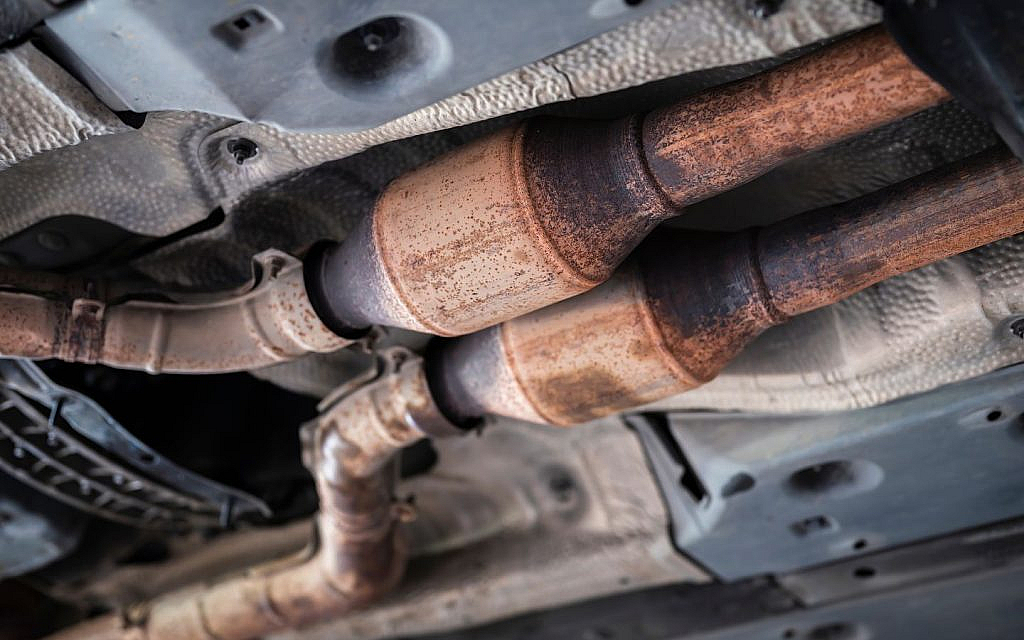
The catalytic converter is located underneath the car – typically under the front seats – and contains a lightweight and fragile ceramic honeycomb structure. This ceramic honeycomb is protected by an insulated mat that holds it in place. Its location makes it vulnerable to damage due to accidents, curbs and more.
Constant impact on the converter due to potholes, road debris, speed bumps, off-road driving or other obstructions can damage the structure of the converter. A severe impact can also rupture the ceramic catalyst, which causes the pieces to break off and rattle inside the converter. The broken pieces interrupt the exhaust flow leading to loss of power and heat buildup.
Moreover, issues like stress fractures, thermal shock, corrosion and stripped oxygen sensor threads may also lead to catalytic converter failure. All these problems usually require converter replacement. Any damage to the tailpipe or muffler may also affect the converter. Case in point: it will raise the internal temperature, elevate back pressure and compromise the overall function.
Unburned Fuel Entering the Exhaust System
Ideally, all fuel must be burned in the engine’s combustion chamber. However, any unburned fuel that passes through the exhaust system may be a cause for concern. Once this fuel reaches the catalytic converter, it can ignite due to the high temperature. The ignition can overheat the converter beyond its limits and possibly cause it to melt. This meltdown may be caused by worn-out spark plugs, improper air-fuel mixture, faulty oxygen sensor, malfunctioning fuel injector, timing issues, broken check valve or a sticking float.
Oxygen Sensor Not Functioning Properly
A malfunctioning or faulty oxygen sensor can send inaccurate readings of the exhaust gases to the vehicle’s computer (ECU or ECM). This can lead to an improper fuel mixture – too lean or too rich. A fuel mixture that is too rich in fuel may leave behind unburned fuel in the converter, causing it to ignite and the converter to overheat and eventually melt. Whereas, a fuel mixture that is too lean may affect the converter’s ability to convert hydrocarbons into safer elements. In both of these scenarios, the emission levels will be problematic.
Short Trips
Shockingly, taking short trips around town can also damage the catalytic converter. Short drives do not allow the converter to reach the appropriate temperature needed to convert hydrocarbons into safer materials. Over time this can clog the convertor due to the buildup of deposits. Occasional long rides prevent this from happening as it gives the catalytic converter enough time to perform efficient functions and clear out any deposits.
Improper Installation
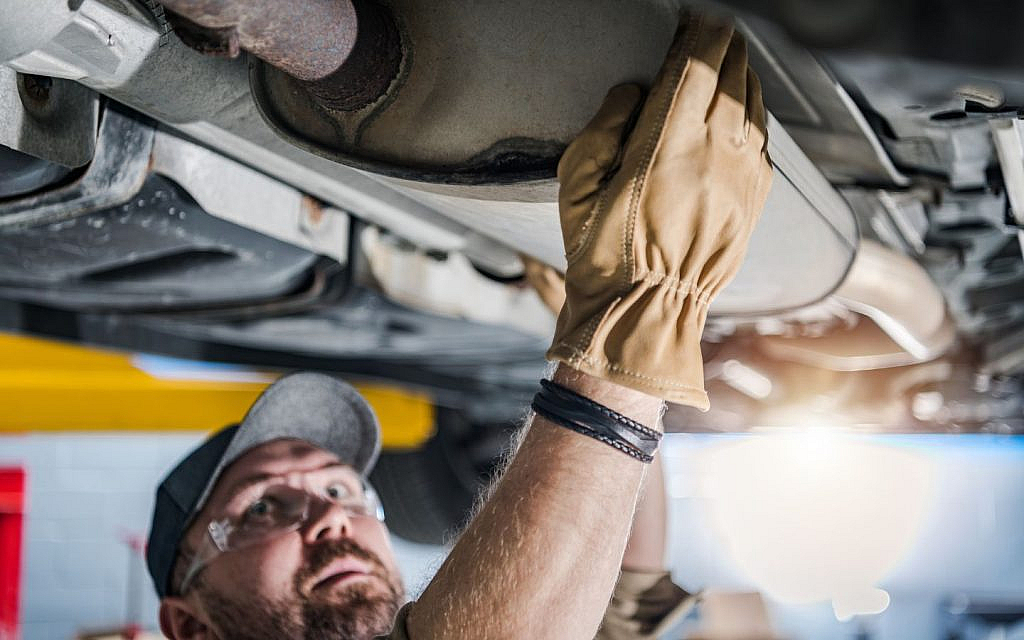
Lastly, improper installation of the catalytic converter can also cause catalytic converter failure. A poorly installed converter is at risk of contamination and structure damage due to impacts on the undercarriage.
How to fix a bad catalytic converter?
Repairing a catalytic converter is usually not possible. This is a crucial component of a car’s exhaust system responsible for reducing harmful emissions. When it fails, it is typically because of two reasons – it is either clogged or damaged. Repairing a damaged converter is not practical or recommended in most cases.
If the converter is clogged with carbon and soot deposits, cleaning the converter is worth a shot. However, it does not guarantee a fully functional converter afterwards. To clean the component, add a cleaner to the gas tank and wait for it to pass through the exhaust system. This ensures that all buildup has been removed. For a more thorough wash, remove the converter from the car and use a pressure washer to get rid of stubborn deposits.
However, if the problem persists or the structure of the converter is damaged, replacing the component is the only option left. Contact a professional to change the catalytic converter and revive the exhaust system of the vehicle.
FAQs
How to prevent catalytic converter failure?
Regular preventative maintenance and checkups can prevent catalytic converter failure. It is recommended to inspect the catalytic converter as part of the car maintenance checklist to catch early signs of cat converter failure.
Can a catalytic converter be cleaned?
Adding a cleaner to the gas tank can clean the catalytic converter as the liquid passes through the car’s exhaust system. For more comprehensive cleaning, remove the converter from the car and wash it thoroughly.
Can oil damage a catalytic converter?
Yes, a large amount of engine oil in the converter can poison the catalyst surfaces. This will result in failure to reduce emissions and eventually damage the catalytic converter.
Understanding the causes and fixes of a bad catalytic converter is important for avoiding catalytic converter failure and improving vehicle performance. Regular maintenance of all car components prevents any such issues and increases the life of a vehicle. However, if your vehicle is breaking down frequently leading to costly repairs, it might be time to consider an upgrade.
Explore new cars for sale in the UAE and invest in a vehicle that will give you peace of mind and enhance your overall driving experience.
Stay connected to dubizzle’s auto blog to learn more about car components issues and their fixes.
Related Posts