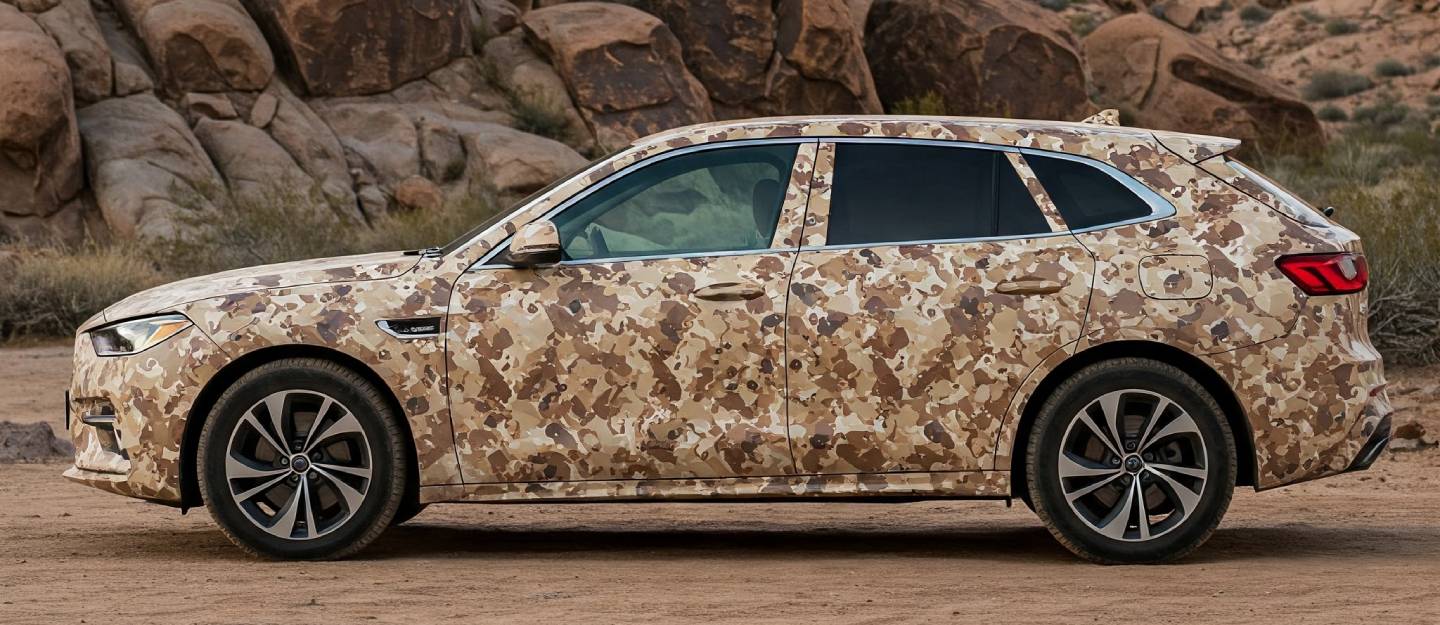
- Vehicle Camouflage Purpose
- Camouflage Types
- Industrial Application Process
- How the Concept Evolved
- Limitations
- FAQs
Car camouflage has become an integral part of the automotive prototype disguise process, with pre-production vehicles sporting black-and-white swirls or other optical illusion wraps during road tests. These prototype car testing camouflage techniques are designed to obscure key design elements while still allowing manufacturers to conduct real-world performance assessments. From marketing tactics to intellectual property protection, there are many aspects of vehicle camouflage application. Let’s unveil some interesting details on the subject.
The Purpose of Car Camouflage
Unlike military camouflage, which helps vehicles blend into their environment, car camouflage for prototype testing serves a different purpose. It obscures a car’s finer details while still keeping it visible on the road. Automakers utilise camouflage wraps during the automotive prototyping and testing phase due to several key reasons:
Protecting Intellectual Property
Car manufacturers invest millions in design and engineering. Vehicle prototype concealment techniques ensure that competitors do not get an early look at the innovations incorporated into an upcoming model. Automotive industry prototype security strategies prevent the leakage of proprietary styling and technology before an official launch.
Managing Public Perception
Early versions of a vehicle often feature unfinished designs or test components that may not reflect the final product. It is a key aspect of automotive design evolution. Techniques for how automakers hide new car designs may vary. However, they all serve the same purpose, which is to ensure that first impressions occur on the automaker’s terms. It also potentially prevents misconceptions that could harm the model’s reception.
Building Anticipation
A camouflaged car driving on public roads generates intrigue and speculation. Car spy shots and camouflage create buzz. The unrevealed model of any particular car body type drives curiosity about unreleased vehicle models and concept cars.

Types of Car Camouflage Patterns and Materials
Camouflage techniques have evolved significantly with the help of advanced materials and disruptive visual patterns. The cutting-edge techniques protect a car’s design from prying eyes and cameras.
Camouflage Wrap Designs
Automakers use various wraps to obscure vehicle designs, including:
- Black and white swirl car wrap: These high-contrast patterns confuse depth perception. This makes it difficult to discern body contours.
- Psychedelic Swirls: Complex patterns that further distort panel shapes and vehicle curves.
- Patterned Images: Some manufacturers incorporate random images or logos to add visual noise, hiding main design elements.
- Masquerading as Other Cars: Some automakers disguise a new model by modifying the car grille, headlights or badges. As a result, they designed a prototype that resembles an entirely different car.
Camouflage Materials
The secret car development process involves layering different materials to enhance concealment:
- Hard Materials: Vacuum-moulded plastic panels disguise the true contours of the vehicle.
- Foam Pieces: Used to add artificial bulges and hide actual body lines.
- Vinyl Wrap: The final layer, featuring camouflage patterns for prototype vehicles, creates an optical illusion that prevents clear visibility of design details.
Interior Camouflage
The disguise isn’t limited to exteriors. Many automakers also camouflage the interior. Hidden features in prototype vehicles include covered dashboards, concealed digital displays and temporary switchgear to keep new technology under wraps.
The Process of Applying Car Camouflage
Applying car camouflage wrap for test models is a meticulous process:
- Design: Engineers use advanced software to create a custom camouflage wrap that effectively conceals specific design elements.
- Preparation: The vehicle undergoes a thorough cleaning to ensure the wrap adheres properly.
- Application: The camouflage is carefully applied using a combination of wraps, stickers and physical add-ons.
- Testing: The camouflaged prototype undergoes multiple inspections under different lighting conditions to verify effectiveness.
The History and Evolution of Car Camouflage
The concept of camouflaging vehicles dates back to military strategies like dazzle camouflage used in World War I. The modern approach, known as Erlkönig in Germany, became popular in the 1950s when journalists began capturing unauthorised images of test cars. Since then, advances in automotive industry prototype security have led to more sophisticated camouflage methods.
Factors Driving Camouflage Evolution
- Advances in Photography: High-resolution cameras have made it easier to capture design details, requiring more effective camouflage techniques.
- Increased Competition: As global competition intensifies, automakers have strengthened their car manufacturers’ test mule strategies.
- Marketing Strategies: Camouflaged cars now serve as a promotional tool, generating hype for upcoming releases.
Effectiveness and Limitations of Car Camouflage
While optical illusion wraps for test cars are highly effective, determined enthusiasts and spy photographers still manage to capture revealing images. Some even use digital tools to ‘de-camouflage’ prototype images, unveiling design elements before official announcements.
Security Measures Beyond Camouflage
Automakers implement additional safeguards to prevent leaks:
- Background Checks: Employees involved in secret car testing locations undergo thorough vetting to prevent unauthorised disclosures.
- Non-Disclosure Agreements (NDAs): Strict contracts legally bind workers to secrecy about ongoing projects.
FAQs
How does camouflage help in prototype car testing?
Camouflage in prototype car testing obscures design details, preventing leaks and protecting intellectual property. All these strategies help automakers manage public perception while allowing real-world vehicle evaluation.
Are there different camouflage techniques for different car models?
Yes, different car models use varied camouflage techniques. These include vinyl wraps, faux body panels and disguises to effectively conceal design details.
Is camouflage also used in crash test vehicles?
No, camouflage is generally not used in vehicle crash testing since the design details are not a concern. Instead, they feature high-contrast markings to aid impact analysis and data collection.
Car camouflage remains a critical tool in maintaining the secrecy in car development process. As technology advances, we can expect even more sophisticated vehicle prototype concealment techniques. The advancements in the field can further extend to different types of digital disguises and AI-driven camouflage.
The continued development of the field allows concept car testing in disguise to remain an exciting aspect of the automotive industry. The testing and prototype models of every used and new car for sale in the UAE go through the camouflage phase. The phenomenon is becoming increasingly advanced and common day by day.
For more informative pieces related to the car industry, make UAE’s leading auto blog your go-to source.
Related Posts