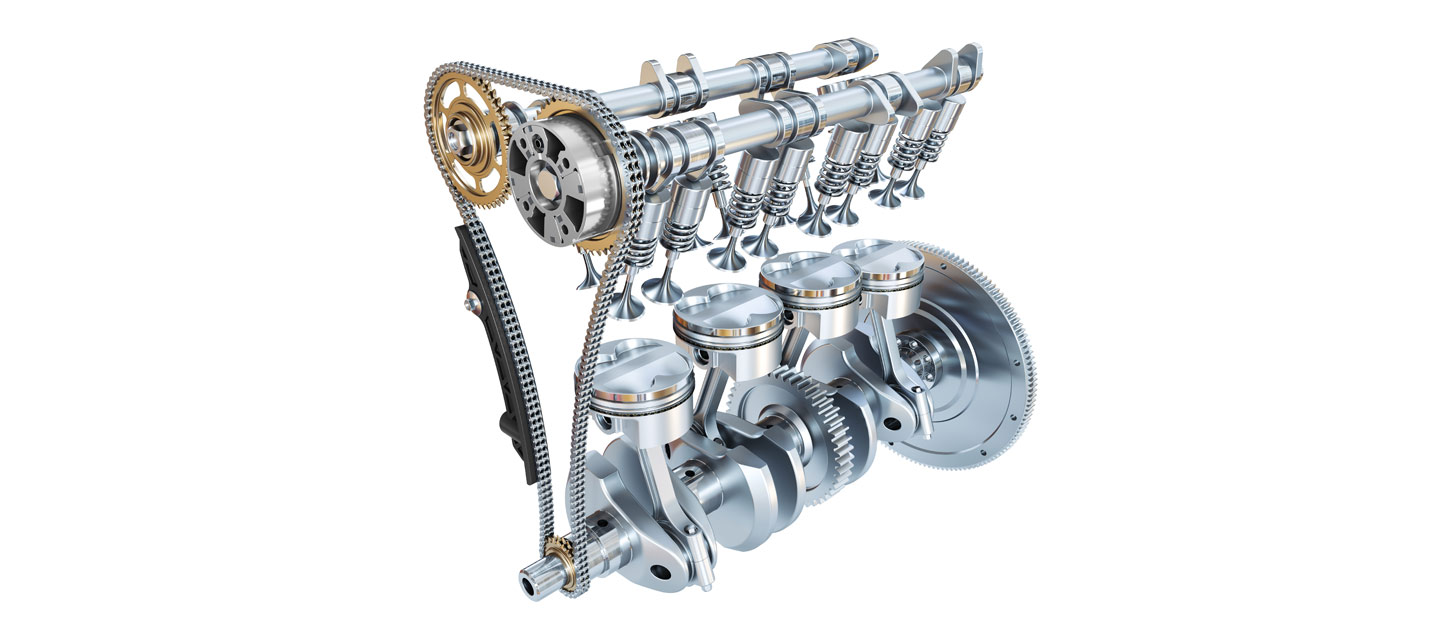
- Camshaft
- Crankshaft
- Camshafts and Crankshafts Work Together
- Differences Between Camshaft and Crankshaft
- FAQs
The camshaft and crankshaft are crucial elements of a car’s engine. They work together to ensure the proper combustion process and smooth operation of the engine. These components are often mistaken to be the same, however, that is not the case. They are both different components with distinct designs and have their separate functions. We have prepared a detailed comparison of the camshaft vs crankshaft, their function, differences and more.
Let’s compare camshaft and crankshaft in this comprehensive overview.
What Is a Camshaft?
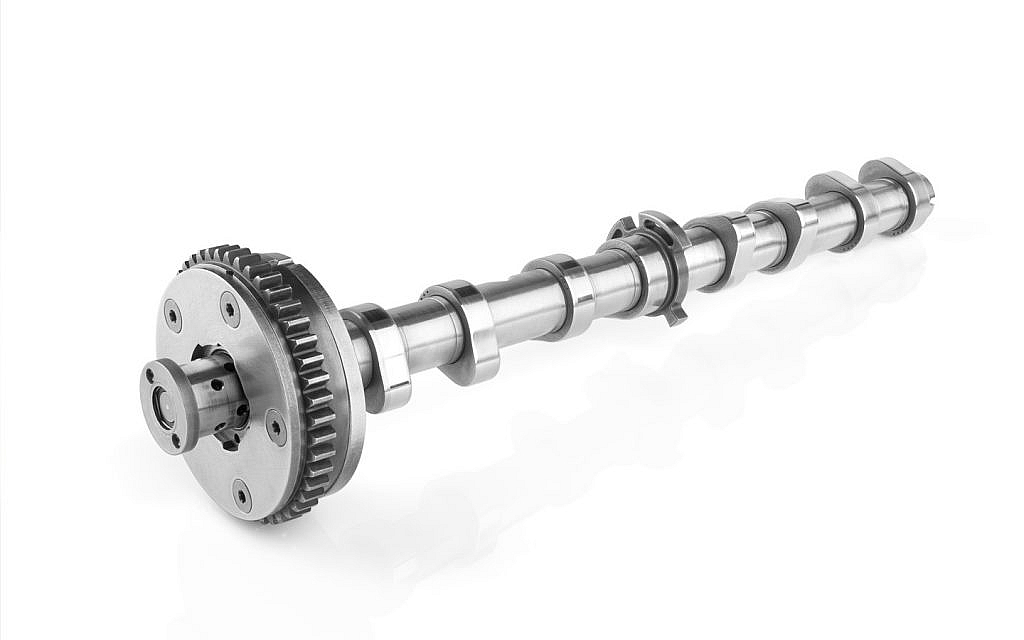
The camshaft is an essential component of the four-stroke engine. It is located at the top end of the engine. It helps the combustion cycle by precisely controlling the timing and duration of the opening and closing of engine valves. These valves allow air and fuel to enter, and exhaust gases to exit the combustion chamber. In other words, it helps your engine create power.
Many modern engines come with two camshafts. These cams sit on each side of the engine and assist in the combustion process. One camshaft is responsible for opening and closing the intake valve, while the other camshaft controls the opening and closing of the exhaust valve.
How Does a Camshaft Work?
The camshaft is a metal rod with lobes called cams positioned along its length. These cams push against the engine valves when the camshaft rotates. This leads to the opening of valves, allowing air and fuel to enter the engine and exhaust gases to exit. Once the cam moves past the valves, the valve closes with the help of a spring.

The camshaft is connected to the crankshaft through a belt or chain so it rotates in sync with the piston. This ensures that the valves open and close at precise moments as the timing is essential for the engine’s smooth operation.
The timing of valve opening and closing is crucial in four-stroke engines. Because longer valve duration allows for more efficient intake and exhaust in the engine. This enhances engine breathing, torque and power.
What Is a Crankshaft?
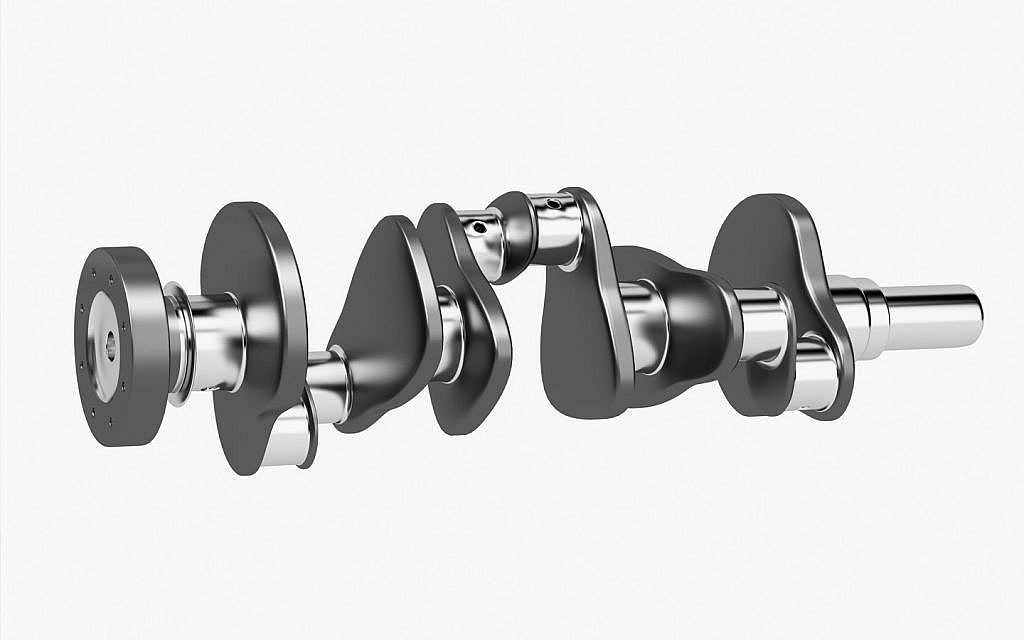
The crankshaft is a part of the combustion chamber that connects the output section of the engine to the input section. It is located at the bottom end of the engine and is connected to the piston through a connecting rod.
The crankshaft delivers power to the gearbox by converting the reciprocal motion of the piston into rotary motion. Reciprocal motion refers to the up and down movement of the piston while rotational motion refers to the spinning of the camshaft into the transmission.
In other words, the crankshaft takes the power generated from the piston and camshaft and provides it to your vehicle, allowing the wheels to move. In a four-stroke engine, the crankshaft completes a combustion cycle after two revolutions. However, in a two-stroke engine, the cycle is completed after only one revolution.
How Does a Crankshaft Work?
The crankshaft is a long, metal shaft with crankpins, crank web and connecting rod journal, making it look uneven. It is attached to pistons with the help of connecting rods in the engine. The combustion of fuel causes the up-and-down movement of the piston inside the cylinders. This movement leads to push and pull on the connecting rods, which in turn rotates the crankshaft.
When the piston moves downward, the crankshaft half rotates, and when it moves upwards, it completes one full rotation. These rotations create rotational energy which is then transferred to other components of the car, such as the car engine flywheel and eventually the transmission. This powers the car.
How Do Camshafts and Crankshafts Work Together?
The camshaft and crankshaft work together in the engine to control the timing of the opening and closing of the engine valves. This is to ensure a smooth and efficient combustion process. Both the components are linked together by a timing chain, timing belt or a gear set. The timing chain or belt ensures that everything moves in sync and works in harmony. This is called valve timing.
In a four-stroke combustion cycle that involves intake, compression, power and exhaust, the crankshaft rotates twice, while the camshaft rotates once. Two full rotations of the crankshaft move each piston up and down twice. This means that each valve opens once for every two crankshaft rotations in relation to the piston.
Both the crankshaft and the camshaft working together ensure that during the intake stroke, only the intake valve opens. Both the valves remain closed during the compression and power strokes. And lastly, only the exhaust valve opens during the exhaust stroke. This guarantees the smooth operation of the engine.
Camshaft vs Crankshaft: The Differences
Here is the difference between a camshaft and a crankshaft.
Camshaft
- The camshaft is made of either cast iron or steel.
- It is located at the top end of the engine.
- The camshaft is used to control the precise timing and duration of the opening and closing of the intake and exhaust valves.
- The timing belt, connected to the crankshaft, rotates the camshaft.
- It is made up of cams and gears.
Crankshaft
- Crankshafts are made from forged steel or cast iron.
- The crankshaft is located at the bottom end of the engine.
- The crankshaft converts the reciprocal motion of the piston into rotational motion.
- The piston rotates the crankshaft.
- It comprises a crankpin, an oil hole, a connecting rod journal and a crank web.
FAQs
Does the camshaft turn the crankshaft?
No, the camshaft works in correlation with the crankshaft but doesn’t directly turn the crankshaft. It opens and closes the valves, whereas the crankshaft moves the pistons. This helps in the combustion process.
What spins faster camshaft or crankshaft?
The crankshaft turns twice as fast as the camshaft. In a single four-stroke combustion cycle, the crankshaft spins twice while the camshaft only rotates once.
What is the main advantage of a camshaft?
Its ability to precisely open and close the valves in a combustion cycle significantly impacts the engine’s performance and efficiency.
Both the camshaft and the crankshaft are essential parts of the car engine and play a vital role in the combustion process. The power generated from the combustion is then used to drive the car. Any issues with either of the components will lead to a significant decline in the car’s performance. Therefore, in case of a faulty camshaft or crankshaft, it is recommended to change your vehicle. Browse through these new cars for sale in the UAE and take your pick.
Stay tuned to dubizzle’s auto blog to learn more about car components and their functions.
Related Posts